
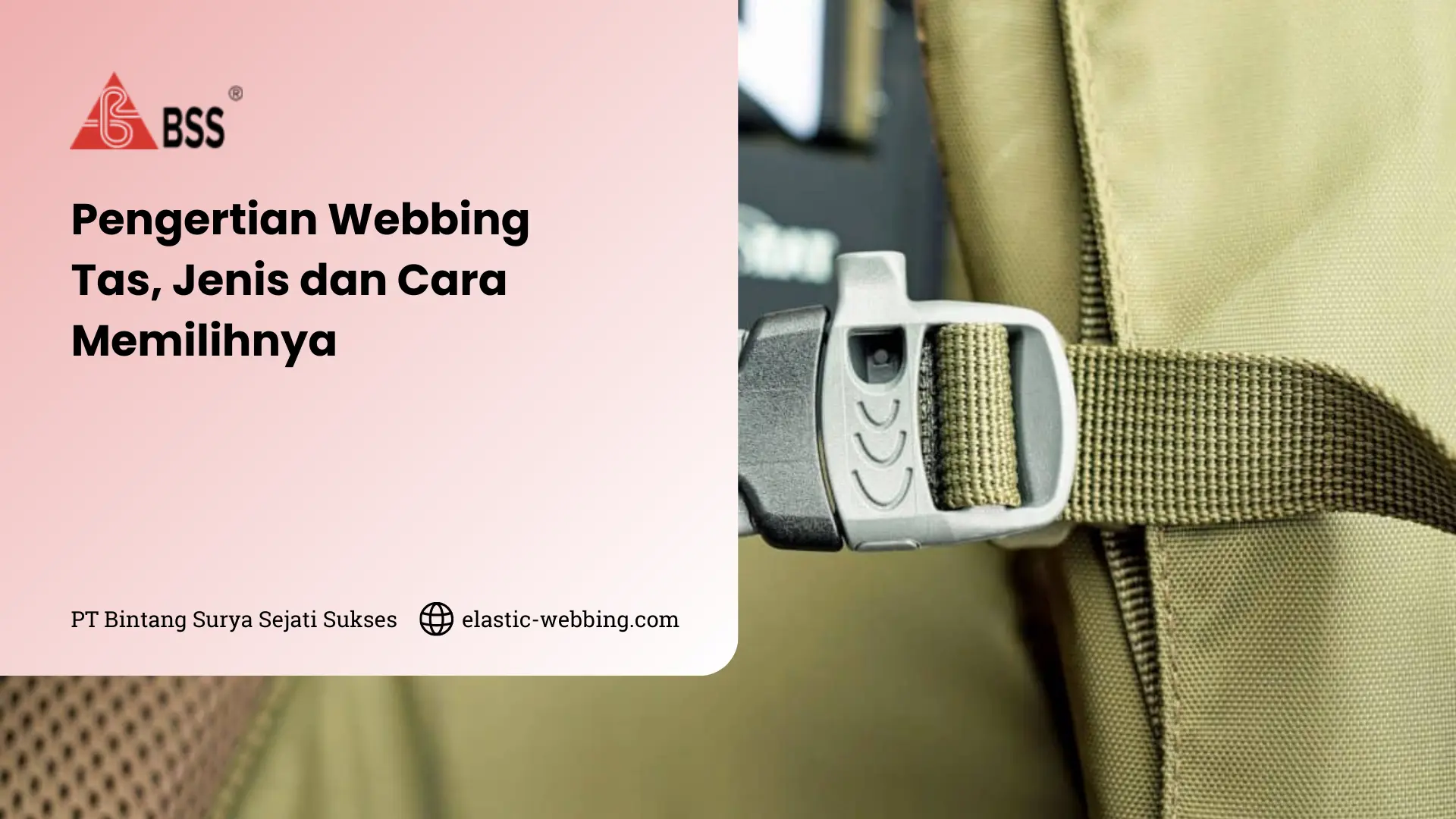


Bag webbing is often considered a simple component, but it plays a crucial role in determining the comfort and durability of a bag. Without the right webbing strap, a bag may feel uncomfortable on the shoulder, wear out quickly, or even fail to support weight properly.
Therefore, both bag manufacturers and users need to understand the types and quality of webbing before selecting it. This material is typically made from strong and durable synthetic fibers, allowing it to be used in various conditions.
Behind high-quality webbing, there are experienced manufacturers who develop modern production technologies. One of them is BSS, a company known as a producer of high-quality narrow fabrics and elastic webbing.
What Is Bag Webbing?
Bag webbing is a special strap used in bag manufacturing to support weight while reinforcing the product structure. Manufacturers usually produce this material from strong synthetic fibers so that it can withstand pressure and long-term use.
In bag construction, webbing is often referred to as the “hidden backbone” because it plays an important role that is not always visible.
Without this component, a bag would not be able to support weight optimally.
Several reasons why webbing is essential in bag manufacturing include:
Supporting Weight:
Webbing distributes the weight of the bag’s contents evenly across the user’s body, keeping the bag comfortable to carry.
Maintaining Stitch Integrity:
This material functions as a reinforcement point in the stitching. Without strong webbing support, the bag’s fabric stitches can tear more easily when holding heavy loads.
Determining Product Quality:
The quality of a bag often depends on the quality of its supporting straps. Poor webbing can fray easily, fade, or stretch, reducing the product’s durability.
Improving User Comfort:
The right material, such as soft nylon, helps reduce pressure on the shoulders and prevents irritation when the bag is used for long periods.
Bag Webbing Straps and Their Role in Bag Products
Webbing also functions as a design element. Bag manufacturers can add patterns, colors, or logos to webbing to strengthen brand identity and enhance the overall appearance.
This is supported by several technical advantages that make webbing superior to round ropes or conventional straps, such as:
-
High Tensile Strength
-
Better Load Distribution
-
Ergonomics and Comfort
-
Shape Stability
-
Resistance to Friction
These advantages give bag manufacturers flexibility to choose webbing materials based on the bag’s function, required strength, and production budget.
Some of the most commonly used materials include:
Nylon:
This material is known as an industry standard because of its excellent strength and toughness.
Polyester:
Polyester offers strong resistance to UV rays and weather conditions.
Polypropylene (PP):
This material is lightweight and about 30% lighter than nylon.
Canvas or Cotton:
This material provides a classic appearance and a natural vintage feel.
4 Common Types of Webbing Used
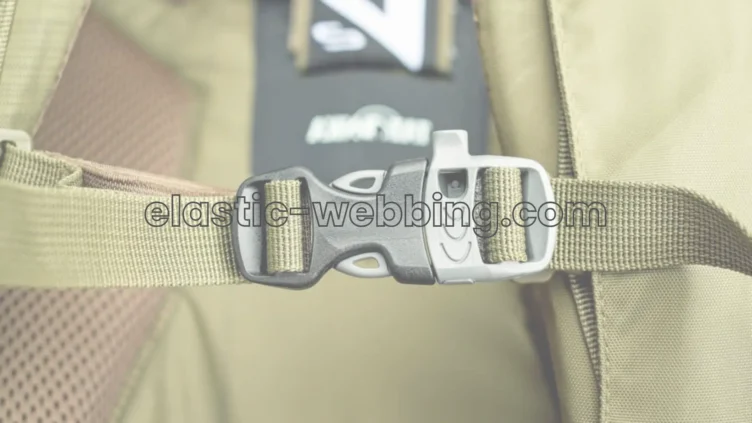
In general, the bag industry widely uses nylon, polyester, polypropylene, and cotton materials. Each of these materials serves different functions, so manufacturers usually adjust them according to the bag type, load capacity, and usage conditions.
1. Nylon Webbing
Nylon has very high tensile strength, allowing it to withstand significant pressure without tearing. In industrial applications, this material is often considered a standard for heavy-duty straps.
Besides being strong, nylon also has a smooth and soft texture. Its surface feels comfortable when in contact with the skin or shoulders, which is why many manufacturers use it for bags worn for extended periods.
This material also has good elasticity. Its 18–25% stretch capability allows nylon to absorb shocks effectively.
Because of these properties, nylon webbing is commonly used for hiking bags, military backpacks, tool bags, and safety equipment.
2. Polyester Webbing
Polyester has a very low water absorption rate, around 0.4–0.8%. This characteristic allows the material to dry quickly and prevents it from shrinking when exposed to moisture.
These advantages make polyester suitable for bags used in outdoor activities.
This material also has very low stretch, even less than 5%. This property helps bags maintain their shape even when carrying heavy loads for long periods.
Therefore, polyester webbing is widely used for travel suitcases, camera bags, outdoor bags, and lifting equipment such as webbing slings.
3. Polypropylene Webbing
Polypropylene is extremely lightweight, approximately 30% lighter than nylon. This advantage helps reduce the overall weight of the bag, making it more comfortable to carry.
In addition to being lightweight, this material is also known for being very economical. Many manufacturers choose it to produce promotional or casual bags with more efficient production costs.
PP webbing is also water-resistant because it does not absorb moisture. The material is resistant to mold, chemicals, and sweat.
Although it is not as strong as nylon, its durability is still sufficient for daily use.
For this reason, polypropylene webbing is commonly used in shopping bags, tote bags, promotional bags, light sports bags, and clothing bags.
4. Cotton Webbing
Cotton provides a natural and classic appearance. Its texture creates a traditional impression often associated with vintage styles or handmade products.
As a natural fiber, cotton is also considered more environmentally friendly than synthetic materials.
Many brands that emphasize sustainability choose this material to strengthen their eco-friendly product image.
In addition, cotton webbing has a very soft texture, making it comfortable to hold or wear on the shoulder.
Because of its aesthetic appeal and comfort, this material is often found in fashion bags, tote bag handles, camera straps, and various retro-style bags.
Read Too: What Are Webbing Straps? Types, Materials & Industrial Applications
Factors That Affect Bag Webbing Quality
Several aspects such as tensile strength, physical dimensions, weaving techniques, and abrasion resistance are key indicators that determine webbing quality.
1. Tensile Strength
The material used greatly affects this capability. Nylon is known as an industry standard because it has a strength of around 28–32 MPa and can support loads of 1,200–1,500 kgf for a 50 mm width.
Polyester also offers nearly comparable strength but with lower stretch levels, keeping the bag shape stable.
Meanwhile, polypropylene (PP) has a tensile strength of around 22–25 MPa, making it more suitable for bags carrying lighter loads.
In product design, manufacturers usually apply a safety factor. Technically, the strap should withstand at least four times the bag’s maximum load.
Another factor is fiber density, known as Denier. The higher the Denier value, such as 1200D compared to 600D, the thicker the thread and the stronger the strap structure.
2. Webbing Thickness and Width
Wider straps distribute pressure more evenly across the shoulders, reducing pain or fatigue.
For example, webbing with a width of 38–50 mm is often used for heavy-load bags because it distributes pressure more effectively.
An increase of 10 mm in width can reduce perceived pressure by approximately 15%.
Thickness is also important. Standard webbing usually has a thickness of 1.2–2.0 mm, while heavy-duty applications may reach 2.5–3.5 mm.
Thicker straps tend to be more rigid, less likely to bend, and remain stable when supporting weight.
3. Weaving Techniques and Finishing
Several weaving techniques such as plain, twill, satin, and jacquard produce different characteristics.
Tighter weaves generally create stronger structures that are less likely to unravel.
Finishing processes also play a key role in maintaining strap durability. Technologies such as ultrasonic cutting or heat-sealing are often used to seal fiber ends to prevent fraying.
Manufacturers may also apply protective coatings such as:
-
DWR (Durable Water Repellent) to repel water
-
UV stabilizers to prevent color fading
-
PU or silicone coatings to create a softer surface with better grip
4. Abrasion Resistance
Weave density also affects resistance to abrasion.
Webbing with tight weaving and high Denier threads is usually more resistant to friction compared to looser weaves.
In manufacturing industries, this quality is commonly tested using methods such as the Martindale abrasion test.
Through this testing, high-quality webbing can withstand tens of thousands of friction cycles without significant fiber damage.
How to Choose the Right Bag Webbing
Choosing the wrong material or size can cause bag straps to wear out quickly, feel uncomfortable on the shoulders, or even break under load.
Therefore, both manufacturers and users should consider the following factors:
Choose the Right Material for the Bag’s Function:
The first step is matching the webbing material with the bag’s purpose.
Select the Proper Size and Thickness:
Webbing size affects comfort and load distribution.
Match the Color and Design:
Manufacturers can choose various colors such as black, brown, white, red, or patterned designs to match the product’s character.
Ensure Stitching Quality and Durability:
Good webbing should be able to withstand at least four times the bag’s maximum load as a safety factor.
Tips for Maintaining Bag Webbing Straps
Webbing straps function as load-bearing components, so even small fiber damage can affect the safety and stability of the entire bag structure.
Consider the following maintenance tips:
How to Clean Webbing:
Regular cleaning helps maintain both hygiene and fiber quality.
Proper Storage:
Correct storage methods greatly affect the lifespan of webbing.
Avoid Excessive Friction Damage:
Repeated friction is one of the main causes of webbing damage.
Need High-Quality Webbing for Your Bag Products?
Webbing plays an important role in determining the quality, strength, and comfort of a bag. Therefore, selecting the right material greatly affects the bag’s performance and durability over long-term use.
Manufacturers need to pay attention to fiber quality, production techniques, and manufacturing standards.
Choosing an experienced production partner like BSS can help ensure the webbing material used maintains consistent quality and meets global standards.
With modern technology and strict quality control, BSS provides narrow fabrics and elastic webbing solutions that support the creation of strong, safe, and high-value bag products.
Read Too: Tubular Webbing: Definition, Advantages, and How to Choose It