
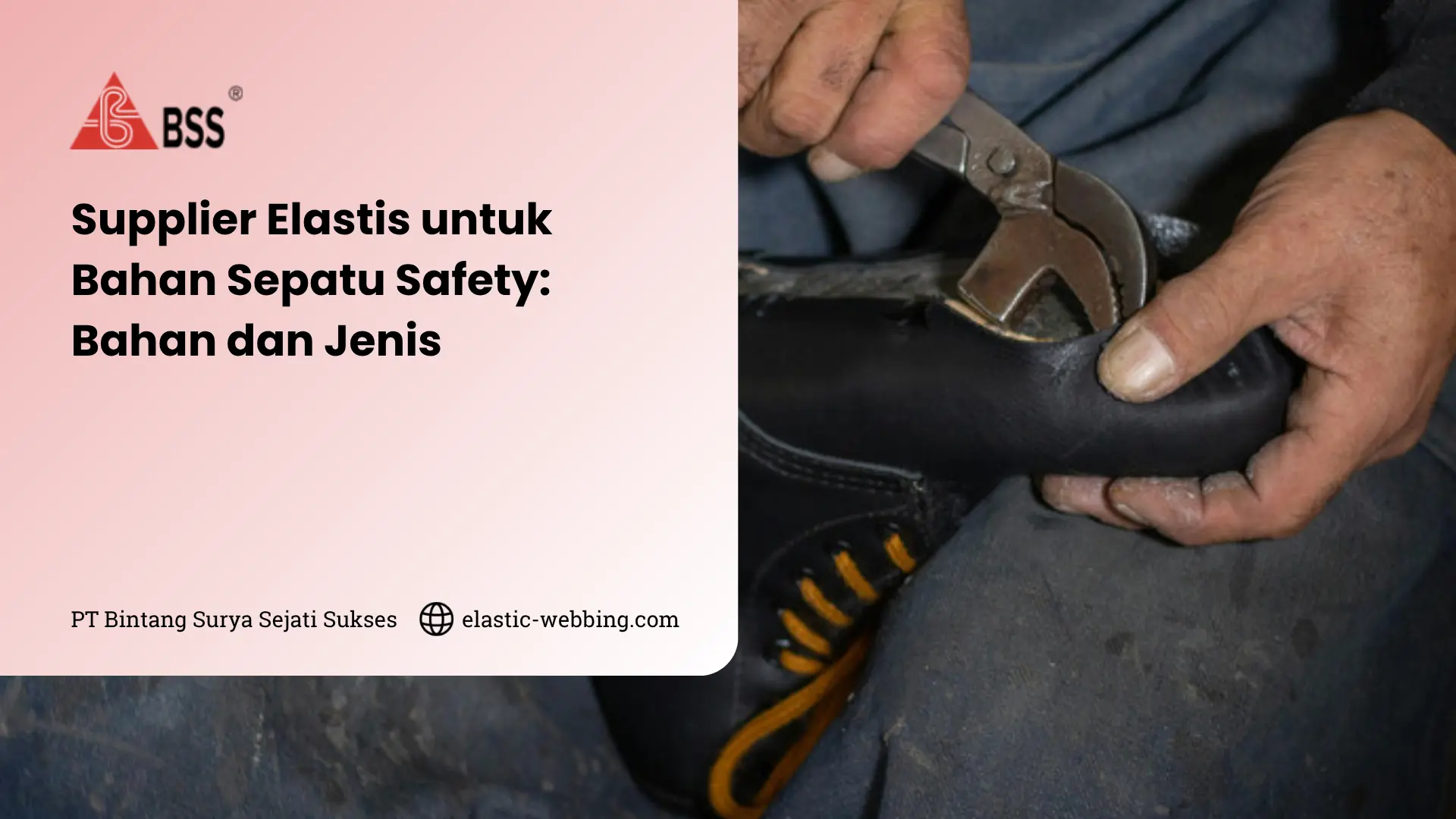


The industry requires reliable elastic suppliers for safety shoe materials that can consistently provide high-quality components, ensuring every product delivers both protection and comfort. The right combination of materials also allows workers to move more freely without compromising safety.
Therefore, selecting materials should never be done carelessly, as they directly affect durability, performance, and long-term wearing comfort. So, what factors should you consider when choosing the right material supplier?
What Are Safety Shoe Materials?
Safety shoe materials are specialized materials designed to provide maximum foot protection in high-risk working environments.
Manufacturers carefully select each material based on its specific function, from protecting feet against heavy impacts and sharp objects to resisting exposure to chemicals.
However, protection alone is not enough. The materials must also provide comfort, allowing workers to move efficiently throughout the workday.
Elastic Suppliers for Safety Shoe Materials
One well-established industry player is PT Bintang Surya Sejati, a manufacturer of narrow fabrics and elastic webbing produced using European-standard machinery to ensure precision and material strength.
1. Criteria for Choosing a Quality Elastic Supplier
Companies should carefully evaluate suppliers to ensure optimal product quality.
Key criteria include:
- Extensive experience and a strong reputation
- Premium-quality materials
- Official safety certifications
- Ergonomic product innovations
2. The Importance of Consistent Material Quality
Consistent material quality determines the long-term safety and durability of safety footwear.
Reliable suppliers maintain production standards by:
- Testing every material to ensure stable performance even under extreme conditions.
- Preventing issues such as hydrolysis in low-quality Polyurethane (PU) materials through strict quality control and proper storage.
- Ensuring materials remain durable, resistant to wear, and less susceptible to brittleness despite exposure to heat or chemicals.
3. Production Capacity for the Footwear Industry
The footwear industry requires suppliers capable of consistently fulfilling large-volume orders.
Leading manufacturers are able to:
- Produce over one million pairs of safety shoes annually.
- Maintain large inventories to support high-volume industrial customers.
- Distribute products across domestic and Asia-Pacific markets, demonstrating operational reliability and strong logistics capabilities.
4. Custom Specifications and Design Capabilities
Every industry has unique requirements, making customization an important advantage.
Professional suppliers can:
- Manufacture materials according to customer specifications.
- Offer custom designs that align with brand identity or ergonomic requirements.
- Utilize technologies such as Jacquard Elastic to weave logos directly into elastic materials.
- Customize material properties based on requirements such as chemical resistance or lightweight construction.
Types of Safety Shoe Materials
Each part of a safety shoe performs a different function and therefore requires materials with specific characteristics.
Together, these materials provide optimal protection and comfort.
1. Genuine Leather and Synthetic Leather
The upper portion of safety shoes is commonly made from genuine leather or synthetic leather.
Each offers distinct advantages depending on industrial requirements and production budgets.
Genuine Leather
Cowhide is especially valued for its durability and ability to conform to the wearer’s foot over time.
Common types include:
- Finish Leather, which preserves the natural leather texture.
- Pull-Up Leather, processed to be softer and more flexible.
- Suede Leather, featuring a soft, velvet-like surface from the inner layer of the hide.
- Nubuck Leather, sanded on the outer surface to create a finer texture than suede.
- Patent Leather, coated with acrylic for a glossy, water-resistant, and easy-to-clean finish.
Synthetic Leather
Synthetic leather provides a more economical alternative while closely resembling genuine leather.
Common options include:
- PVC (Polyvinyl Chloride): Features a plasticized coating with a glossy and relatively rigid surface.
- PU (Polyurethane): An improved version of PVC with a softer, more flexible texture that closely resembles genuine leather.
Besides lower costs, synthetic leather also offers broader color options and easier maintenance.
2. Mesh and Textile Fabrics
Textile materials significantly improve comfort by enhancing airflow inside safety shoes.
Common textile materials include:
- Canvas and cotton used as base layers beneath PVC coatings.
- High-quality textile fabrics used beneath PU coatings for a softer feel.
- Textile combinations that reduce heat buildup while increasing long-term wearing comfort.
3. Rubber Materials for Safety Shoe Soles
The outsole supports body weight while protecting feet from slippery, rough, and sharp surfaces.
Common outsole materials include:
- Rubber: Flexible, waterproof, lightweight, and highly durable.
- TPU (Thermoplastic Polyurethane): Offers excellent elasticity and abrasion resistance.
- PU (Polyurethane): Lightweight and ideal for jobs requiring high mobility.
- Nitrile: Resistant to high temperatures, oils, and hazardous chemicals.
Each material is selected based on workplace conditions to ensure maximum protection and comfort.
4. Toe Cap Materials for Toe Protection
The toe cap protects toes against impacts and compression from heavy objects.
One of the most widely used materials is composite toe, a non-metallic material that provides excellent protection without significantly increasing shoe weight.
Composite toe caps also offer electrical insulation, making them suitable for environments requiring additional electrical safety.
5. Webbing and Elastic Materials as Supporting Components
Besides primary materials, safety shoes also rely on supporting components that improve comfort and flexibility.
Common supporting materials include:
- Elastic webbing, which provides flexibility in specific shoe sections.
- Narrow fabrics, precision-woven tapes and webbings designed for industrial footwear.
- Woven jacquard elastic, a premium elastic material combining strength, flexibility, and attractive woven designs.
High-quality supporting materials also enhance long-term durability.
For this reason, many manufacturers collaborate with suppliers that maintain strict production standards and international quality specifications.
Also Read: Types of Safety Shoes: Functions and How to Choose OHS Safety Shoes
The Role of Elastic Materials in Safety Shoe Construction
Manufacturers integrate elastic materials into various shoe components, particularly the outsole and supporting structures, to ensure safety shoes remain durable while allowing natural movement.
1. Functions of Elastic Materials
Elastic materials provide the flexibility and cushioning required during active work.
Materials such as TPU and rubber are selected because they stretch without compromising structural integrity.
These materials also improve water resistance and chemical protection, enhancing workplace safety.
2. Improving Flexibility and User Comfort
Elastic materials enable workers to move more naturally throughout the day.
Examples include:
- PU outsoles, producing lightweight and flexible footwear.
- Ergonomic sole designs that reduce foot pressure and minimize fatigue during prolonged standing or walking.
Together, these features improve overall productivity.
3. Easier Shoe Wearing and Removal
Elastic components such as elastic webbing allow shoes to adapt to the shape of the wearer’s foot.
The material stretches as the foot enters and then contracts to provide a secure, comfortable fit.
Some designs also incorporate zippers to speed up the wearing process without sacrificing stability.
4. Supporting Long-Term Product Durability
Premium elastic materials improve the lifespan of safety footwear.
Benefits include:
- High abrasion resistance, particularly with TPU materials.
- Reduced hydrolysis risk in PU through proper use and maintenance.
- Excellent resistance to extreme temperatures and chemicals with NBR (Nitrile Butadiene Rubber).
Examples of Elastic Materials for Safety Shoes
Each elastic material offers unique characteristics that help footwear adapt to demanding industrial environments.
1. Knitted Elastic for Flexible Areas
Knitted elastic is commonly used in sections requiring maximum flexibility.
Its stretchability follows natural foot movement, reducing pressure and improving comfort during extended work hours.
2. Woven Elastic for Superior Strength and Stability
Woven elastic features a tighter weave, making it stronger and more dimensionally stable than knitted elastic.
It maintains its shape despite repeated stretching, making it ideal for applications requiring durability while preserving essential flexibility.
3. Jacquard Elastic for Functionality and Aesthetics
Woven jacquard elastic combines technical performance with premium visual appeal.
Manufacturers can weave logos and patterns directly into the elastic without affecting performance.
Its primary advantages include:
- Meeting technical requirements for safety footwear.
- Enhancing product appearance with professional, modern designs.
4. Heavy-Duty Elastic for Industrial Applications
Heavy-duty elastic materials are designed for the harshest industrial environments.
Common options include:
- Rubber: High elasticity, waterproof performance, and excellent durability.
- Nitrile: Outstanding resistance to heat and chemicals.
- TPU/PU (Thermoplastic Polyurethane / Polyurethane): High abrasion resistance combined with flexibility for worker mobility.
Together, these materials create the ideal balance between protection, durability, and comfort.
Characteristics of High-Quality Safety Shoe Materials
Manufacturers engineer every component to function as reliable personal protective equipment (PPE) while maintaining comfort during everyday use.
1. High Tensile Strength
Safety shoe materials must withstand significant mechanical stress.
Examples include:
- Rubber, which offers excellent toughness and long-term durability.
- Outsoles engineered to withstand heavy loads while maintaining structural integrity on rough terrain.
2. Resistance to Abrasion and Pressure
Safety footwear regularly contacts abrasive surfaces.
Essential characteristics include:
- High abrasion resistance provided by TPU.
- Chemical and heat resistance offered by nitrile compounds.
- Anti-slip sole designs that improve traction on wet, oily, or slippery surfaces.
3. Stable Flexibility
Flexibility allows natural movement without sacrificing structural strength.
Rubber and PU provide excellent flexibility while maintaining durability.
Although PU can experience hydrolysis after prolonged moisture exposure, routine use and proper maintenance help preserve its performance.
4. Long-Term Comfort
Comfort directly affects worker productivity.
Lightweight PU reduces overall shoe weight, minimizing fatigue during active work.
Ergonomic sole structures, EVA midsoles, and odor-control technologies further improve comfort during prolonged wear.
Tips for Choosing an Elastic Supplier for the Safety Footwear Industry
The right supplier ensures materials remain durable under exposure to chemicals, water, and extreme temperatures.
Careful supplier selection helps maintain consistent safety footwear quality.
1. Verify Experience and Reputation
Experienced manufacturers understand industry requirements and consistently deliver stable product quality.
Look for suppliers with:
- Proven industry experience.
- Strong customer retention.
- Positive reputation among major industrial clients.
2. Evaluate Quality Control Standards
Reliable suppliers conduct rigorous testing throughout production.
Ensure they offer:
- Structured in-house quality control.
- Advanced manufacturing equipment for consistent precision.
- Strong technical expertise to ensure long-term material performance.
3. Review Material Selection and Customization Options
Different industries require different material specifications.
Ideal suppliers offer:
- Rubber for waterproof performance.
- TPU for high abrasion resistance.
- Nitrile for chemical and heat resistance.
- Custom material designs, dimensions, and structures tailored to industry requirements.
4. Confirm Large-Scale Manufacturing Capabilities
High production capacity ensures stable supply for industrial customers.
Large-scale manufacturers typically:
- Produce more than one million footwear components annually.
- Maintain substantial inventory levels.
- Operate efficient distribution systems.
- Manufacture products directly rather than relying on third-party production, improving both cost efficiency and quality control.
Looking for a Trusted Elastic Supplier for Safety Shoe Materials?
Selecting the right elastic materials for safety footwear directly affects product performance and user safety. Manufacturers should combine durable protective materials with high-quality elastic components to achieve optimal performance in demanding work environments.
To accomplish this, you need a manufacturing partner that thoroughly understands industrial standards.
PT Bintang Surya Sejati Sukses (BSS) is your trusted solution, offering globally standardized manufacturing technology along with flexible custom production capabilities to meet your specific safety footwear material requirements.