
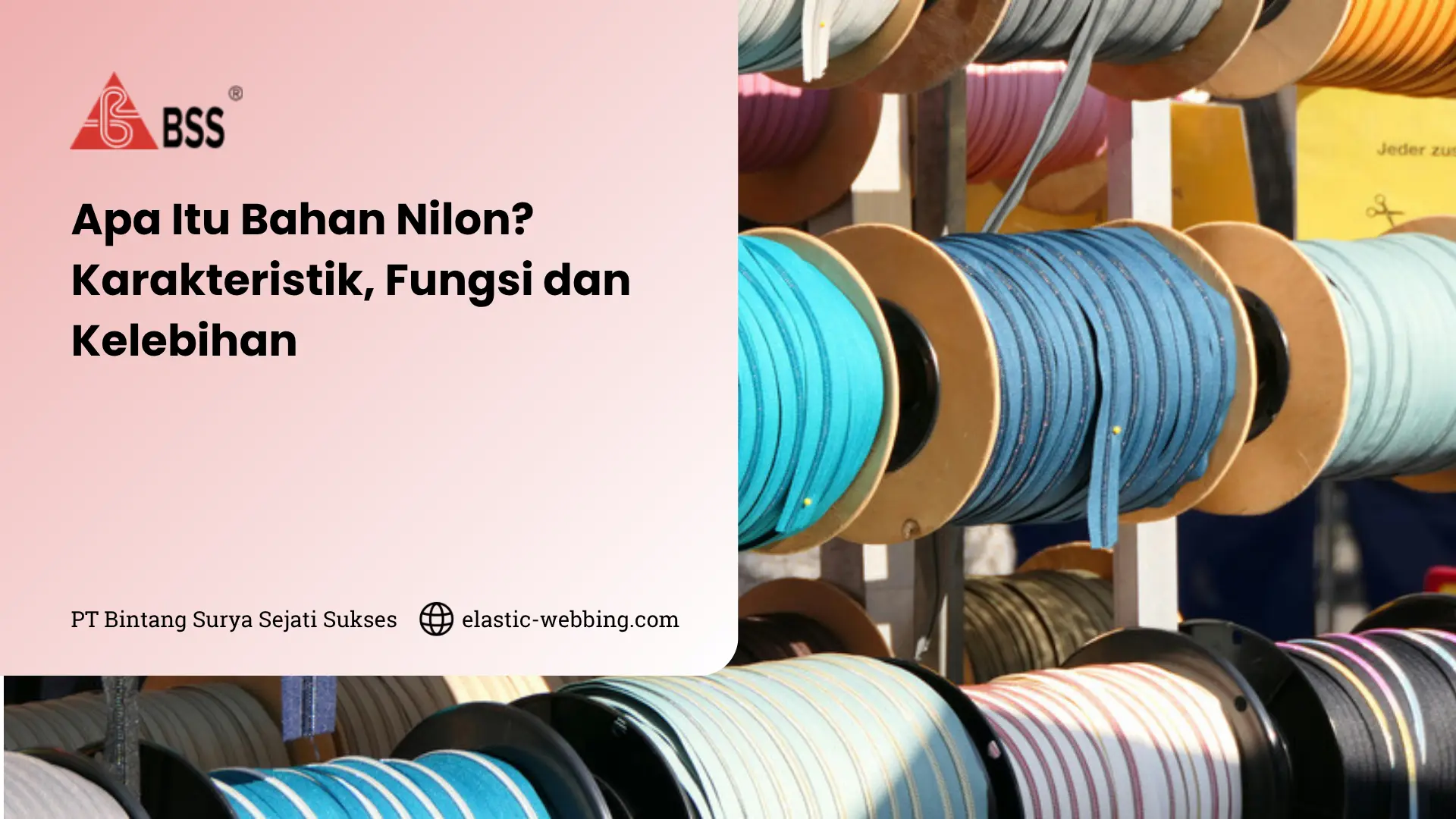


What is nylon, and why is this material so widely used in clothing, bags, and various industrial products? Despite its simple appearance, nylon possesses unique characteristics that have made it one of the world’s most popular synthetic materials.
It is lightweight yet exceptionally strong and durable, making it suitable for everyday products as well as technical applications. However, like any material, nylon has both strengths and limitations.
This article explains what nylon is, its key characteristics, common applications, as well as its advantages and disadvantages to help you better understand whether it is the right material for your needs.
What Is Nylon?
Nylon is the trade name for a group of synthetic polymers belonging to the polyamide (PA) family. It was developed in 1935 by researchers at DuPont in the United States under the leadership of Wallace Carothers.
Its invention marked a major milestone in materials science, as nylon became the world’s first fully synthetic fiber produced entirely from chemical compounds rather than natural fibers.
Initially, nylon was developed as an alternative to silk, which was expensive and limited in supply. Its first commercial product—women’s stockings—quickly gained popularity in the late 1930s.
During World War II, nylon became an essential material for manufacturing parachutes, ropes, and military nets because it offered an excellent combination of lightweight construction and high tensile strength.
Characteristics of Nylon
Nylon offers several properties that make it widely used across industries, from textiles to manufacturing.
1. Lightweight with High Tensile Strength
One of nylon’s greatest advantages is its ability to withstand significant tensile forces without breaking easily.
Despite its low density of approximately 1.13–1.15 g/cm³, nylon can support relatively heavy loads while remaining lightweight.
Pure nylon generally has a tensile strength ranging from 50–90 MPa. Its strength can be further enhanced by adding reinforcing materials such as glass fiber, making it suitable for structural components requiring exceptional mechanical performance.
2. Excellent Abrasion and Wear Resistance
Nylon provides outstanding resistance to abrasion and friction.
Its surface resists wear even after continuous use or repeated contact with other components.
Because of this property, manufacturers commonly use nylon to produce:
- Gears
- Bearings
- Bushings
- Rollers
Using nylon helps extend component lifespan while reducing wear-related failures.
3. Elastic and Flexible
Nylon stretches under pressure and returns to its original shape without permanent deformation.
Its elasticity makes it especially comfortable for textile products that require unrestricted movement.
The combination of flexibility and durability makes nylon one of the preferred materials for modern apparel.
4. Quick-Drying and Moisture Resistant
Compared to many natural fibers, nylon absorbs relatively little water.
As a result, it dries much faster after exposure to water or washing.
Nylon also naturally resists:
- Mold
- Mildew
- Insects
- Pests
These qualities make it ideal for outdoor equipment such as jackets, backpacks, tents, and other gear frequently exposed to damp environments.
5. Easy to Process for Industrial Manufacturing
Manufacturers can process nylon using numerous production methods, including:
- Fiber spinning
- Extrusion
- Injection molding
This flexibility allows nylon to be formed into both simple and complex product designs in high production volumes.
Its properties can also be customized through fillers, stabilizers, and lubricants, making nylon suitable for countless industrial applications.
Functions of Nylon
Because nylon combines strength, flexibility, and durability, it serves many purposes across different industries.
1. Textile and Fashion Industry
The textile industry is one of the largest consumers of nylon.
Its smooth texture, lightweight feel, and elasticity provide comfort while maintaining durability.
Common applications include:
- Lingerie and underwear
- Yoga pants, leggings, and tights
- Fabric blends with cotton or spandex to improve elasticity and durability
- Fashion products requiring vibrant colors, as nylon absorbs dyes exceptionally well and resists fading after repeated washing
2. Bags, Ropes, and Webbing
Nylon’s high tensile strength makes it an excellent choice for products subjected to heavy loads or frequent abrasion.
Examples include:
- Backpacks
- Suitcases
- Bag straps
- Industrial ropes
- Decorative cords
- Braided ropes
- Webbing straps used in furniture, bags, and industrial equipment
3. Automotive Industry
Automotive manufacturers use nylon to replace certain metal components, reducing vehicle weight while maintaining strength.
Nylon also offers excellent resistance to oils, fuels, and various operating temperatures.
Applications include:
- Fuel lines
- Hydraulic hoses using PA11 and PA12
- Intake manifolds
- Engine covers
- Gears
- Cooling system components
- Transmission components utilizing specialized grades such as Nylon 46 (Stanyl)
4. Safety Equipment
The combination of strength and flexibility makes nylon an essential material for safety equipment.
Applications include:
- Parachutes
- Military nets
- Load-bearing straps
- Full body harnesses
- Seat belts using nylon webbing
- Reinforcement components in safety footwear
5. Outdoor and Sports Equipment
Nylon’s quick-drying and moisture-resistant properties make it ideal for outdoor and sporting equipment.
Examples include:
- Tents
- Hiking jackets
- Sleeping bags
- Swimwear
- Climbing ropes
- Tubular webbing for rock climbing
Also Read: What Is Elastic Tape? Definition, Types, Functions & Examples
Advantages of Nylon
Its unique characteristics make nylon suitable for both consumer products and demanding industrial applications.
1. Exceptional Durability
Nylon withstands heavy loads and repeated stress without significant damage.
It also offers excellent abrasion resistance, making it suitable for products subjected to continuous use.
Manufacturers commonly use nylon for:
- Bags
- Luggage
- Ropes
- Industrial equipment
2. Lightweight and Comfortable
Although extremely durable, nylon remains relatively lightweight.
This makes products easier to carry and more comfortable to wear.
Its elasticity also allows garments to move naturally with the body before returning to their original shape.
This explains why nylon is widely used in sportswear, outdoor clothing, and performance gear.
3. Mold Resistant and Quick Drying
Nylon naturally resists:
- Mold
- Mildew
- Insects
- Pests
Its low moisture absorption enables it to dry rapidly after rain, sweat, or washing.
4. Easy to Dye and Manufacture
Nylon fibers absorb dyes efficiently, producing vibrant, consistent colors that resist fading after repeated washing.
Additionally, nylon is easy to manufacture through processes such as:
- Injection molding
- Extrusion
These efficient production methods allow manufacturers to produce a wide variety of products at competitive costs.
5. Suitable for Numerous Industrial Applications
One of nylon’s greatest strengths is its versatility.
Applications include:
- Clothing
- Bags
- Luggage
- Gears
- Bearings
- Bushings
- Fuel lines
- Parachutes
- Industrial ropes
- Climbing webbing
Its resistance to oils, lubricants, and many chemicals also makes it highly suitable for industrial environments.
Disadvantages of Nylon
Despite its many benefits, nylon also has several limitations that should be considered.
1. Limited Heat Resistance
Nylon is not intended for prolonged exposure to extremely high temperatures.
Excessive heat may reduce its strength and even cause deformation if temperatures exceed its operating limits.
As a clothing material, nylon can also retain heat, making it feel warmer during hot weather or strenuous activities.
2. Susceptible to UV Degradation
Continuous exposure to sunlight gradually degrades nylon fibers.
Over time, the material may become:
- Brittle
- Cracked
- Discolored
To maximize product lifespan, nylon products should not remain under direct sunlight for extended periods.
3. Can Generate Static Electricity
As a synthetic fiber, nylon tends to build up static electricity, particularly in dry environments or when rubbed against other materials.
This may result in:
- Minor static shocks
- Dust attraction
Although harmless in most situations, static buildup can reduce user comfort.
4. Lower Moisture Absorption
Compared to natural fibers such as cotton, nylon absorbs much less moisture.
As a result:
- Sweat remains on the fabric surface longer.
- Breathability is generally lower than natural fibers.
- Clothing may feel warmer and less comfortable during prolonged wear in hot weather.
Nylon Compared with Other Materials
Comparing nylon with other materials helps determine the best choice for different applications.
1. Nylon vs. Polyester
Although both are synthetic fibers, they differ in several important ways.
| Comparison | Nylon | Polyester |
|---|---|---|
| Strength & Elasticity | Higher tensile strength and elasticity; stretches and returns to shape easily, making it ideal for stockings, swimwear, and sportswear. | Better dimensional stability but lower elasticity than nylon. |
| Abrasion Resistance | Excellent wear resistance, making it suitable for bags, ropes, luggage, and heavy-duty equipment. | Good abrasion resistance, although generally lower than nylon. |
| Moisture Performance | Dries quickly but absorbs more atmospheric moisture, which may slightly affect mechanical properties in highly humid conditions. | Also dries quickly while absorbing less moisture, resulting in greater dimensional stability in humid environments. |
| Blended Fabrics | Frequently blended with polyester to improve strength, elasticity, and durability. | Combined with nylon to improve fabric stability while maintaining comfort. |
2. Nylon vs. Cotton
Nylon and cotton differ significantly because nylon is synthetic while cotton is a natural fiber.
| Comparison | Nylon | Cotton |
|---|---|---|
| Breathability | Denser fiber structure with lower airflow; tends to feel warmer in hot weather. | Excellent airflow and moisture absorption, making it cooler and more comfortable for daily wear. |
| Durability | Superior tensile strength and greater resistance to abrasion, mold, and pests. | Durable for everyday use but generally wears faster under heavy use. |
| Drying Speed | Quick drying due to low moisture absorption. | Absorbs more water and therefore dries more slowly. |
| Best Applications | Sportswear, outdoor gear, backpacks, and technical equipment requiring high performance. | Everyday clothing where softness and comfort are priorities. |
3. When Should You Choose Nylon?
Nylon is the ideal choice when products require a combination of strength, flexibility, and lightweight performance.
It is particularly suitable for:
- High-strength products
- High-elasticity applications
- Equipment used in humid environments
- Industrial components exposed to oils
- Cost-efficient manufacturing
- Lightweight equipment and accessories
Tips for Choosing High-Quality Nylon
Choosing nylon should involve more than simply selecting the material.
1. Select the Appropriate Nylon Grade
Different nylon grades are designed for different applications.
Recommended choices include:
- PA66 for high-temperature environments requiring greater rigidity and heat resistance.
- PA6 when flexibility and manufacturing efficiency are priorities.
- PA11 or PA12 for humid or chemical-exposed environments due to their extremely low moisture absorption.
- Nylon blended with polyester, spandex, or cotton for textile products requiring greater comfort and breathability.
- Specialized grades such as PA46 for extreme-temperature mechanical applications.
2. Evaluate Material Construction and Thickness
Material construction greatly influences strength and durability.
Important considerations include:
- Denier rating: Higher Denier values indicate thicker and stronger fabrics. For example, 1000D nylon offers outstanding abrasion resistance for backpacks and outdoor equipment.
- Glass-filled nylon: Adding 20–50% glass fiber significantly improves tensile strength and dimensional stability.
- Manufacturing precision: Proper weaving, knitting, or braiding ensures consistent product quality and performance.
3. Choose a Reliable Manufacturer or Supplier
Material quality depends not only on nylon grade but also on manufacturing standards.
Choose suppliers that offer:
- Comprehensive quality control systems
- Advanced manufacturing technology
- International certifications
- Technical support
- Extensive industry experience
Looking for High-Quality Nylon Products?
Nylon is an excellent material for a wide range of applications because it combines exceptional strength, flexibility, and durability. If you’re looking for premium nylon-based products for narrow fabrics applications, BSS is ready to become your trusted manufacturing partner.
Backed by more than 30 years of experience, in-house manufacturing, European-standard machinery, and fully customized production services, BSS delivers solutions focused on quality, precision, and consistency. Contact our team today to discuss your project requirements.
Also Read: Braided Elastic Function: Definition, Benefits, and Advantages