
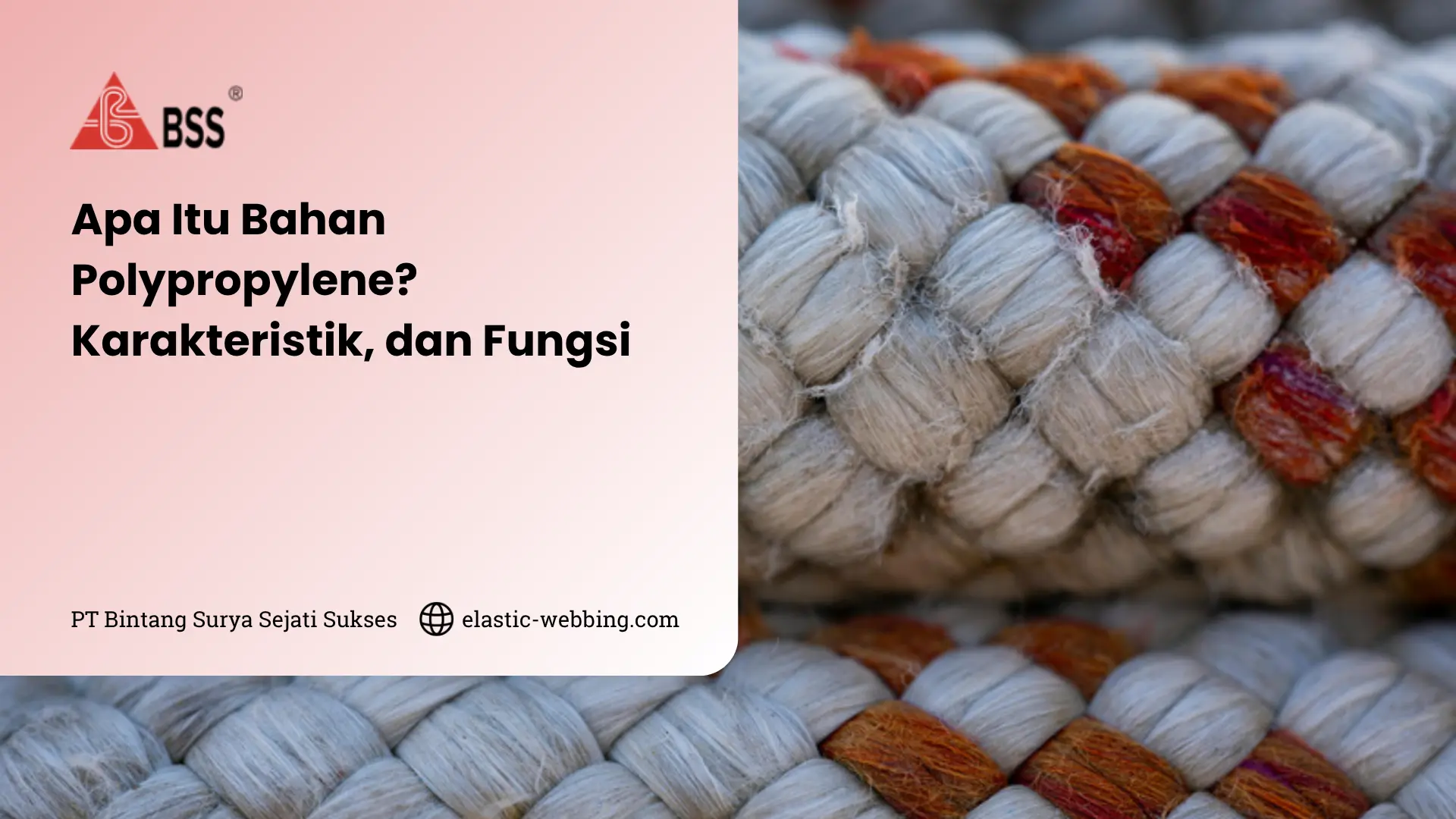


If you are looking into what polypropylene material is, you will find that this material is actually very close to everyday life. It is used in various products that we encounter on a daily basis.
Polypropylene, also known as polypropylene plastic, is lightweight, strong, water-resistant, and offers good resistance to various chemicals. These characteristics make it widely used for household products as well as industrial applications.
However, despite its wide range of uses, polypropylene has specific properties that you need to understand before choosing it as a material. So, what makes this material so popular? What are its characteristics, and what products use it?
What Is Polypropylene Material?
Polypropylene (PP) is a thermoplastic linear hydrocarbon polymer resin that is widely used as a raw material for plastic products. This material softens when exposed to high temperatures and hardens again when its temperature decreases.
This property makes PP easier to process and recycle, including through systems using recycling code number 5. Based on production volume, PP is even one of the world’s largest plastic resins after polyethylene (PE).
Giulio Natta, an Italian scientist who received the Nobel Prize in Chemistry, discovered this material in the early 1950s. The industry then began mass-producing it in 1954 through the chemical company Montecatini.
Since then, the use of PP has continued to grow because the material offers a combination of light weight, strength, flexibility, and resistance to various chemicals.
How Is Polypropylene Material Manufactured?
Manufacturers produce polypropylene through the polymerization of propene gas with the help of specific catalysts. Two commonly used production methods include:
1. Gas-Phase Process
This method carries out the polymerization reaction inside a fluidized bed reactor. The industry typically operates the reactor at temperatures of around 70–100°C and pressures of 1–20 atm.
Propene gas and hydrogen are then passed through a catalytic bed containing catalysts. This process converts propene into polypropylene in the form of a fine powder.
Afterward, manufacturers separate the powder from unreacted gas using a cyclone separator before processing it into pellets that are ready for use.
2. Spheripol Process
The Spheripol method uses a mixture of propene, ethylene, and hydrogen to produce polymers with specific characteristics. Manufacturers mix the monomers and catalyst in an inert solvent medium before introducing them into the reactor.
The reactor then carries out the polymerization process with the help of a vertical agitator. Once the reaction is complete, the mixture of polymer powder and monomers is transferred through a dip tube.
Manufacturers separate the unreacted monomers and return them to the reactor, while the polymer that has already formed can be processed for subsequent use.
Characteristics of Polypropylene Material
Every material has characteristics that determine the types of applications and working environments it is suitable for. Polypropylene offers several physical and chemical properties that make it widely used in household products, textiles, and industrial applications.
Some of the main characteristics of this material include:
- Water and moisture resistant: PP is hydrophobic, meaning it does not easily absorb water. This characteristic makes it suitable for products used in damp or wet environments.
- Flexible and resistant to cracking: The structure of the material provides a certain degree of flexibility, allowing PP to withstand repeated bending without easily breaking.
- Functions as an electrical insulator: PP can inhibit the flow of electricity, making it suitable for various components that require electrical insulation.
- BPA-free: PP generally does not contain Bisphenol-A (BPA) and can be used for various products that require contact with food or skin, subject to applicable usage standards.
- Naturally opaque appearance: PP naturally has a semi-crystalline structure that tends to appear opaque. Manufacturers can still process it to create a more transparent appearance depending on product requirements.
Also Read: What Is a Headband? Definition, Functions, Types, and Materials
Advantages and Disadvantages of Polypropylene
The characteristics of PP provide various advantages during the production process. However, this material also has limitations that need to be considered to ensure its use remains appropriate for specific requirements.
1. Advantages of Polypropylene
Various advantages make this material popular across different sectors. Some of its main benefits include:
- Lightweight, making it easy to transport and process.
- Resistant to various chemicals and not easily affected by corrosion.
- Offers relatively economical production costs.
- Can be recycled, supporting more sustainable material use.
- Provides good resistance to repeated use and certain types of impact.
- Can be used for products that require contact with food or skin, subject to applicable safety standards.
2. Disadvantages of Polypropylene
Despite its advantages, PP also has several limitations that need to be considered. Manufacturers need to take the conditions of use into account to prevent the material from experiencing premature deterioration.
Some of its disadvantages include:
- Less suitable for environments exposed to extreme high temperatures.
- Can be damaged by prolonged exposure to ultraviolet (UV) radiation without additional protection.
- Has a lower level of rigidity compared with some types of engineering plastics.
- Raw material prices can fluctuate depending on oil and natural gas market conditions.
Is Polypropylene Suitable for Textile Products?
In the textile industry, manufacturers can process PP into filament fibers and then weave or braid them into products with specific functions. Some applications include:
1. Webbing Straps and Industrial Ropes
Manufacturers use PP fibers to produce bag straps, cargo straps, safety belts, military equipment, and industrial ropes.
This material can provide good tensile strength while keeping the overall product lightweight.
2. Tapes and Narrow Fabrics
The textile industry also uses PP yarn to produce various types of tapes and narrow fabrics.
These products can be used as mattress tape, sofa webbing, woven tapes, and various industrial textile components.
3. Medical and Hygiene Textiles
Manufacturers can process PP into spunbond fabric for various medical and hygiene products.
This material can be used to produce masks, mask straps, and disposable protective equipment according to product specifications.
4. Sportswear and Outdoor Clothing
PP’s low water absorption and lightweight properties make it suitable for sportswear and outdoor activity equipment.
These characteristics help produce lightweight products suitable for physical activities. However, using PP for products that remain outdoors continuously requires special consideration.
Uses of Polypropylene in Industry
Polypropylene (PP) has characteristics that make it suitable for a wide range of industrial applications. The following are some industries that widely use polypropylene:
1. Packaging Industry
Manufacturers use PP to produce various types of packaging, such as food wrappers, beverage bottles, ready-to-eat food containers, plastic cups, and detergent and chemical containers.
Its low reactivity with various substances makes this material suitable for packaging applications.
2. Medical Equipment
The medical industry uses PP to manufacture syringes, infusion bottles, medicine containers, and sterile pharmaceutical packaging. Manufacturers also process it into spunbond fabric for various medical applications, including masks.
This material offers chemical resistance and can meet the requirements of products that require a high level of cleanliness. Therefore, PP is widely used in various disposable medical supplies.
3. Automotive Components
Automotive manufacturers use PP for various vehicle components. The material can be used to produce door panels, interior components, and vehicle protective components.
Its lightweight properties also help manufacturers reduce component weight without compromising the required material strength. These characteristics make PP one of the options used in vehicle component development.
4. Warehousing and Logistics
The warehousing and logistics sector requires materials that can withstand repeated use. PP meets this requirement, so manufacturers use it to produce box containers, plastic pallets, and various storage containers.
The material can withstand impact and is not easily affected by moisture. These properties help protect products and equipment during storage and distribution processes.
5. Furniture and Laboratory Equipment
Manufacturers also use PP to produce various household products, such as buckets, basins, storage racks, and children’s toys. Meanwhile, the laboratory industry takes advantage of its resistance to acids and bases for various technical applications.
Its uses include chemical tanks, industrial piping systems, laboratory tables, and fume cupboards or fume hoods. These characteristics make the material suitable for environments that require chemical resistance.
Polypropylene as a Material for Tape and Webbing
Manufacturers process PP filament yarn through weaving and braiding processes. These processes produce tapes and ropes with characteristics that can be adjusted according to their intended applications.
Some of the advantages of PP that support its use in tape and webbing include:
- Lightweight with good strength: PP has a density of approximately 0.90–0.91 g/cm³, making it a lightweight plastic material. Despite being lightweight, it still offers good tensile strength and resistance to repeated use.
- Low water absorption: PP fibers are hydrophobic, meaning they do not easily absorb water or moisture. This characteristic makes them suitable for various outdoor applications, cargo ropes, and products frequently exposed to damp environments.
- Resistant to various chemicals: PP offers good resistance to acids and bases. This property provides an advantage when the material is used for products that require resistance to chemical exposure.
- Can withstand high-temperature production processes: PP has a melting point of approximately 130–171°C. This characteristic helps the material maintain stability during processing under certain temperature conditions.
Manufacturers can also select different types of PP based on the characteristics they want the final product to have. Two commonly used types are Homopolymer Polypropylene (PP-H) and Copolymer Polypropylene (PP-C).
PP-H uses propylene chains as its primary component. This material is stiffer, harder, and more heat-resistant than copolymer types.
Meanwhile, PP-C combines propylene with ethylene monomers, resulting in a material that is more flexible and impact-resistant. It can also provide better performance when products are exposed to low temperatures.
Differences Between Polypropylene and Other Textile Materials
Compared with cotton and polyester, polypropylene has several characteristics that make it stand out for certain applications.
| Characteristic | Polypropylene (PP) | Cotton | Polyester |
|---|---|---|---|
| Fiber origin | Synthetic and derived from propylene polymerization | Natural and derived from cotton plant fibers | Synthetic and derived from chemical processes |
| Water absorption | Low and hydrophobic | High and easily absorbs water | Low |
| Moisture resistance | Very good because it does not easily absorb water | More likely to retain moisture | Good |
| Elasticity | Durable and able to withstand repeated bending | Relatively low | Fairly good |
| Skin comfort | Relatively firm in filament form | Soft and comfortable | Depends on the type and fiber construction |
| Static electricity | Can generate static electricity | Generally lower | Can generate static electricity |
These differences show that each material has its own advantages. Cotton can be a suitable choice when manufacturers prioritize softness and absorbency, while polyester offers different characteristics for specific textile requirements.
Unique Facts About Polypropylene
Behind its wide range of applications, polypropylene has several interesting facts that demonstrate how the material has developed and become an important part of modern industry.
1. One of the Most Widely Produced Plastic Resins
Polypropylene is one of the most widely produced plastic resins in the world. Based on production volume, the material ranks second after polyethylene (PE).
Its high production volume demonstrates the extensive industrial demand for a material that is lightweight, strong, and versatile.
2. Has Recycling Code Number 5
PP has recycling identification code number 5. As a thermoplastic material, PP softens when exposed to high temperatures and hardens again when its temperature decreases.
This property allows manufacturers to recycle the material through appropriate processes. However, recycling still requires proper collection and processing systems so that the material can be reused effectively.
3. Has a Relatively High Melting Point
PP has a melting point of approximately 130–171°C. This characteristic provides relatively good heat resistance for various applications.
Nevertheless, manufacturers still need to select the appropriate type of PP based on the intended conditions of use. Prolonged exposure to extreme temperatures can affect material performance.
Use Quality Materials for Industrial Applications with BSS!
By choosing the right material and manufacturer, you can obtain tape and webbing that meet your application requirements. PT Bintang Surya Sejati Sukses is ready to provide quality narrow fabrics solutions to support your industrial needs.
We manage various production stages in-house, from design development, yarn and tape dyeing, and sublimation printing to heat-setting and further production processes. Contact us today to discuss your requirements!
Also Read: What Is Polyester? Definition, Characteristics, Advantages, and Disadvantages