
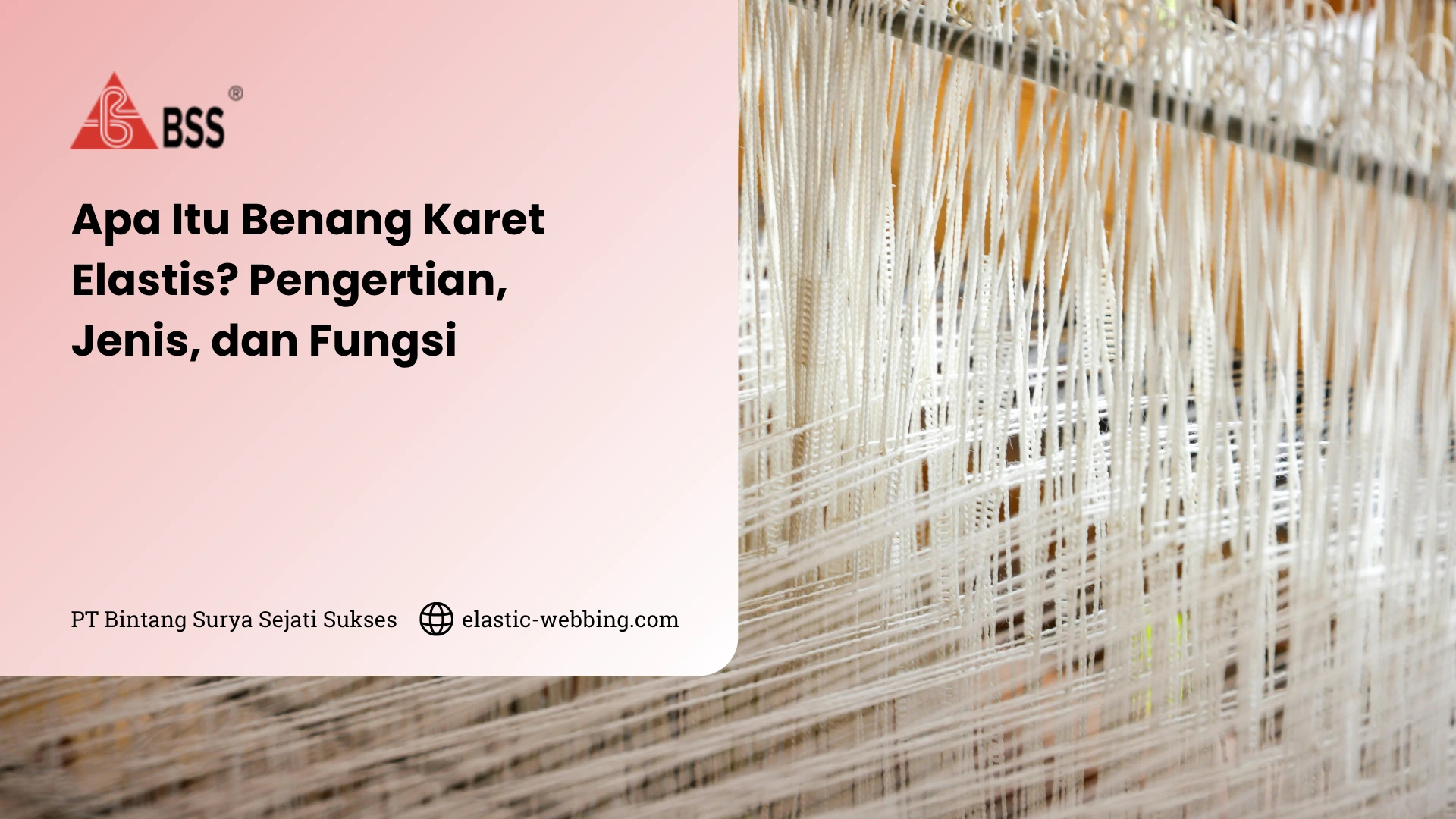


When choosing materials for products that need to be flexible and comfortable, you may wonder, what is elastic rubber thread and why is this material widely used across industries? Elastic rubber thread is an important component in textile products.
This material is available in several types based on its raw materials, construction, and application. This article discusses the definition, types, advantages, and various uses of elastic rubber thread in everyday products and industrial applications.
What Is Elastic Rubber Thread?
Elastic rubber thread (rubber thread or latex thread) is a flexible strand made from natural rubber derived from latex or synthetic rubber, such as polyurethane, neoprene, and styrene-butadiene compounds.
This material provides both stretch and recovery, allowing it to extend when pulled and return close to its original shape after the pressure is released.
The flexible molecular structure of rubber allows the material to follow movement without easily undergoing permanent deformation. Manufacturers typically use rubber thread as the core, which is then spirally wrapped with textile yarns such as nylon, polyester, or cotton.
How Is Elastic Rubber Thread Made?
Manufacturers go through several stages to transform rubber materials into threads with specific sizes and elasticity levels. Each stage requires controlled processing to produce consistent material that meets production requirements.
1. Raw Material Collection
Manufacturers collect the primary materials from appropriate sources. Natural rubber comes from latex tapped from rubber trees, while synthetic rubber uses specific chemical materials such as styrene and butadiene.
2. Processing and Mixing
The raw materials then undergo processing and mixing according to a specific formulation. Manufacturers adjust the material composition to achieve the required elasticity, strength, and durability characteristics.
3. Extrusion and Forming
The rubber compound is processed using an extrusion machine. The machine pushes the material through a precisely sized die to form rubber strands with a consistent diameter.
4. Cutting and Covering
Once the material has achieved the required form, manufacturers process the thread according to the product requirements.
In textile applications, rubber thread can be covered using covering yarn or textile yarn before being processed into elastic bands through weaving or knitting techniques.
Characteristics of Elastic Rubber Thread
In addition to its ability to stretch, rubber thread has several characteristics that support its use in various textile products. These characteristics also determine whether the material is suitable for specific production requirements.
- High elasticity and recovery: The thread can stretch when pulled and return close to its original size after the tension is released.
- Flexible: The material can follow movement and changes in product shape without easily becoming damaged.
- Resistant to certain conditions: Some types of synthetic rubber offer good resistance to temperature changes and chemical exposure.
- Durable: Rubber thread can withstand friction and repeated use, particularly when manufacturers select material according to the application’s requirements.
- Comfortable to use: Its flexible structure helps create textile products that follow the body’s shape without applying excessive pressure.
Types of Elastic Thread
Manufacturers can classify elastic thread based on the materials and construction used in textile products. Each type has different characteristics and applications.
1. Based on the Base Material
The first classification is based on the primary material used to produce the thread. Differences in material can affect elasticity, durability, and application characteristics.
- Natural rubber (latex): Provides good elasticity and recovery. This material is widely used when a product requires a high degree of stretch.
- Synthetic rubber: Manufacturers use materials such as polyurethane or neoprene to achieve more consistent characteristics and specific resistance to heat and chemicals.
2. Based on Textile Application Construction
In addition to the base material, construction also determines the characteristics of elastic thread when used in textile products. Different manufacturing techniques can produce different levels of flexibility and comfort.
- Woven elastic: Manufacturers weave rubber thread together with warp and weft yarns. This structure produces a strong and stable material that is suitable for use as a waistband in garments.
- Knitted elastic: Manufacturers knit elastic thread to create a softer and more flexible structure. This type is suitable for garments that require comfort when in direct contact with the skin.
- Jacquard elastic: Manufacturers use Jacquard weaving machines to create patterns on the material’s surface. The patterned structure can provide a more decorative appearance to textile products.
What Is the Function of Elastic Rubber Thread in Textile Products?
Rubber thread does more than simply provide stretch. In the textile industry, this material helps manufacturers create products that are flexible, comfortable, and capable of following the body’s shape during use.
- Provides stretch: The thread helps garment sections follow the user’s body shape and movements without easily losing flexibility.
- Keeps garments in position: Elastic material helps sections such as pants waistbands, underwear, bras, sportswear, and swimwear remain in the appropriate position.
- Supports product design: Manufacturers can use it to create gathers, elastic accents, and various garment shapes.
- Improves comfort: Its ability to stretch and recover helps garments follow body movements, making them feel more flexible during use.
- Supports the production process: Using elastic components can help manufacturers create flexible garment sections without always relying on additional fastening components.
Also Read: What Is Cotton Material? Characteristics, Advantages, and Disadvantages
Uses of Elastic Rubber Thread in Industry
Its elastic characteristics allow this material to be used in products that require stretch, comfort, and the ability to return to their original shape. Several sectors that use this material include:
1. Garment and Fashion Industry
The garment industry uses elastic rubber thread to produce clothing that can follow the shape of the body. This material can be used in shirts, pants, underwear, bras, swimwear, and sportswear.
Its use helps garments remain in the appropriate position as the body moves. In certain garments, elastic material also helps create a comfortable fit without making the garment feel excessively loose.
2. Footwear and Accessories Industry
Elastic rubber thread also supports the production of various footwear and accessory components. Manufacturers can use it for shoelaces, elastic sections in footwear, and fastening components that require flexibility.
The material can also be used to produce hair ties, bracelets, and necklaces. Its ability to stretch makes these products more practical to use while allowing them to return to their original shape after being pulled.
3. Medical and Healthcare Industry
The medical sector requires materials that are flexible, comfortable, and capable of following body movement. Elastic rubber thread can support the production of elastic bandages, tourniquets, and various medical protective products.
Using elastic material allows products to follow body contours without excessively restricting movement. Manufacturers still need to match material specifications with the safety standards and requirements of each medical product.
4. Automotive Industry
The automotive industry uses rubber-based materials in various components that require flexibility and durability. One application can be found in vehicle tires, which use reinforcement from steel or textile fibers.
Rubber materials can also be used as fastening straps for certain components inside vehicles. Material selection needs to consider operating conditions, load, friction, temperature, and environmental factors to ensure that components perform according to requirements.
5. Household Products and Toys
The use of elastic materials is not limited to large-scale industries. Various household products also use them as cable ties, clothesline components, and other flexible components.
Toy manufacturers can also use rubber materials to produce balls and various products that require flexibility. Elastic characteristics help products return to a certain shape after receiving pressure or tension.
Difference Between Elastic Rubber Thread and Elastic Webbing
Elastic rubber thread and elastic webbing are often used within the same production process, but they are not the same material. Differences in shape, structure, and manufacturing processes determine their respective functions in the final product.
1. Elastic Rubber Thread
Elastic rubber thread or rubber thread is a strand-shaped material made from natural latex or synthetic rubber. It serves as a source of elasticity and can function as the core of elastic textile products.
In certain processes, manufacturers cover the thread using textile yarn or covering yarn. This process helps protect the rubber core while creating a surface that is more suitable for textile applications.
2. Elastic Webbing
Elastic webbing or narrow fabrics is a tape-shaped product with a specific width and construction. Manufacturers can produce it through woven, knitted, or braided processes depending on the desired product characteristics.
Within its construction, rubber thread can function as the core combined with textile yarns such as nylon or polyester. The final product is an elastic tape that can be used in garments, accessories, medical equipment, and various industrial applications.
How to Choose Elastic Rubber Thread for Production Needs?
Choosing the right material can affect the performance, comfort, and durability of the final product. Therefore, you need to consider several specifications before selecting material for production.
1. Choose the Right Base Material
Natural latex provides good elasticity and the ability to return to its original shape, or recovery. This material can be an option for products that require consistent flexibility.
Meanwhile, synthetic rubber such as polyurethane or neoprene has different characteristics. These materials can offer production consistency and resistance to certain conditions, so the choice should be adjusted according to the product’s operating environment.
2. Determine the Diameter and Thickness
Thread diameter affects the material’s strength and stretch characteristics. Threads with different sizes can produce different levels of elasticity and tensile strength.
Therefore, determine the appropriate size based on the final product requirements. Also consider the required percentage of elongation so the material can deliver the expected performance without reducing user comfort.
3. Pay Attention to Covering Yarn Quality
The covering yarn protects the rubber core while also affecting the appearance of the product surface. An appropriate covering construction can help prevent the rubber core from becoming visible on the surface or experiencing show-through.
In addition to appearance, covering quality can affect the texture and comfort of the material. Choose a construction that matches the product type and production process being used.
4. Evaluate Tension Consistency
Tension consistency determines the uniformity of elasticity throughout the material. Uneven tension can result in different characteristics between sections of a product, particularly when the material is processed in large quantities.
Manufacturers need to ensure that the production process uses machinery with an appropriate level of precision. Consistency from one batch to another is also important to maintain stable product quality.
5. Choose a Manufacturer with Quality Control
A manufacturer that implements in-house quality control can help ensure that materials undergo inspection before being used in the production process. Inspections may cover dimensions, elasticity, strength, and material consistency.
In addition to product quality, consider the manufacturer’s ability to meet required specifications and order quantities. Technical support can also help you determine the material that best matches your production requirements.
Use High-Quality Elastic Materials for Industrial Needs with BSS
The right material can help maintain the comfort, flexibility, and consistency of final products across various industries. PT Bintang Surya Sejati Sukses (BSS) provides narrow fabrics and elastic webbing solutions for a wide range of industrial applications.
With production experience and integrated manufacturing processes, BSS can help provide elastic materials according to specific requirements and production needs. Consult your requirements with BSS to find the right product based on your production specifications.
Also Read: What Is Nylon? Characteristics, Uses, Advantages, and Disadvantages