


What is Kevlar, and why is this material known for its exceptional strength despite its lightweight nature? You may have encountered it in protective equipment, vehicles, and various industrial products.
In this article, you will learn about the definition of Kevlar, the characteristics that distinguish it from other materials, and the various applications that take advantage of its strength and durability in everyday life and professional applications.
What Is Kevlar?
Kevlar is a synthetic fiber from the aromatic polyamide family known as para-aramid fiber. Chemically, the material is known as poly-para-phenylene terephthalamide, or PPTA.
The material began commercial production in the 1970s. Since then, its use has expanded into various fields that require strong yet lightweight materials. Its tightly packed molecular structure also contributes to its high strength and durability.
How Is Kevlar Made?
The production of Kevlar involves several chemical and mechanical processes to create fibers with a strong molecular structure. Manufacturers do not produce the fibers directly from the initial chemicals. Instead, they first form a polymer and then process it into fibers.
1. Polymer Synthesis
The initial stage involves forming the PPTA polymer through a chemical reaction between terephthaloyl chloride (TCl) and p-phenylene diamine (PPD). This process produces long polymer chains that serve as the foundation for Kevlar fibers.
Manufacturers use specific solvents during the synthesis process to allow the reaction to proceed properly. The result is a polymer with a molecular structure that provides the characteristic properties of para-aramid fibers.
2. Polymer Dissolution
The PPTA polymer is then dissolved in concentrated sulfuric acid to produce a solution with a specific concentration. This solution has a high viscosity and therefore requires specialized processing before it can be converted into fibers.
At this stage, manufacturers need to carefully control the concentration and condition of the solution. This control helps produce fibers with a consistent structure during the subsequent stages.
3. Fiber Spinning
Manufacturers then introduce the polymer solution into a dry-jet wet-spinning process. The solution passes through small openings in a spinneret, through an air gap, and then into a bath containing cold water.
This process transforms the polymer solution into thin fibers. The fibers are then drawn and processed to control the arrangement of the molecular chains within them.
4. Molecular Orientation
Drawing the fibers causes the molecular chains of Kevlar to become more aligned. This arrangement creates a dense structure and increases the strength of the fibers.
Hydrogen bonds between the molecular chains also help maintain this structure. The combination of molecular orientation and strong bonding gives Kevlar its high tensile strength while keeping its weight relatively low.
Characteristics of Kevlar
Kevlar has several characteristics that distinguish it from many other synthetic fibers. These properties include mechanical strength, heat resistance, and the ability to withstand certain impacts.
- High tensile strength: Kevlar has very high tensile strength, allowing it to withstand significant loads without easily breaking.
- Lightweight: Despite its strength, Kevlar has relatively low mass. This characteristic makes it suitable for products that require protection without adding excessive weight.
- Heat and flame resistant: Kevlar has flame-resistant properties, meaning it does not easily ignite. It also does not melt and drip like some synthetic fibers when exposed to high temperatures.
- Cut and puncture resistant: Its strong fiber structure can help withstand energy from sharp objects and certain impacts.
- Chemical resistance: Kevlar has resistance to certain organic solvents and alkaline solutions.
- Flexible: Manufacturers can weave Kevlar fibers into sheets or fabrics for various protective applications.
- Sensitive to ultraviolet radiation: Long-term exposure to UV radiation can reduce fiber performance, so outdoor applications generally require additional protection.
Kevlar is also available in several types with different characteristics. Some types are designed to provide high modulus, while others prioritize flexibility or impact resistance.
Also Read: What Is Rubber Material? Types, Characteristics, and Uses
Advantages and Disadvantages of Kevlar
Every material has advantages and limitations, including Kevlar. Understanding both helps users determine applications that are suitable for the material’s characteristics.
Advantages of Kevlar
Kevlar offers a combination of strength and low weight that is difficult to achieve with many other materials. These characteristics make it widely used when products require a high level of protection without significantly increasing mass.
- High strength: Can withstand tensile forces and help reinforce various products.
- Lightweight: Provides protection or reinforcement without adding excessive weight.
- Heat resistant: Has flame-resistant properties and can be used in applications requiring heat resistance.
- Resistant to certain impacts: Its fiber structure can absorb and distribute impact energy.
- Easy to combine: Manufacturers can combine it with resin, rubber, or other materials to produce composites.
Disadvantages of Kevlar
Despite its various advantages, Kevlar also has several limitations that need to be considered. Environmental factors and usage conditions can affect the material’s durability.
- Sensitive to UV radiation: Long-term exposure to sunlight can reduce fiber strength.
- Absorbs moisture: Kevlar can absorb water from the surrounding environment, so operating conditions need to be considered.
- Sensitive to strong acids: Certain chemicals, particularly highly concentrated strong acids, can damage the fibers.
- Relatively high cost: Its production process and specialized characteristics can make Kevlar-based products more expensive than some alternative materials.
- Impact-related damage: In protective equipment, damage may not always be visible from the outside after a major impact, so products need to be inspected and used according to the manufacturer’s guidelines.
What Are the Uses of Kevlar?
Manufacturers use Kevlar as a primary material, protective layer, or reinforcement in various products. Some of its applications include:
1. Defense and Personal Protection
The protective equipment industry uses Kevlar to manufacture various safety products. The fiber can help absorb impact energy and provide protection against cuts and punctures in certain applications.
Some products include:
- Ballistic vests or body armor.
- Protective helmets.
- Cut-resistant gloves.
- Protective clothing for industrial applications.
- Clothing and equipment requiring heat resistance.
2. Automotive and Transportation
The automotive industry uses Kevlar as a reinforcement material because of its lightweight nature and high strength. Manufacturers can use it in components that require durability while reducing weight.
Applications include tire reinforcement, vehicle components, friction materials, and various other transportation components. The aviation industry also uses aramid-based materials for certain structural and reinforcement applications.
3. Sports Equipment and Consumer Products
Kevlar’s lightweight and strong characteristics make it useful for various sports products. Manufacturers can incorporate the fiber into product structures or layers to improve durability.
Applications include skis, snowboards, bicycle tires, rackets, and other sports equipment. Some consumer products also use Kevlar as a reinforcing or protective material.
4. Industrial and Technology Applications
The use of Kevlar is not limited to protective equipment. Industries also use it for products that require high tensile strength and low weight.
Examples include ropes, fiber optic cables, conveyor belts, industrial hoses, and reinforcement materials for various composite structures. These characteristics allow Kevlar to remain relevant for industrial applications that require a combination of strength, durability, and weight efficiency.
Kevlar in the Textile Industry
The textile industry uses Kevlar to produce materials that require high levels of strength and protection. The processing method transforms synthetic polymer chains into fiber filaments, which are then spun into yarn.
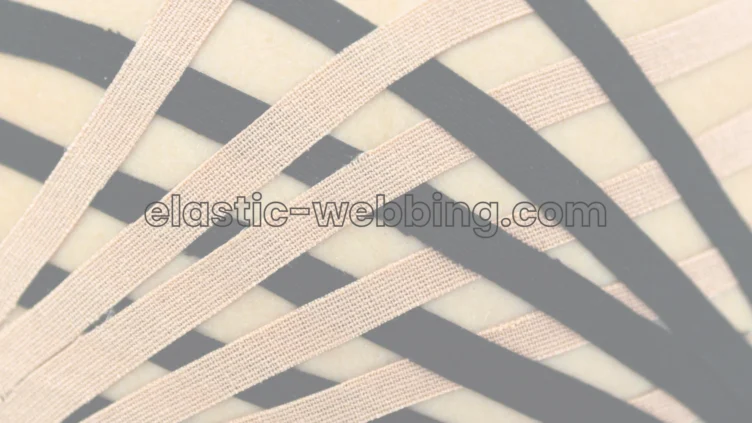
These yarns can be woven or knitted into protective fabrics or narrow fabrics. Their lightweight characteristics allow manufacturers to use them for workwear and protective equipment.
Manufacturers can also combine or blend Kevlar with other materials, such as rubber or resin. These combinations can improve resistance to abrasion, punctures, heat, and mechanical impacts, making them suitable for various industrial applications.
Differences Between Kevlar and Other Fiber Materials
Each fiber material has different characteristics, so its application needs to be matched with the requirements of the final product. Kevlar’s combination of strength and lightweight characteristics distinguishes it from several other materials.
Here are some of the differences:
- Kevlar vs. steel: Kevlar offers a high strength-to-weight ratio. At the same weight, its tensile strength can be several times that of steel, allowing manufacturers to achieve strong protection with a lighter material.
- Kevlar vs. nylon: Kevlar has higher tensile strength than standard nylon and can maintain its performance at higher temperatures.
- Kevlar vs. asbestos: Kevlar is used as an alternative material for certain applications that previously used asbestos, including friction components such as brake pads.
- Kevlar vs. conventional textile fibers: The structure of Kevlar fibers allows the material to effectively withstand and distribute impact energy. This characteristic makes it suitable for products requiring resistance to cuts, punctures, and impacts.
What Products Use Kevlar?
The characteristics of Kevlar have led manufacturers to use it in a variety of products, including:
- Personal Protective Equipment and Military Equipment: The material helps provide protection while keeping equipment relatively lightweight.
- Automotive and Transportation: In the automotive and transportation sectors, Kevlar can serve as a reinforcing material in aircraft tires, high-performance vehicle tires, and various vehicle components.
- Industrial Textiles and Technical Components: The strength of the fibers helps these products withstand mechanical loads during use.
- Sports and Consumer Products: Its characteristics also make Kevlar suitable for various sports equipment and consumer products.
Unique Facts About Kevlar
Kevlar has several interesting facts related to its discovery, characteristics, and applications. The following information provides a broader understanding of this material.
1. Discovered by Stephanie Kwolek
Stephanie Kwolek discovered Kevlar in 1965 while conducting research on polymers for industrial applications.
The resulting polymer solution looked different from solutions normally used in spinning processes, but further research showed that the material had significant strength potential.
2. Highly Heat Resistant
Kevlar has high heat resistance and does not easily melt like some other synthetic fibers.
This characteristic has led manufacturers to use it in protective clothing and various applications exposed to heat.
3. Can Be Reused
Kevlar materials from products that are no longer in use can undergo reprocessing for certain applications.
This process allows used materials to be incorporated into other products, helping reduce material waste.
Explore Textile Materials for Industrial Applications with BSS
Choosing textile materials still requires careful consideration of the required technical specifications. PT Bintang Surya Sejati Sukses (BSS) provides narrow fabrics and elastic webbing solutions for industrial applications.
With experience in textile material manufacturing, BSS can help provide products according to your specifications and application requirements. Explore the available textile material options and consult your industrial requirements with BSS to find a suitable solution.
Also Read: What Is Polypropylene Material? Characteristics and Functions