


What is elastic rubber cord and why is this component so important across various industries? You may often find it in clothing, masks, and furniture, but rarely realize its crucial role.
Elastic rubber cord is a solution that can stretch multiple times its length and return to its original shape without losing strength. Through advancements in textile technology, manufacturers now offer various types of elastic rubber cords according to their specific functions.
In Indonesia, BSS or PT Bintang Surya Sejati Sukses also plays a major role in delivering high-quality elastic products for both national and global markets. This article will comprehensively discuss its functions, types, and applications.
What Is Elastic Rubber Cord?
Elastic rubber cord is a type of cord or narrow fabric tape made using natural rubber (latex) or synthetic materials such as polyurethane (PU) with high elasticity.
This elastic material has several key characteristics that distinguish it from other types of cords.
-
Capable of stretching up to an average of 200% of its original length. After being pulled, the material returns to its original shape stably.
-
This cord can withstand repeated use pressure, temperature changes, and various environmental conditions without easily being damaged.
-
Elastic rubber cord usually has a rubber core combined with textile fibers such as polyester, nylon, or cotton.
Elastic rubber cord has mechanical properties that are far more flexible than conventional cords. Regular cords are generally static and not designed to stretch significantly. In contrast, elastic cords provide freedom of movement as well as size adjustability for the objects they secure.
Elastic Rubber Cord Materials for Various Industries
The core of this elastic cord is generally made from natural rubber (latex) or synthetic materials such as polyurethane (PU), which provide the basic elasticity.
This core material allows the cord to stretch significantly and return to its original shape. The rubber content in a product, for example 42%, greatly determines the level of tensile strength produced.
The rubber core is usually coated or wrapped with textile fibers such as polyester, nylon, or cotton. This layer functions to protect the rubber core from damage due to friction, environmental exposure, and heat.
The final structure of elastic cord is determined through three main methods:
-
braided (plaited), which has horizontal ribs,
-
knitted, which feels softer,
-
woven, which is known to be the strongest and most stable.
Various industrial sectors utilize elastic rubber cords because this material combines flexibility, strength, and production efficiency in a single component.
-
The fashion industry uses elastic materials for underwear, masks, and waistbands.
-
The automotive and logistics industries utilize woven elastic types for heavy applications such as car covers and cargo tie-down straps. This material has webbing-like strength while still offering elastic flexibility.
-
Elastic cords help distribute pressure evenly, provide greater freedom of movement, and enable adjustable-size product designs, such as children’s clothing that adapts to the wearer’s growth.
Components & Structure of Elastic Rubber Webbing
The key component of elastic cord lies in its rubber core. Manufacturers typically use natural rubber (latex) or synthetic materials such as polyurethane (PU) as the primary elasticity source.
After forming the elastic core, manufacturers coat it with protective textile fibers such as polyester, nylon, or cotton. This layer maintains structural stability while protecting the rubber core from friction, high temperatures, and extreme environmental exposure.
Certain material combinations produce different characteristics. A cotton and rubber blend, for example, shows better resistance to heat and chlorine exposure compared to polyester-based materials alone.
Construction method is an important factor determining the strength and comfort of elastic cords. There are two commonly used methods:
Woven Construction: The woven structure produces the strongest and most stable elastic cord. This material does not narrow when stretched and has non-roll characteristics, so it does not easily twist or curl.
Knitted Construction: Knitted construction offers a softer and more flexible texture. The knitted structure maintains the cord width when stretched and is safe to sew directly onto fabric without damaging its elasticity.
In addition, several technical aspects directly determine the elastic capability of webbing cords.
-
Braided types tend to narrow when pulled, while woven and knitted constructions maintain width stability.
-
Synthetic materials such as PU in clear elastic allow extreme stretching up to three times the original length.
-
Exposure to chlorine, seawater, and excessive heat can accelerate degradation of textile fibers—especially polyester—thereby reducing elasticity and material lifespan.
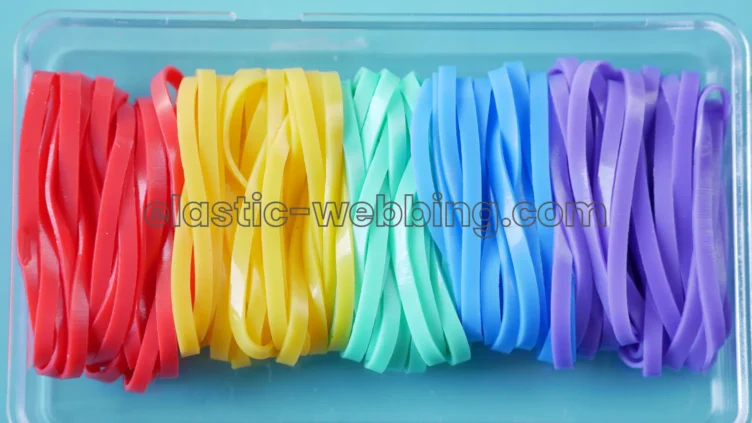
The function of elastic rubber straps varies depending on their use in each industry.
Functions of Elastic Rubber Cord in Various Applications
The characteristics of this cord are widely used across many sectors. Below is an explanation of elastic rubber cord functions based on usage types.
1. Binding & Securing Function
Elastic rubber cord functions to bind, secure, and hold objects steadily without reducing flexibility.
For heavy-duty needs, woven elastic has a strong woven structure, making it suitable for cargo strapping and car covers. This material keeps objects securely in place even under pressure or movement.
In applications that come into direct contact with the body, silicone-backed elastic provides a silicone layer on the back so it does not easily slip on the skin.
2. Flexibility Function in Fashion Products
The fashion industry uses elasticity to improve comfort while enriching product design.
Knit flat elastic is often placed at the waistband to create a fabric gathering effect without narrowing when stretched. Its soft texture maintains wearer comfort throughout activities.
In children’s clothing, buttonhole elastic allows garment size adjustment following body growth through an internal button system. This solution extends garment lifespan without major modification.
3. Damping and Tension Adjustment Function
Elastic material helps maintain tension balance while protecting product structures from excessive stress.
Stretch drawcord or elastic drawstring allows users to manually adjust tightness in hoodies, pajamas, and sportswear. This system provides direct control over wearing comfort.
In addition, elastic thread placed in the sewing machine bobbin creates an elastic shirring effect so the fabric can naturally follow body shape.
4. Function in Industrial & Medical Products
Elastic rubber cord also plays an important role in technical and healthcare applications that require high performance standards.
In the medical sector, elastic material is used in face masks so they fit snugly without causing excessive pressure on the head. Medical knitted elastic is even specially designed to meet professional healthcare equipment needs.
In industrial and automotive fields, elastic rubber is used in vehicle covers, heavy sports equipment, and components that follow MIL-SPEC military standards. This material maintains strength while remaining flexible under extreme conditions.
Types of Elastic Rubber Cord Based on Material
Below is an explanation of the various types of elastic rubber cords based on their constituent materials:
1. Polyester Elastic Rubber Cord
Polyester is the most common material in elastic cord production because it offers a balance between strength and durability. Manufacturers usually combine polyester with rubber as the elastic core.
Main characteristics:
-
High resistance to pulling and repeated use.
-
Very strong, especially in woven construction.
-
Suitable for heavy applications such as car covers and strapping.
2. Nylon Elastic Rubber Cord
Nylon is a popular alternative in narrow fabrics and elastic webbing production because it offers excellent mechanical strength.
Main characteristics:
-
High tensile strength.
-
Resistant to abrasion.
-
Provides a smoother surface than polyester.
3. Polypropylene (PP) Elastic Rubber Cord
Polypropylene or PP is known as a lightweight synthetic fiber often formed into braided cords or elastic webbing.
Main characteristics:
-
Lightweight yet functional.
-
Low water absorption.
-
Suitable for practical daily use.
4. Latex / Rubber Elastic Cord
Natural latex or rubber acts as the elastic core that produces the main stretch capability of elastic rubber cord.
Main characteristics:
-
Allows stretching up to around 200% of the original length.
-
Returns to its original shape after being pulled.
-
Provides stable elasticity for long-term use.
5. Spandex / Lycra Elastic Cord
Spandex or Lycra is known as a synthetic elastic fiber based on polyurethane (PU) that offers very high flexibility. In the sewing industry, this material is also known through products such as Clear Elastic.
Main characteristics:
-
Extreme stretch up to around 300% or more.
-
Transparent and highly flexible.
-
More resistant to chlorine than polyester.
Types of Elastic Rubber Cord Based on Construction
There are also various elastic rubber cord types categorized by the most commonly used constructions:
1. Elastic Braided
Elastic braided is made through a plaiting or braiding technique that produces a distinctive pattern of parallel horizontal ribs along its surface. This structure creates strong grip so the material does not easily shift during use.
This type has a unique mechanical property—it narrows when stretched. Because of this characteristic, manufacturers usually install it inside fabric casings, such as sleeve ends, necklines, and masks.
2. Elastic Knitted
Manufacturers produce elastic knitted using a knitting technique that joins fibers flexibly. This process produces a softer, lighter texture that is comfortable against fabric and skin.
The main advantage of the knitted type lies in its ability to maintain its original width when stretched. The material does not narrow, making it more stable during use.
3. Elastic Woven
Elastic woven is the strongest and most robust construction type. The tight weaving technique makes the material structure thicker and highly resistant to pressure and repeated pulling.
When stretched, this elastic remains stable and does not narrow. This stability makes it known as non-roll elastic because it does not easily twist or curl during use.
4. Fold Over Elastic
Fold over elastic has a distinctive crease line in the center that serves as a folding guide. This design allows users to quickly and neatly fold the elastic into two symmetrical parts.
Its main function is as an edge-binding tape to cover raw elastic fabric edges. This technique not only strengthens the stitching structure but also improves the product’s aesthetic appearance.
Advantages and Limitations of Elastic Rubber Cord
Elastic rubber cord is known for its excellent stretch capability. This material has strong resistance to repeated use and environmental changes.
Woven elastic types can even support heavy applications such as vehicle covers or industrial securing systems.
Despite many advantages, some limitations must be considered. Braided elastic can lose elasticity if sewn directly because needle punctures weaken its fiber structure.
Elastic rubber cord selection should be adjusted to production techniques and usage needs. If the sewing process is done directly on the elastic, choose knitted or woven types because both remain stable when pierced by a needle.
Finally, match the cord shape to its technical function. Round cords are suitable for slim applications such as shoelaces, while flat cords provide more even pressure distribution for needs such as waistbands or load restraint systems.
Need High-Quality Elastic Rubber Cord? Trust BSS
Choosing high-quality elastic rubber cord means ensuring the product has stable elasticity. PT Bintang Surya Sejati Sukses (BSS), the largest narrow fabrics manufacturer in Indonesia since 1987, presents an integrated manufacturing system with European-standard technology.
We provide various elastic solutions such as jacquard elastics, woven, knitted, and braided cords that can be customized to the technical specifications of the fashion, automotive, medical, and furniture industries.
If you need elastic materials that are strong, precise, and customizable according to your production needs, you can start consulting with the BSS team to find the most professional and efficient solution.
Read Too: Understanding Rock Climbing Webbing: Types and Functions