
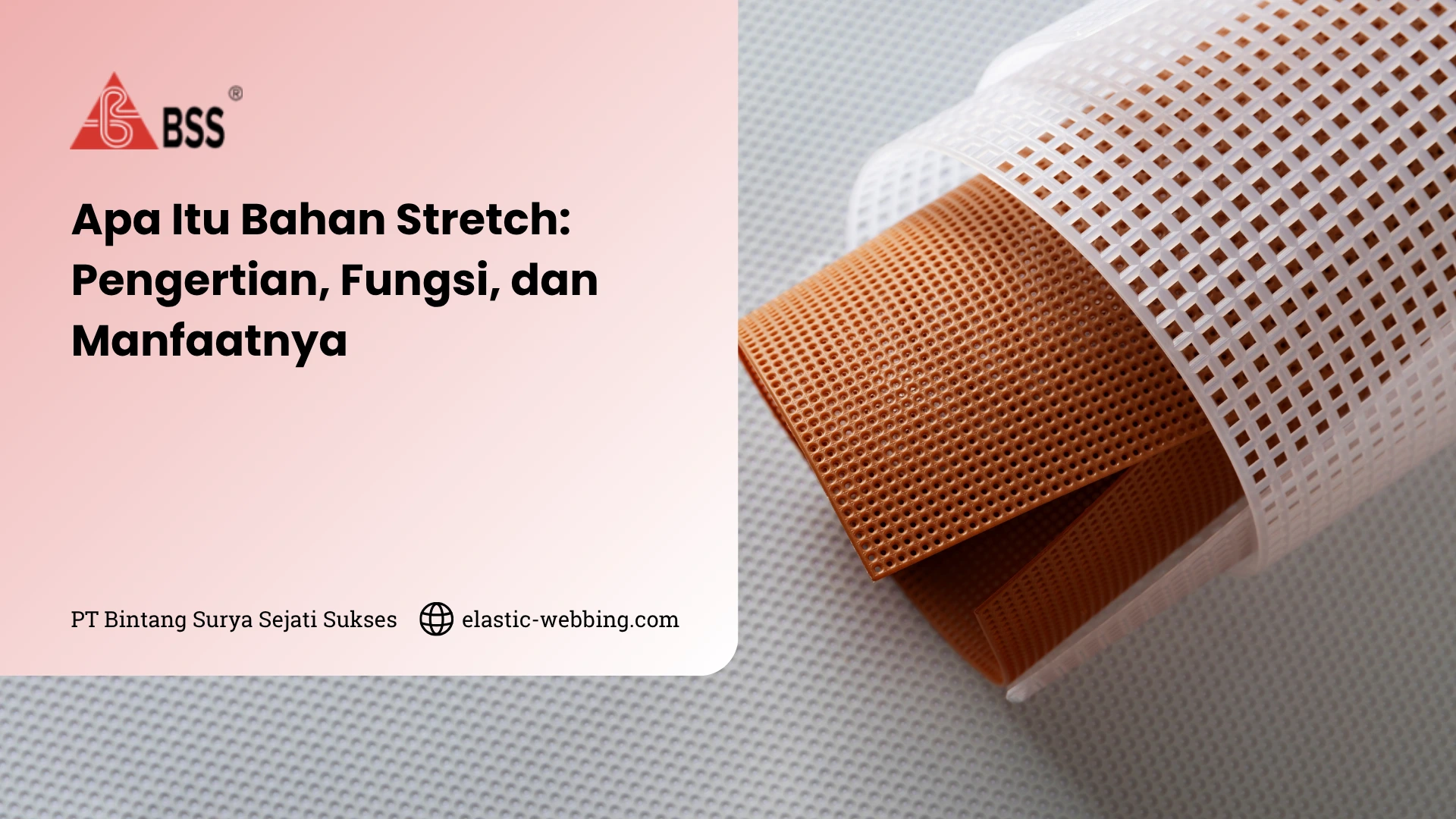


Stretch fabric is a textile innovation that changes the way you experience comfort in clothing. This material not only offers excellent flexibility but is also able to follow every body movement perfectly.
The demand for clothing that is both comfortable and stylish continues to grow, and this is where stretch fabric plays an important role. Behind its comfort lies elastic fiber technology such as spandex, combined with various other materials to create optimal performance.
Not only in the fashion industry, this material is also used in sportswear and medical applications. Companies like BSS also play a role in providing high-quality elastic solutions that support various sectors of the global textile industry.
What Is Stretch Fabric?
Stretch fabric is a type of textile material that can stretch (expand) and return to its original shape effectively.
Manufacturers create this material by combining elastic yarns known as corespun (elastic core wrapped with other fibers) with non-elastic yarns such as cotton, wool, silk, polyester, or nylon.
Stretch fabric and non-stretch fabric have significant differences, especially in terms of composition and performance. Stretch fabric uses a blend of fibers like cotton with added elastane or spandex, while non-stretch fabric usually consists of natural fibers without elastic elements.
In terms of flexibility, stretch fabric supports active movement more freely. In contrast, non-stretch fabric tends to be more rigid and restrict movement, especially in fitted clothing.
Stretch Fabric Materials
Stretch fabric is designed to stretch and return to its original form very well. It is engineered to provide maximum flexibility, allowing it to follow body movements naturally.
Stretch fabric gains its elasticity from a combination of special fibers designed to provide high flexibility. Textile manufacturers typically mix elastic fibers in certain proportions to maintain both comfort and functionality.
Components:
-
Elastic Percentage
Manufacturers usually use around 2%–20% elastic fibers in a fabric. For example, stretch denim often consists of 98% cotton and 2% elastic fibers. -
Fiber Types
The main elastic fiber is elastane, also known as spandex or by the trademark Lycra. This fiber can stretch up to 5–8 times its original size. -
Material Combination
Manufacturers combine elastic fibers with materials such as cotton, polyester, nylon, wool, or silk to create variations like cotton stretch and power stretch.
Stretch fabric offers various advantages compared to non-elastic fabrics. These advantages not only improve comfort but also enhance the aesthetic value of clothing.
First, it provides high flexibility, allowing the body to move freely without restriction. Second, it feels lightweight and conforms to the body, making it comfortable for all-day wear. Third, it has excellent recovery ability, meaning it can return to its original shape after being stretched.
Additionally, stretch fabric is generally more wrinkle-resistant and easier to maintain than regular fabrics. It also offers a more stylish appearance as it adapts well to different body shapes.
Read Too: Braided Elastic Function: Definition, Benefits, and Advantages
Functions of Stretch Fabric in Various Products
Stretch fabric provides innovative solutions in the textile industry through its ability to stretch up to 5–8 times its original size and return to its original form. Below are its main functions in everyday use:
1. Providing Flexibility in Clothing
Stretch fabric allows clothing to offer high flexibility without sacrificing comfort. It supports various activities, including intense movements such as sitting, bending, or squatting.
Garments like shirts, skirts, and jeans feel more comfortable because elastic fibers help the fabric follow body movements without stiffness.
2. Enhancing User Comfort
Stretch fabric provides optimal comfort with a lightweight texture and minimal wrinkling. It is often referred to as a “second skin” because it naturally follows body movements.
In cotton stretch, the material feels softer, cooler, and absorbs sweat well, making it suitable for daily wear such as T-shirts, house dresses, or long dresses.
3. Adapting to Body Shape
Stretch fabric can adapt to body shape effectively, creating a more proportional appearance. Designers often use this characteristic to create garments like bodycon dresses or skinny jeans that highlight body contours.
Its strong recovery ability ensures the fabric returns to its original shape after use, preventing permanent stretching.
4. Supporting Performance in Sportswear
Stretch fabric plays a crucial role in enhancing sportswear performance. Around 75% of modern sportswear uses this material due to its ability to support free movement.
The 4-way stretch type allows fabric to stretch in all directions, making it ideal for activities such as yoga, cycling, or intense training. Additionally, power stretch provides compression that supports circulation and muscle recovery.
Benefits of Stretch Fabric for Industry and Users
The industry utilizes these advantages to create products that are not only functional but also meet modern lifestyle needs. Here are the main benefits:
-
More Comfortable for Daily Activities
Stretch fabric offers optimal comfort as it follows body movements like a second skin, allowing greater freedom of movement. -
Resistant to Tearing When Stretched
Despite being elastic, this material has high durability and is highly tear-resistant, making it less likely to tear even under tension. -
Suitable for Various Textile Products
Its flexibility makes it highly adaptable for different applications, from fashion items like dresses and jeans to formal wear. -
Provides a More Fit and Flexible Look
Aesthetically, stretch fabric creates a modern and neat appearance by following body contours, resulting in a more stylish and proportional silhouette.
Common Types of Stretch Fabric
Stretch fabric comes in various types depending on usage and fiber characteristics. Understanding each type helps you choose the most suitable material.
1. Stretch Cotton
Stretch cotton combines natural cotton fibers with elastane or lycra to create a comfortable and flexible fabric.
Manufacturers typically use a composition of 95% cotton and 5% elastane. The fabric feels cool, soft, and absorbs sweat well.
It is widely used for everyday clothing such as chinos, T-shirts, house dresses, and long dresses. However, it takes longer to dry and requires proper care to avoid permanent stretching.
2. Polyester Stretch
Polyester stretch uses polyester fibers combined with elastane to improve elasticity.
Usually, about 5% elastane is added, but in types like Power Stretch, it can reach 20% for compression effects.
This fabric is often 2-way stretch, meaning it stretches in one direction. It is commonly used for shirts, skirts, and medical products like compression stockings.
3. Spandex / Elastane
Spandex or elastane acts as the core fiber that provides elasticity, rather than being used alone.
It can stretch 5–8 times its original size and quickly return to its original form.
Manufacturers typically add only 2%–20% to maintain comfort. Its main role is providing recovery, ensuring the fabric returns to its original shape.
4. Nylon Stretch
Nylon stretch combines strong nylon fibers with elastane, often around 15%.
It is usually designed as 4-way stretch, allowing it to stretch in all directions.
Its durability, tear resistance, and quick-drying properties make it ideal for sportswear like leggings, yoga pants, and swimwear.
Applications of Stretch Fabric in Industry
Stretch fabric offers high flexibility and comfort, making it widely used across industries:
-
Fashion and Apparel
Used to create clothing that follows body shape without sacrificing comfort. -
Sportswear
Essential for high-intensity activities due to its flexibility and support. -
Medical and Healthcare Products
Used in compression garments like stockings to improve blood circulation. -
Textile Accessories and Industrial Use
Used in work uniforms, outdoor gear, and even space suits to support mobility in extreme environments.
Tips for Choosing Quality Stretch Fabric
Choosing the right stretch fabric requires careful consideration to ensure comfort and durability:
-
Check material composition before choosing. Elastane content typically ranges from 2%–20%.
-
For daily use, choose 5%–8% elastane; for sportswear, 10%–15%; for medical use, 15%–20%.
-
Ensure the fabric has the right elasticity—2-way or 4-way stretch depending on needs.
-
Use cotton stretch for light activities and nylon-elastane blends for high-intensity use.
-
Choose experienced suppliers to ensure consistent quality.
Need High-Quality Stretch Materials for Your Production?
Stretch fabric has transformed the textile industry by providing maximum flexibility and comfort that feels like a second skin. Its advantages make it increasingly used in fashion, medical, and industrial applications.
To produce high-quality products, selecting the right type of elasticity is essential. Working with experienced manufacturers like BSS can help ensure optimal material quality.
With modern technology, custom production capabilities, and international standards, PT Bintang Surya Sejati Sukses (BSS) is ready to provide innovative and competitive elastic material solutions.
Read Too: Tubular Webbing: Definition, Advantages, and How to Choose It