



You may often see various types of rope used for tying, pulling, or lifting loads, but not all ropes are designed for the same function. Each type has different characteristics, materials, and construction.
One example that is increasingly used in the industrial sector is webbing rope. Unlike conventional round ropes, webbing has a flat shape with a special construction designed to support specific loads.
This product belongs to the narrow fabrics category and is widely utilized in safety equipment, automotive, furniture, and even military applications. In Indonesia, industries such as BSS play an important role in advancing globally competitive webbing manufacturing.
What Is Rope and Its Functions Across Industries
Rope is a long, slender object made from natural fibers, synthetic fibers, or other engineered materials used to tie, pull, secure, or lift loads. Manufacturers design ropes with high tensile strength so they can perform optimally under various technical conditions.
In the construction and manufacturing industries, workers use ropes to lift building materials through pulley and crane systems.
In the maritime and shipping sector, crews utilize ropes for mooring, towing, and boarding ladder operations. The logistics and transportation industry relies on ropes as load restraint systems to maintain cargo stability during delivery.
In occupational safety, manufacturers make rope a key component in body harnesses and rescue equipment. Meanwhile, the military sector and outdoor activities use ropes in parachutes, tents, and technical climbing gear.
Types of Rope Based on Material
The material used determines the strength, durability, and application characteristics of a rope. In general, manufacturers classify ropes into the following three main categories.
1. Natural Fiber Rope
Manufacturers produce natural ropes from plant or animal fibers. These materials offer biodegradable properties, making them more environmentally friendly. Natural ropes are also heat resistant, non-slip when handled, and have high aesthetic value for decorative needs.
Examples of natural ropes include:
- Manila Rope, made from abaca fiber and known for its strength in maritime and decorative applications.
- Sisal Rope, derived from agave leaves and commonly used for packaging due to its hard and durable texture.
- Cotton Rope, which has a soft and flexible texture suitable for crafts and interior decoration.
2. Synthetic Rope
Manufacturers produce synthetic ropes from engineered man-made fibers designed to meet specific strength standards. These materials can withstand extreme weather, water exposure, and chemicals.
Examples of synthetic ropes include:
- Nylon, offering high strength and good elasticity for outdoor and heavy industrial use.
- Polyester, resistant to UV rays and abrasion and does not easily absorb water.
- Polypropylene (PP), lightweight and able to float on water, making it suitable for marine applications.
- Kevlar (Aramid), extremely strong and fire-resistant for extreme conditions.
3. Webbing Rope
Webbing rope belongs to the narrow fabrics category and features a flat shape. Manufacturers design webbing to distribute loads more evenly than round ropes.
This structure allows precise strength measurement according to industrial requirements. Some webbing applications across sectors include:
- Webbing Sling (Flat Sling), used as a safe lifting tool that does not damage load surfaces.
- Sofa Webbing, functions as a furniture support structure to maintain elasticity and comfort.
- Military Webbing, produced with high-strength standards for tactical equipment.
- Safety Webbing, a primary component in seat belts and workers’ body harnesses.
Read Too: Understanding Rock Climbing Webbing: Types and Functions
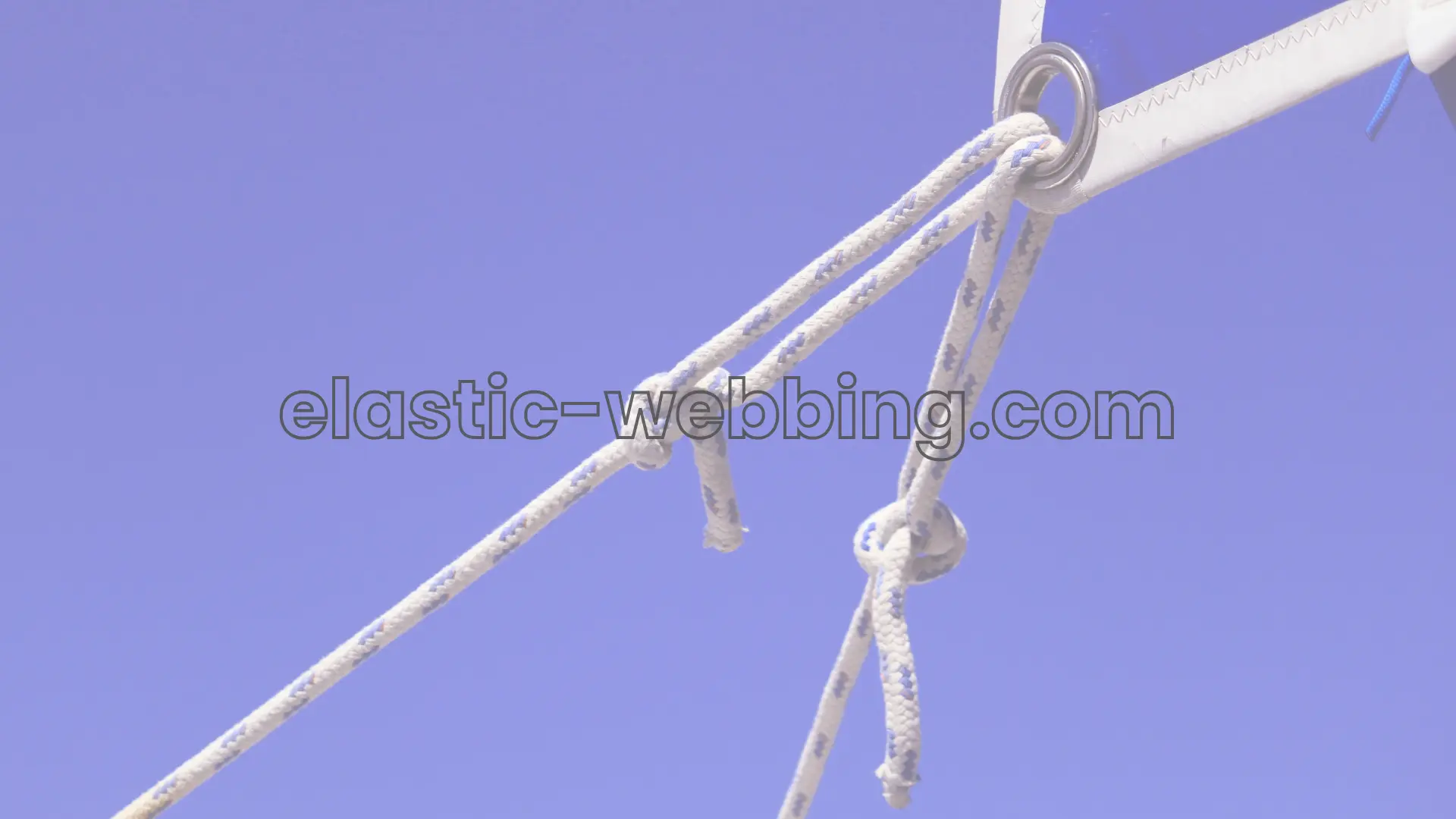
Rope is also an important element in the creative world and DIY (Do It Yourself) projects.
Types of Rope for Crafts and DIY
Rope is also an important element in the creative world and DIY (Do It Yourself) projects. Many artisans use various types of rope to create products that are both aesthetic and functional.
1. Cotton Rope for Crafts
Cotton rope is a popular choice because it has a soft and flexible texture. Its natural fibers are biodegradable, making it widely used by sustainability-conscious artisans.
Crafters often use this rope for macramé projects, wall décor, curtain ties, and plant hangers. In addition to being lightweight and easy to shape, cotton rope feels comfortable to the touch, making it suitable for fashion products such as knitted sweaters, scarves, and children’s toys.
2. Nylon Rope for Crafts
Nylon rope offers high strength and durability. This synthetic material can withstand mold, sunlight exposure, and repeated friction. These characteristics make it suitable for crafts that are frequently used or placed outdoors.
In accessories, artisans often use cord rope as a base material for bracelets, necklaces, and earrings combined with beads. Its strong fiber structure helps accessories remain durable even with daily use.
3. Polyester Rope for Crafts
Polyester rope provides a balance between strength and environmental resistance. This material has high resistance to UV rays and moisture, so colors do not fade easily and fibers do not deteriorate quickly.
Many outdoor DIY projects use polyester rope, such as decorative clotheslines, tent ties, or garden swings. Its low water absorption and minimal shrinkage help maintain product shape and quality over time.
4. Webbing Rope for Modern Crafts
In the modern creative industry, webbing or narrow fabrics provide a more precise technical touch. Its flat shape and strong construction make it widely used for designs that combine aesthetics and function.
Webbing is often used as belts, bag straps, and trimmings on clothing or safety footwear. In furniture, sofa webbing helps create an elastic and comfortable support structure.
Differences Between Natural and Synthetic Rope
Natural rope uses plant fibers such as coconut coir, hemp, cotton, sisal, and abaca (Manila). Some also use animal fibers such as wool and silk.
In contrast, synthetic rope uses man-made fibers such as nylon, polyester, and polypropylene produced through modern industrial processes.
Synthetic ropes offer higher tensile strength to support heavy loads over long periods. However, these materials can melt when exposed to very high temperatures.
Natural ropes, on the other hand, provide better heat resistance and a non-slip grip, although their tensile strength is generally lower than synthetic versions.
How to Choose the Right Type of Rope
Choosing the right rope must consider safety, work efficiency, and technical suitability for specific applications.
1. Based on Tensile Strength
Tensile strength is the primary factor in lifting and load-bearing applications. Nylon rope is among the strongest for heavy lifting. Its elasticity helps absorb sudden shock loads, making it suitable for dynamic needs.
Polyester rope also offers high strength and abrasion resistance, ideal for long-term use in demanding environments.
Although natural, Manila rope made from abaca fiber still provides sufficient strength for ship or bridge construction needs.
2. Based on Usage Environment
The working environment greatly affects rope durability. In water areas, polypropylene rope is ideal because it is lightweight, water-resistant, and floats.
For high sunlight exposure, polyester rope provides better UV resistance than nylon or natural ropes.
In dry and hot conditions, natural ropes such as hemp or sisal are more suitable because they do not melt under high temperatures.
3. Based on Flexibility and Elasticity
Flexibility determines ease of tying and energy absorption capability. Dynamic ropes are designed to stretch under load, effectively absorbing energy in activities such as climbing.
Static ropes have minimal stretch and support stable movement in evacuation or rescue operations. In terms of construction, plaited or braided ropes offer high flexibility and resist kinking, making them more comfortable to use.
4. Based on Industrial or Craft Applications
The final application determines whether the focus is on technical performance or aesthetic value. In the industrial sector, wire rope is commonly used in heavy equipment, while nylon and polyester are widely used in construction, transportation, and pulley systems.
Rope Applications Across Industries
Various sectors use rope to improve efficiency, strengthen structures, and maintain safety standards.
1. Fashion & Garment Industry
The fashion industry uses rope not only for technical functions but also for aesthetic value. Manufacturers use plant-based natural fibers to produce eco-friendly clothing concepts.
Designers also apply cord rope or macramé rope to create accessories such as bracelets, necklaces, and earrings. Cotton rope often complements garment details, including shoelaces and decorative elements.
2. Outdoor & Safety Industry
Outdoor and occupational safety sectors require ropes with high technical specifications. Activities such as mountaineering, rock climbing, camping, and sailing rely on nylon and polyester ropes because these materials can withstand loads and absorb shock.
Rescue teams use static ropes for vertical evacuation to maintain stability, while dynamic ropes help absorb energy during free falls.
In military needs, paracord—originally designed for parachutes—now supports various survival equipment. Kevlar materials are also used when applications demand high heat and fire resistance.
3. Furniture & Interior Industry
The furniture and interior industry uses rope for both structural and aesthetic functions. Interior designers use cotton rope and cord rope to create wall décor, curtains, lampshades, and plant hangers.
Rustic, natural, or classic design concepts often feature Manila, sisal, or rope elements as decorative components in garden fences or swings.
Beyond decoration, furniture manufacturers also install sofa webbing as an internal support structure to keep sofas elastic and comfortable over long-term use.
4. Crafts and DIY
Creative communities use rope as a primary material in various DIY projects. Macramé rope is popular for hanging décor, woven bags, or home ornaments.
Raffia rope is also commonly used for baskets and table décor. Natural fibers such as hemp and cotton are widely chosen for photo props, journaling supplies, and children’s toys due to their safe texture and visual appeal.
Even economical raffia rope is often repurposed to create costumes or decorations for simple celebration events.
Need High-Quality Webbing & Elastic? Contact BSS
The demand for strong and consistently high-quality webbing and elastic materials requires a manufacturing partner that truly understands industrial standards. PT Bintang Surya Sejati Sukses (BSS) is here as a solution for various sectors, from apparel and furniture to heavy industry and occupational safety.
With experience since 1987, an integrated in-house production system, European-standard machinery support, and custom production capabilities based on technical specifications, BSS ensures every product meets both functional needs and global standards.
Commitment to quality control, international certifications, and export readiness makes BSS a trusted partner for businesses that prioritize performance, safety, and sustainability in every narrow fabrics product they use.
Read Too: What Is Tali Kur (Drawcord)? Materials, Functions & Industrial Applications