


Understanding the differences between woven and non woven geotextiles will help you determine the best material before starting a construction project. Many people still assume they are the same, even though their structure, function, and performance are very different.
If you choose the wrong type, risks such as soil settlement, poor drainage, and faster structural damage may occur. By understanding their characteristics, you can match the material to soil conditions, construction loads, and water flow requirements.
With BSS, you can also obtain high-quality technical textile manufacturing support that prioritizes strength, precision, and international industry standards for various project needs.
General Differences Between Woven and Non Woven Geotextiles
Geotextiles are porous synthetic sheets that are permeable to water and flexible. This material plays an important role in civil engineering, especially in improving subgrade stability.
Woven geotextiles are produced through a weaving process using synthetic fibers such as polypropylene or polyester. This process creates a stiff and strong structure similar to a tightly woven sack or carpet.
Because the weave is dense and regular, this material excels in reinforcement functions with high tensile strength.
In contrast, non woven geotextiles are produced without weaving. Manufacturers use mechanical methods such as needle punching or thermal bonding to bind fibers randomly.
The result is a flexible sheet resembling thick fabric with high permeability. This structure allows water to flow easily, making it more effective for filtration and drainage systems.
Woven Geotextile as a Soil Reinforcement Material
Woven geotextile belongs to the geosynthetic category made from polypropylene (PP) or polyester (PET) tape yarns. Manufacturers arrange these tapes using a two-directional weaving technique: warp (lengthwise) and weft (crosswise).
This structure creates evenly distributed strength. The material can withstand lateral loads effectively, making it widely used to reinforce subgrades with low bearing capacity.
Characteristics of Woven Geotextile
-
Very high tensile, puncture, and tear strength. At the same gram weight, its strength can reach up to twice that of non woven types.
-
Low elongation ranging from 5% to 25%, meaning it does not stretch easily under load.
-
Equipped with UV resistance and resistant to fungi, microorganisms, and certain chemicals.
-
Dense weave results in lower water flow compared to non woven types, although it can still function as a separator.
Read Too: What is Non Woven? Material, Fabric Types, and Material Functions
Functions of Woven Geotextile in Construction
-
Subgrade reinforcement: Works like reinforcement in concrete, distributing loads evenly and reducing settlement risk.
-
Soft soil stabilization: Commonly used in swamp areas, peat soils, and railway subgrades.
-
Separator: Prevents mixing between fill material and soft subsoil.
-
Slope protection: Helps form steeper and more stable embankments.
-
Heavy-duty applications: Toll roads, mining hauling roads, heavy parking areas, and dams.
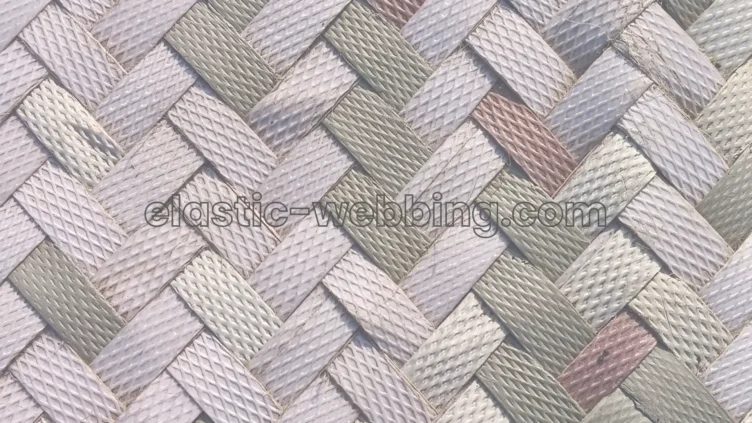
The function of woven geotextile is to reinforce soft soil, and separate the base soil and aggregate.
Non Woven Geotextile for Filtration and Drainage
Non woven geotextile is a geosynthetic sheet made from polyester (PET) or polypropylene (PP) fibers arranged randomly. Manufacturers bond these fibers through needle punching, thermal bonding, or chemical processes.
Physically, the material is flexible and resembles a thick carpet often called “road carpet.” Its porous structure enables excellent permeability—water flows freely while soil particles are retained.
Characteristics of Non Woven Geotextile
-
High permeability: Allows water to pass while filtering fine soil particles.
-
High elongation: Generally above 50%, making it more flexible than woven types.
-
Environmental resistance: Designed to resist UV exposure, microorganisms, chemicals, and long-term moisture.
Functions of Non Woven Geotextile in the Field
-
Filtration: Filters water and prevents soil particles from entering drainage systems.
-
Subsurface drainage: Commonly wraps perforated drainage pipes to prevent clogging.
-
Separation: Separates subgrade and fill in relatively stable soil conditions.
-
Geomembrane protection: Protects geomembranes from puncture damage.
Price of Geotextiles and Influencing Factors
Geotextile prices vary depending on technical specifications and project requirements. Non woven types are generally more economical for large-scale drainage work.
Key factors affecting price include:
-
Standard classification (PUPR): Class 1, 2, and 3—higher classes have stricter specs and higher prices.
-
Raw materials: Polypropylene (PP) vs. polyester (PET) following global price fluctuations.
-
Additional resistance: UV and chemical resistance features increase durability and cost.
How to Choose the Right Geotextile
Based on Function (Separation, Filtration, Reinforcement)
-
Choose woven geotextile for reinforcement needs.
-
Choose non woven geotextile for filtration and drainage.
-
Both can be used for separation depending on soil conditions.
Based on Soil Condition and Load
For heavy-load areas such as logistics routes or mining roads, woven performs better.
For rocky or sharp conditions, high-grammage non woven (e.g., 500 gsm) is suitable as a protective layer.
Based on Project Budget
Non woven is generally more cost-efficient for large drainage projects.
Woven is more expensive but offers superior structural strength for long-term extreme conditions.
Woven vs Non Woven: Which Is Better?
Use woven geotextile when the project requires high load resistance and strong subgrade stabilization, especially on soft soils like swamps or peatlands.
Use non woven geotextile when the project focuses on water management or layer protection. Its flexible and highly permeable structure allows smooth water flow while retaining soil particles.
Need High-Quality Webbing & Material Solutions? Contact BSS
In conclusion, selecting between woven and non woven geotextiles must be based on technical project requirements. Use woven for road construction on soft ground or low bearing capacity areas. Use non woven for drainage and filtration systems.
PT Bintang Surya Sejati Sukses (BSS) provides international-standard manufacturing support to help strengthen the quality of technical materials required for various long-term industrial and infrastructure applications.