
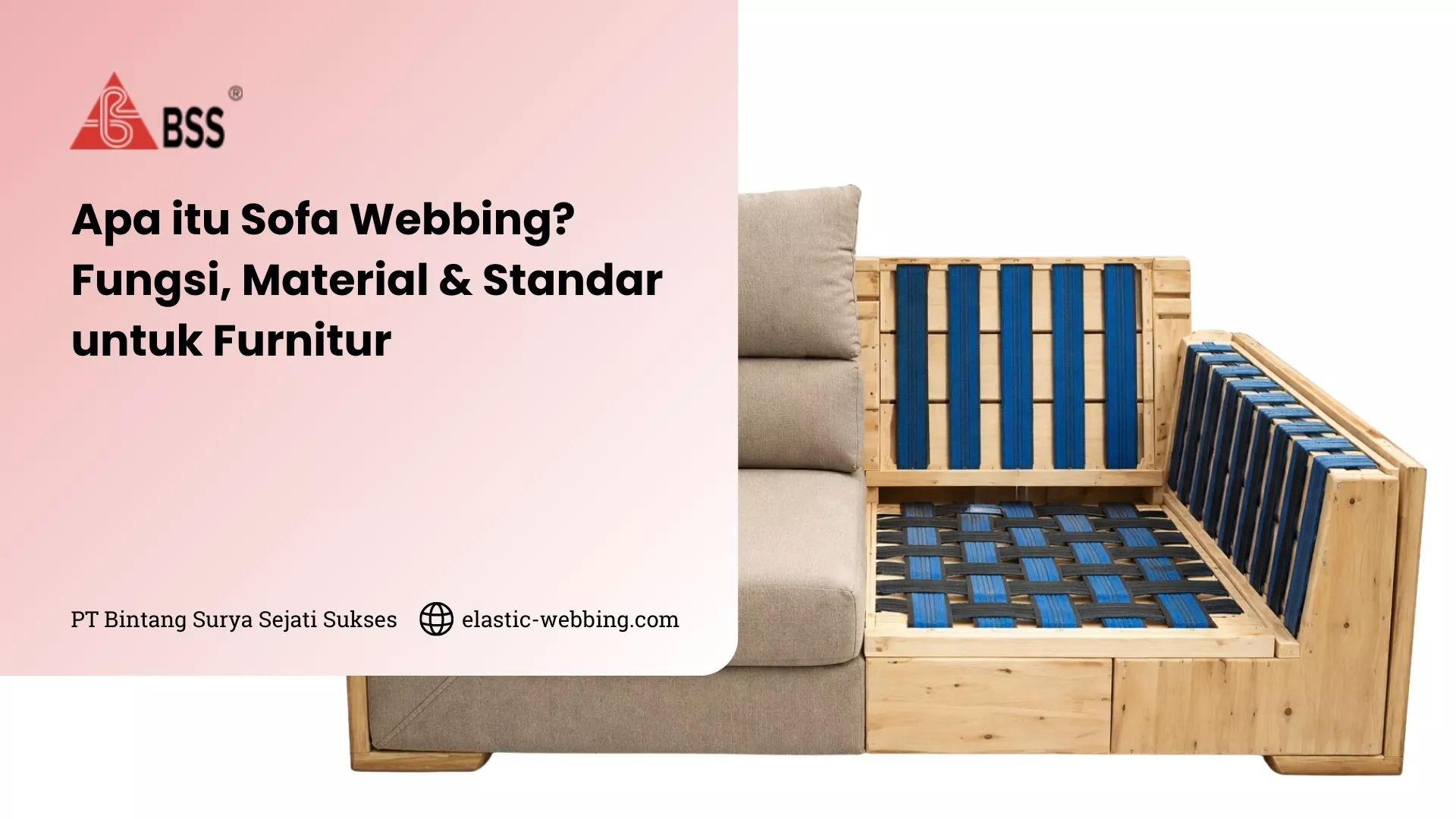


In the modern furniture industry, the comfort and durability of a sofa are not determined solely by its design or the foam used. There is one crucial component that is often overlooked but plays a decisive role in seating quality: sofa webbing. This component functions as the primary support system that bears body weight while maintaining the sofa’s shape over the long term.
As furniture technology evolves, many manufacturers are shifting from conventional spring systems to webbing because it is more flexible, silent, and structurally efficient. Sofa webbing allows manufacturers to create ergonomic, lightweight furniture that remains strong enough for both daily residential use and commercial applications.
For furniture manufacturers, choosing the right sofa webbing is not merely a matter of price, but one of product reputation in the eyes of consumers. Proper webbing ensures consistent seating comfort, reduces damage claims, and extends the overall lifespan of the sofa.
As a webbing manufacturer operating since 1987, BSS understands that the quality of sofa webbing is the foundation of reliable furniture. This article provides a comprehensive discussion of what sofa webbing is, its types, materials, and the quality standards that should be considered.
What Is Sofa Webbing?
Sofa webbing is a woven or elastic tape installed on the sofa frame to support the seat and backrest. The webbing is applied horizontally or in a crisscross pattern, then covered with foam and upholstery, functioning as the primary load-bearing layer before pressure reaches the frame.
Unlike metal springs, sofa webbing works on the principle of more even load distribution. Its elasticity helps absorb body pressure, resulting in a softer, more natural seating experience without friction noise.
In industrial practice, sofa webbing is used either as the main support system or as a complement to springs, depending on the furniture design and product segmentation. The choice of webbing type significantly influences the seating characteristics of the sofa.
Functions of Sofa Webbing in Furniture
The primary function of sofa webbing is to consistently support the user’s weight. When someone sits down, the webbing stretches within its capacity and returns to its original position once the load is removed. This mechanism creates long-term, repeatable comfort.
In addition to load support, sofa webbing helps maintain the shape of the seat, preventing premature sagging. High-quality webbing retains its tension even after thousands of uses, protecting the foam above it from early deterioration.
Another function is structural efficiency. With the right webbing, manufacturers can reduce reliance on heavy springs without compromising furniture strength or comfort.
Characteristics of High-Quality Sofa Webbing
High-quality sofa webbing features controlled elasticity—not merely flexibility. This elasticity must be balanced between stretch capability and recovery to its original form.
Another key characteristic is resistance to fatigue. Good webbing does not easily lose elasticity even under intensive use, especially in commercial furniture applications.
Additionally, quality webbing has a dense and consistent woven structure. This ensures even load distribution and reduces excessive pressure points that can accelerate wear.
Baca Juga : What Is Military Webbing? Functions, Materials & Industry Standards
Types of Sofa Webbing
Various types of sofa webbing have been developed to meet different furniture needs, ranging from residential sofas to commercial furniture with high usage intensity.
1. Elastic Sofa Webbing
Elastic sofa webbing is the most commonly used type in modern sofas. It offers high elasticity, providing a soft and ergonomic seating experience.
This type is ideal for both seat and backrest areas, as it adapts to the user’s body contours. However, elastic quality must be maintained to prevent excessive stretching over time.
2. Rubber Webbing
Rubber webbing uses a rubber core as its source of elasticity, resulting in very flexible webbing with high comfort from initial use.
However, rubber webbing is more sensitive to material aging and environmental conditions. Without high-quality materials and proper manufacturing processes, its elasticity can degrade more quickly.
3. Polyester Sofa Webbing
Polyester sofa webbing is known for its stability and durability. Its elasticity is more controlled compared to rubber, making it suitable for sofas with higher durability requirements.
This type is widely used in commercial furniture such as hotels and public spaces due to its consistent long-term performance.
4. Woven / Non-Elastic Webbing
Non-elastic webbing is used as additional structural support. It has minimal elasticity but offers high strength and stability.
It is typically installed in specific areas to maintain frame shape or combined with elastic webbing to balance overall structure.
Materials Used in Sofa Webbing
The main materials used in sofa webbing include polyester, synthetic rubber, and specialized elastic yarns. Each material provides different characteristics in terms of strength, elasticity, and service life.
Polyester is often chosen for its abrasion resistance, moisture stability, and suitability for various usage environments. Rubber-based materials, on the other hand, provide enhanced comfort.
At BSS, material selection is always tailored to the specific furniture application, serving both domestic and international markets.
Differences Between Sofa Webbing and Springs
Sofa webbing offers a quieter seating experience compared to metal springs. There is no friction noise, making it ideal for modern furniture focused on comfort.
From a design perspective, webbing is more flexible and lightweight, allowing manufacturers to create diverse sofa forms without the complexity of spring structures.
While springs still excel in certain applications, current furniture trends show a shift toward webbing due to efficiency, comfort, and ease of production.
Applications of Sofa Webbing in the Furniture Industry
Each furniture segment has different usage characteristics, requiring webbing types and specifications to be matched to the product’s final function.
1. Residential Sofas
In residential sofa applications, sofa webbing plays a major role in delivering daily seating comfort. Elastic sofa webbing is commonly selected because it provides a soft feel, follows body contours, and operates silently.
Beyond comfort, residential sofa webbing must maintain seat shape over long periods. Webbing with stable elasticity helps prevent sagging, ensuring the sofa remains comfortable for years.
Home furniture manufacturers typically combine webbing with medium-density foam to achieve a balance between softness and support. The right webbing selection enhances perceived product quality for end consumers.
2. Commercial Furniture (Hotels, Offices, Cafés)
In commercial furniture, sofa webbing is subjected to heavier loads and higher usage frequency. As a result, the webbing must offer higher tensile strength and fatigue resistance compared to residential furniture.
Polyester sofa webbing is often the preferred choice because its elasticity is more controlled and less prone to deformation. This is essential to maintain a neat, professional appearance despite continuous use.
Beyond technical performance, commercial furniture demands quality consistency. Uniform webbing specifications ensure each sofa unit provides the same level of comfort and strength, especially in large-scale projects such as hotels or office buildings.
3. Upholstery & Custom Furniture
In the upholstery and custom furniture industry, sofa webbing provides high design flexibility. Manufacturers can adjust installation patterns and tension levels according to ergonomic needs or client preferences.
Webbing also allows customization of seating characteristics—from very soft to firmer support—without significantly altering the frame structure. This simplifies the production of custom furniture with unique specifications.
For custom projects, webbing quality consistency is critical, as products are often made individually or in limited quantities. Stable and precise webbing helps ensure the final furniture quality matches the intended design.
Quality Standards & Testing for Sofa Webbing
High-quality sofa webbing must undergo tensile testing, elasticity testing, and fatigue testing. These tests ensure the webbing can withstand loads according to design specifications.
Quality control also includes consistency in width, thickness, and woven structure. These standards are essential to maintaining overall furniture performance.
How to Choose the Right Sofa Webbing
Selecting sofa webbing requires consideration of furniture type, desired comfort level, and usage intensity. Not all webbing types are suitable for every application.
A common mistake is choosing overly elastic webbing for heavy use or overly rigid webbing for residential sofas. Achieving the right balance of specifications is key.
How BSS Manufactures Sofa Webbing
As a webbing manufacturer since 1987, BSS produces sofa webbing using a technical approach aligned with modern furniture industry needs. Each product is developed under strict quality control with customization options tailored to client requirements.
BSS serves sofa webbing needs for both national and international furniture manufacturers, focusing on consistency, durability, and long-term performance. For the furniture industry, BSS is not merely a supplier, but a production partner that understands technical details from raw materials to finished products.
Baca Juga : What Is Woven Tape? Definition, Materials & Industrial Applications