


In the world of rock climbing, safety does not depend solely on a climber’s skills, but also on the quality of the equipment used. One essential component that is often overlooked is rock climbing webbing. Although it does not function as the main belay rope, webbing plays a vital role in safety systems and in supporting climbing activities.
As rock climbing continues to grow—whether for sport, training, or professional applications such as vertical rescue—the demand for webbing with precise technical specifications has increased significantly. Incorrectly specified webbing can pose serious risks, ranging from rapid wear to functional failure when bearing loads.
For outdoor and safety equipment manufacturers, selecting webbing is not only about strength, but also about quality consistency, certification standards, and material suitability for the intended conditions of use. This is why technical understanding of webbing is crucial.
As a webbing manufacturer established since 1987, BSS produces various types of technical webbing for industrial needs, including outdoor and safety applications. This article provides a comprehensive discussion of rock climbing webbing, covering its definition, types, materials, standards, and applications.
What Is Rock Climbing Webbing?
Rock climbing webbing is a flat or tubular textile tape used as part of safety systems in climbing activities. Unlike climbing ropes (dynamic ropes), webbing is static or has very low elongation.
Webbing is used for various functions such as creating anchors, runners, extenders, or safety loops. In practice, webbing serves as a connector between components within a climbing system, rather than as the primary fall-arrest element.
Because it is static in nature, webbing is not designed to absorb fall energy like climbing ropes. Therefore, understanding the correct function of webbing is essential to avoid misuse in the field.
Functions of Webbing in Rock Climbing Systems
The primary function of climbing webbing is as an anchor sling, serving as a connection between ropes, carabiners, and anchor points. Webbing helps distribute loads evenly across anchor systems.
In addition, webbing is often used as a runner or extender to reduce rope drag along a climbing route. With proper configuration, webbing helps maintain system efficiency and safety.
In advanced applications, webbing is also incorporated into harnesses, quickdraws, and rescue equipment. This functional versatility makes webbing a mandatory component in modern climbing systems.
Read More : What Is Sofa Webbing? Functions, Materials & Standards for Furniture
Key Characteristics of Rock Climbing Webbing
One of the main characteristics of climbing webbing is high tensile strength combined with minimal elongation. This ensures that the webbing does not significantly change length when supporting static loads.
Webbing must also offer good abrasion resistance, as it frequently comes into contact with rock, metal, or rough surfaces. A tightly woven structure helps extend its service life.
Another important characteristic is flexibility and knot-handling capability. Webbing that is too stiff is difficult to configure, while webbing that is too soft may compromise stability.
Types of Rock Climbing Webbing
Sumber : freepik.com
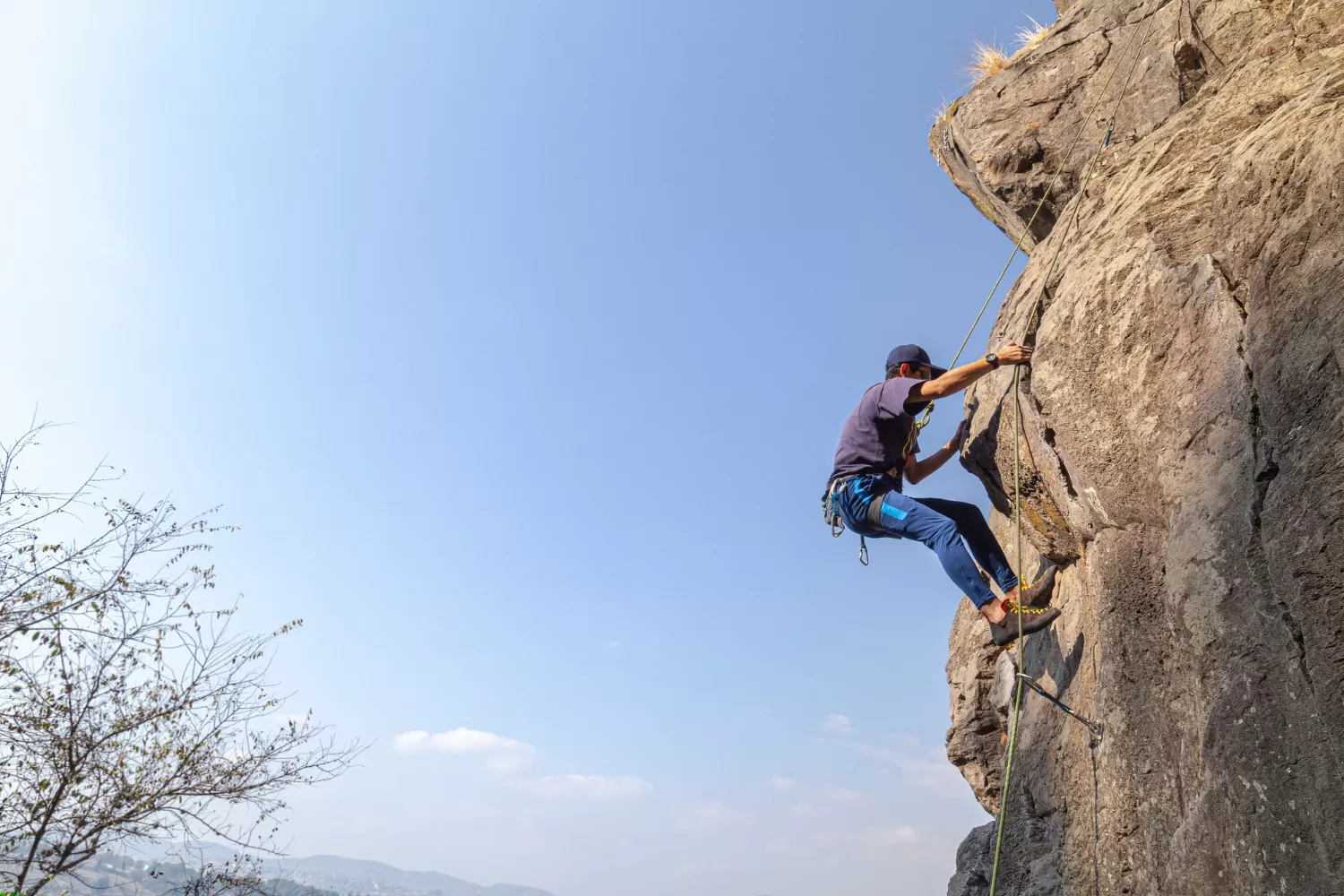
There are several types of webbing used in rock climbing activities, each with different functions and characteristics.
1. Flat Webbing
Flat webbing has a flat profile with a specific width, allowing for even load distribution. This type is most commonly used as runners and anchor slings.
The main advantage of flat webbing lies in its stability and ease of installation. However, it is less ideal for complex knots due to its relatively stiffer structure compared to tubular webbing.
2. Tubular Webbing
Tubular webbing has a hollow structure, making it more flexible and more resistant to abrasion. This type is frequently used in traditional climbing and rescue operations.
The tubular structure also makes this webbing more knot-friendly, reducing the risk of fiber damage caused by localized pressure.
3. Sewn Webbing Sling
Sewn webbing slings are webbing loops permanently stitched by the manufacturer. The stitching is performed according to specific standards to ensure consistent strength.
This type is widely used in quickdraws and fixed anchors due to its practicality and reduced risk of configuration errors.
4. Dyneema / UHMWPE Webbing
Webbing made from Dyneema or UHMWPE offers an extremely high strength-to-weight ratio. It is lightweight yet exceptionally strong.
However, this material is sensitive to heat and certain types of friction, so its use must strictly follow technical recommendations.
Materials Used in Rock Climbing Webbing
The material used in webbing plays a critical role in determining performance and safety. Polyester is known for its stability, UV resistance, and good abrasion resistance, making it suitable for outdoor use.
Nylon (polyamide) offers high tensile strength and flexibility but absorbs more water than polyester. This factor must be considered in humid or wet conditions.
For specialized applications, high-performance fibers such as UHMWPE are used, offering extreme performance with minimal weight. BSS produces webbing using material selections tailored to specific client application requirements.
Standards & Certifications for Rock Climbing Webbing
Rock climbing webbing must comply with international standards such as EN 566 for slings. These standards define minimum strength requirements and testing methods.
Certification ensures that webbing can withstand loads according to specifications and is safe for use in climbing systems. Product labeling serves as an important indicator for professional users.
For manufacturers and brands, compliance with standards is a mandatory requirement to ensure user safety and maintain product credibility.
Maintenance & Service Life of Rock Climbing Webbing
Webbing must be inspected regularly to detect signs of wear, cut fibers, or color changes caused by UV exposure. Even minor damage can significantly affect strength.
Storage conditions also influence service life. Webbing should be stored in a dry place, away from chemicals and excessive heat.
With proper care, webbing can be used optimally over long periods without compromising safety.
Applications of Rock Climbing Webbing in Industrial & Professional Fields
Beyond recreational climbing, rock climbing webbing is widely used in rescue operations, vertical access, and safety training. In these sectors, quality consistency is a key requirement.
Outdoor equipment brands and safety gear providers require webbing with precise specifications to ensure reliable product performance.
For OEM and B2B needs, webbing is produced according to defined technical standards so it can be integrated into larger safety systems.
How BSS Manufactures Webbing
As a webbing manufacturer since 1987, PT Bintang Surya Sejati Sukses (BSS) produces technical webbing with strict quality control and proven material selection.
BSS serves webbing needs for both national and international markets, including outdoor and safety applications. With the ability to customize width, material, and construction, BSS is ready to become a long-term production partner for brands and industries.
If you require rock climbing webbing with consistent technical specifications and customizable options, BSS is ready to support your industrial needs for both the Indonesian market and global export.
Read More : What Is Tali Kur (Drawcord)? Materials, Functions & Industrial Applications