
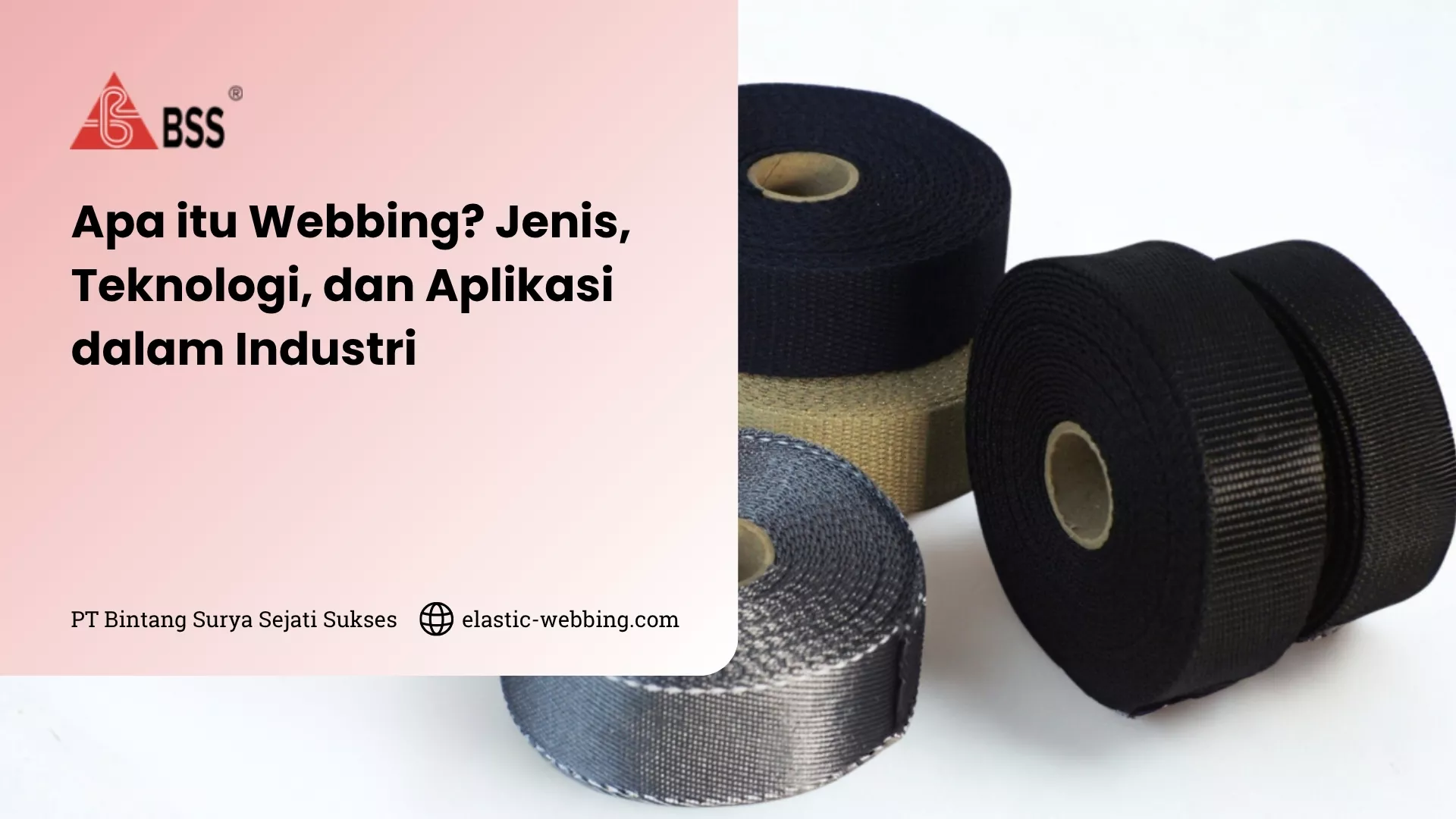


Bayangkan Anda tengah memeriksa rantai pasokan untuk proyek industri besar—apakah sabuk pengaman, strap pengikat kargo, atau harness keselamatan. Di balik itu semua, ada satu elemen tekstil penting: webbing. Memahami webbing adalah apa, komponen, dan aplikasinya bukan hanya esensial untuk teknisi, tapi juga pengambil keputusan.
Dalam artikel ini, Anda akan mendapat gambaran teknis sekaligus bisnis: dari sejarah, struktur, keunggulan & kelemahan, hingga kiat memilih webbing terbaik untuk proyek industri Anda. Dengan insight terpercaya, artikel ini siap membantu Anda membuat keputusan yang optimal dan aman.
Apa itu Webbing?
Webbing adalah kain anyaman yang dihasilkan dalam bentuk strip datar atau tubular, digunakan sebagai alternatif tali tradisional untuk beban dan pengikatan. Berbeda dari tali, webbing menawarkan lebar kontak lebih luas yang membantu distribusi tekanan lebih merata dan meminimalkan titik lemah.
Dalam praktiknya, webbing dapat dibuat dari berbagai serat—natural maupun sintetis—dan sering ditemukan dalam aplikasi seperti safety harness, sabuk pengaman, penjepit kargo, dan ikatan struktural lainnya.
Sejarah Webbing
Awalnya, webbing dibuat dari serat alam seperti kapas, flax, atau hemp, digunakan dalam aplikasi pengikatan sederhana. Seiring kemajuan teknologi tekstil, webbing modern beralih ke bahan sintetis—yang lebih ringan, lebih kuat, dan lebih tahan terhadap elemen eksternal seperti air, UV, dan bahan kimia.
Dengan perkembangan serat performa tinggi — misalnya Dyneema, Kevlar, UHMWPE — webbing telah mencapai kapasitas tarik yang luar biasa sambil mempertahankan bobot rendah. Transformasi ini memungkinkan webbing bersaing dalam aplikasi teknik tinggi dan keselamatan industri di skala global.
Komponen & Klasifikasi Webbing
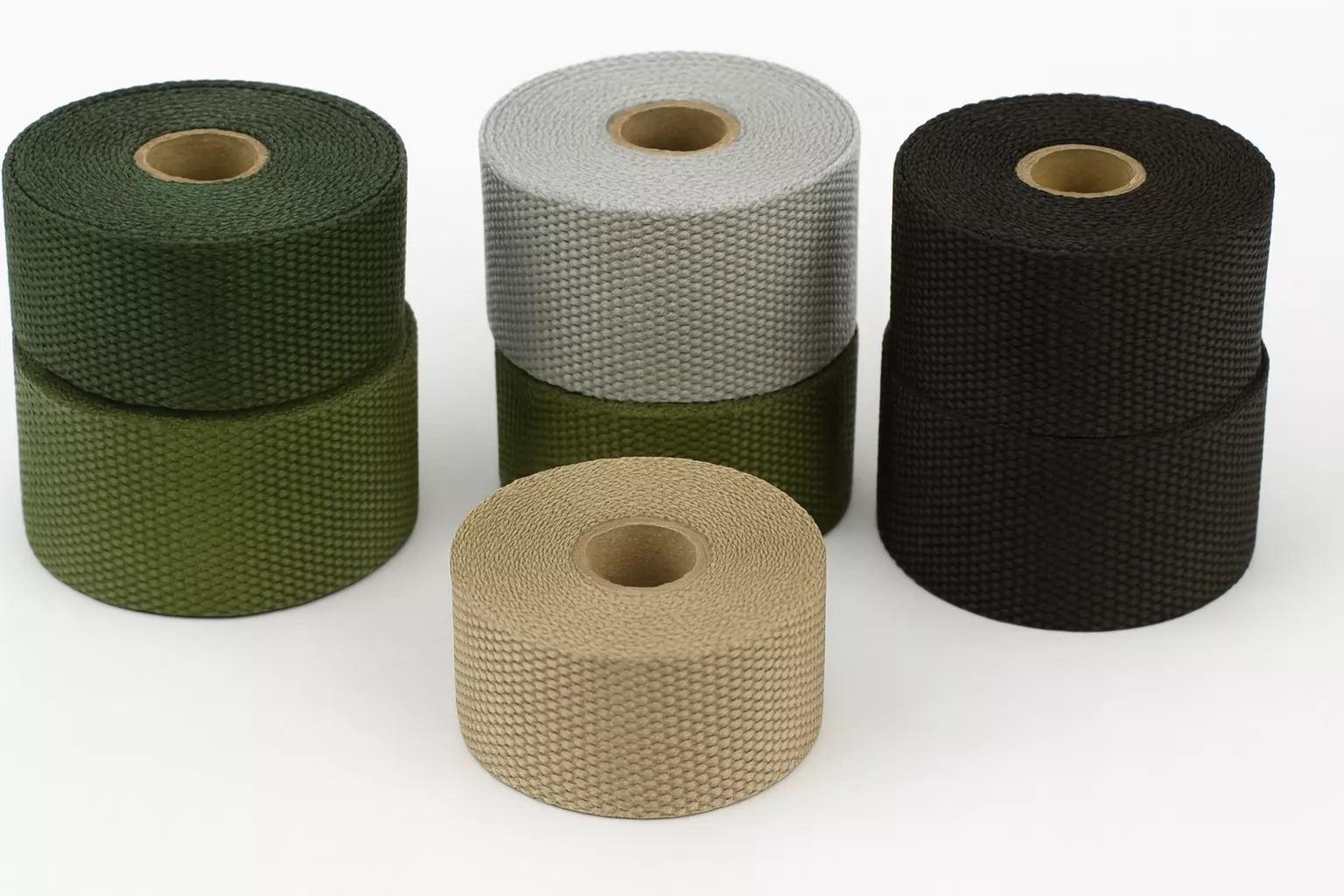
Dalam industri manufaktur dan rekayasa material, webbing diklasifikasikan berdasarkan bahan pembentuk, struktur anyaman, serta spesifikasi teknisnya. Setiap komponen ini menentukan kekuatan, fleksibilitas, serta ketahanan webbing terhadap kondisi lingkungan. Memahami klasifikasi ini penting agar pemilihan produk dapat disesuaikan dengan kebutuhan industri dan standar keselamatan yang berlaku.
1. Jenis Material (Serat)
Material merupakan faktor utama yang menentukan karakteristik dan performa webbing. Setiap jenis serat memiliki sifat unik — mulai dari elastisitas, daya tahan terhadap suhu, hingga resistensi terhadap bahan kimia. Berikut beberapa jenis material yang paling umum digunakan dalam industri.
a. Nylon
Nylon adalah material paling populer dalam pembuatan webbing karena memiliki kekuatan tarik tinggi dan ketahanan terhadap abrasi. Sifat elastisnya memungkinkan webbing menahan beban kejut tanpa mudah putus, menjadikannya pilihan utama untuk aplikasi safety seperti harness atau sabuk pengaman.
Namun, nylon juga memiliki kelemahan: ia menyerap air hingga 10% dari beratnya dan kehilangan sebagian kekuatannya dalam kondisi basah. Selain itu, paparan sinar UV berkepanjangan dapat mempercepat degradasinya, sehingga tidak disarankan untuk aplikasi outdoor jangka panjang tanpa pelindung tambahan.
b. Polyester
Polyester memiliki kestabilan dimensi yang tinggi — tidak mudah meregang dan tetap kuat meski dalam kondisi lembap. Bahan ini unggul dalam ketahanan terhadap sinar UV dan abrasi, sehingga banyak digunakan untuk aplikasi luar ruangan seperti tali kargo dan peralatan pendakian.
Keunggulan lain dari polyester adalah kemampuan mempertahankan performa meski terkena air atau bahan kimia ringan. Kombinasi antara daya tahan dan fleksibilitas menjadikannya bahan paling seimbang untuk berbagai kebutuhan industri.
c. Polypropylene
Polypropylene (PP) dikenal sebagai bahan yang ringan, tahan air, dan memiliki ketahanan kimia yang baik. Karena sifatnya yang ekonomis, PP sering digunakan untuk aplikasi ringan seperti tali tas, tali pengikat barang, dan tali pengaman sementara.
Meski begitu, PP memiliki kelemahan pada suhu tinggi — titik leburnya relatif rendah dan kekuatannya menurun ketika terkena panas atau beban berat secara terus-menerus. Karena itu, penggunaannya disarankan untuk aplikasi non-struktural atau jangka pendek.
d. Serat Khusus / High Strength
Dalam industri berisiko tinggi seperti militer, penerbangan, dan keselamatan kerja, digunakan serat berperforma tinggi seperti Kevlar, Dyneema (UHMWPE), atau Vectran. Serat ini memiliki kekuatan luar biasa dengan berat yang sangat ringan.
Dyneema, misalnya, memiliki rasio kekuatan terhadap berat 15 kali lebih tinggi dibanding baja, sementara Kevlar tahan terhadap suhu tinggi dan abrasi ekstrem. Kelemahannya hanya satu: biaya produksinya jauh lebih tinggi dibanding bahan sintetis konvensional.
2. Struktur & Konstruksi
Selain material, struktur anyaman juga menentukan kekuatan dan karakteristik fleksibilitas webbing. Secara umum, ada tiga jenis konstruksi utama yang digunakan di industri.
a. Webbing Datar (Flat)
Webbing datar merupakan jenis paling umum dengan struktur anyaman rapat yang menghasilkan permukaan halus dan kuat. Jenis ini ideal untuk aplikasi jahit-menjahit karena permukaannya mudah disambung dengan kain atau komponen lain.
Namun, webbing datar cenderung kurang fleksibel dibanding webbing tubular. Dalam aplikasi yang membutuhkan simpul atau tekanan melingkar, webbing datar bisa menimbulkan titik gesek yang lebih besar sehingga perlu perlakuan tambahan seperti coating pelindung.
b. Webbing Tubular
Webbing tubular memiliki bentuk seperti pipa kecil yang diratakan. Desain ini membuatnya lebih lentur dan mampu menahan tekanan dengan distribusi beban lebih merata di seluruh struktur.
Jenis ini banyak digunakan dalam aktivitas outdoor seperti panjat tebing atau tali penahan beban karena kekuatannya yang lebih tinggi terhadap beban dinamis. Struktur tabung juga membantu melindungi serat dalam dari abrasi langsung.
c. Webbing Elastis / Stretch
Webbing elastis mengandung serat khusus yang memungkinkan peregangan hingga batas tertentu. Jenis ini digunakan dalam aplikasi yang memerlukan kelenturan dan kenyamanan seperti sabuk elastis atau strap olahraga.
Meskipun tidak dirancang untuk beban berat, webbing elastis memberikan keunggulan ergonomis dan kemampuan meredam getaran, menjadikannya pilihan untuk aplikasi yang lebih ringan dan fleksibel.
3. Ukuran & Spesifikasi Teknis
Ukuran dan spesifikasi teknis menentukan kelayakan webbing terhadap kebutuhan industri. Parameter seperti lebar, ketebalan, densitas, dan kekuatan tarik menjadi acuan utama dalam pemilihan.
a. Lebar, Ketebalan, Densitas, Kekuatan Tarik
Webbing hadir dalam berbagai ukuran — mulai dari 10 mm hingga 100 mm — disesuaikan dengan kapasitas beban dan tujuan penggunaan. Semakin lebar dan padat anyamannya, semakin tinggi pula kekuatan tariknya.
Untuk aplikasi teknik berat, webbing dengan densitas tinggi dan serat performa tinggi seperti Kevlar atau UHMWPE mampu menahan beban hingga beberapa ton. Oleh karena itu, setiap proyek perlu menyesuaikan ukuran dengan beban kerja (WLL) dan faktor keselamatan (SF).
b. Standar Mutu / Kelas Industri
Webbing industri harus memenuhi standar mutu seperti ISO, EN, ASTM, atau Mil-Spec. Sertifikasi ini memastikan produk telah melalui uji kekuatan, uji abrasi, dan uji penuaan UV.
Bagi perusahaan B2B, kepatuhan terhadap standar ini sangat penting untuk menjamin keamanan operasional. Pemasok yang dapat menunjukkan data teknis dan sertifikat uji akan lebih dipercaya dalam rantai pasokan industri.
Keunggulan & Keterbatasan Webbing
Keunggulan: Webbing mampu menahan beban tinggi dengan bobot relatif ringan, memberikan distribusi gaya yang lebih merata dibanding tali, dan fleksibilitas struktur. Selain itu, versi sintetis memiliki ketahanan terhadap air, jamur, sinar UV, dan abrasi—fitur penting di lingkungan industri.
Keterbatasan: Beberapa kelemahan mencakup potensi degradasi akibat sinar UV (terutama untuk nylon), kelemahan di suhu tinggi (polypropylene), serta keausan akibat gesekan tajam atau tepi tajam. Selain itu, dalam aplikasi ekstrem, penanganan produksi dan kontrol kualitas yang buruk dapat menyebabkan cacat tak terdeteksi yang membahayakan performa.
Aplikasi Industri Webbing
Webbing digunakan di hampir semua sektor industri yang memerlukan pengikatan, pengangkatan, atau perlindungan. Aplikasinya luas, mulai dari otomotif hingga militer. Setiap sektor memiliki kebutuhan dan spesifikasi berbeda tergantung lingkungan dan tingkat keamanan yang dibutuhkan.
1. Industri Transportasi / Otomotif
Dalam dunia otomotif, webbing menjadi komponen vital untuk sabuk pengaman, tali penahan beban, dan pengikat kargo. Material seperti polyester atau nylon digunakan karena mampu menjaga kekuatan dan elastisitas dalam berbagai kondisi cuaca.
Selain itu, webbing juga digunakan pada sistem kursi, interior kendaraan, serta sabuk kargo di pesawat terbang. Pengujian ketat dilakukan untuk memastikan bahwa setiap meter webbing mampu menahan gaya deselerasi ekstrem tanpa putus.
2. Industri Konstruksi
Di sektor konstruksi, webbing digunakan sebagai pengikat beban, webbing sling, dan safety harness bagi pekerja. Keunggulan utamanya adalah kemampuan mendistribusikan tekanan secara merata pada permukaan benda berat sehingga risiko kerusakan struktur dapat diminimalkan.
Dalam proyek besar, webbing berbahan polyester atau high-strength fibers digunakan untuk rigging dan lifting equipment yang membutuhkan kekuatan serta fleksibilitas tinggi.
3. Industri Outdoor / Olahraga
Webbing menjadi bagian penting dari peralatan outdoor seperti harness panjat tebing, tali pengaman, sabuk carrier, dan sling hammock. Ketahanannya terhadap UV dan air menjadikannya pilihan ideal untuk penggunaan di luar ruangan.
Selain itu, desainnya yang ringan dan kuat membantu menjaga keamanan pengguna tanpa menambah beban berlebih — faktor penting dalam aktivitas ekstrem seperti climbing dan rescue operation.
4. Industri Furnitur
Dalam industri furnitur, webbing digunakan sebagai penopang kursi dan sandaran sofa. Material polypropylene atau polyester sering dipilih karena fleksibilitas dan daya tahannya.
Selain meningkatkan kenyamanan duduk, webbing juga membantu mempertahankan bentuk dan elastisitas furnitur dalam jangka panjang, terutama untuk produk premium yang menuntut durabilitas tinggi.
5. Industri Militer
Militer dan pertahanan menggunakan webbing dalam berbagai perlengkapan, seperti sabuk peralatan (tactical belt), sistem MOLLE, ransel tempur, dan rompi anti peluru.
Material high-strength seperti Kevlar dan Dyneema memberikan kombinasi kekuatan ekstrem dan bobot ringan. Dalam kondisi medan berat, webbing ini diuji untuk tahan terhadap abrasi, suhu ekstrem, dan air garam.
Pemilihan & Kriteria Webbing untuk Proyek Industri
Pemilihan webbing harus dimulai dari beban kerja maksimum (working load limit) yang ditambahkan faktor keselamatan (safety factor). Pastikan margin desain mencukupi untuk kondisi darurat. Selain itu, pertimbangkan lingkungan operasi: paparan air, bahan kimia, sinar UV, dan suhu ekstrem harus diperhitungkan untuk memilih bahan.
Selanjutnya, pastikan bahwa pemasok atau produsen webbing memiliki sertifikasi mutu (ISO, EN, ASTM, Mil-Spec) dan menyediakan data teknis (sertifikat uji beban, retensi setelah aging). Mintalah sampel dan lakukan uji di lapangan atau laboratorium sendiri bila memungkinkan agar sesuai kebutuhan spesifik proyek.
Proses Produksi & Teknologi di Industri Webbing
Pembuatan webbing modern menggabungkan teknik tekstil tradisional dengan inovasi teknologi canggih. Proses ini melibatkan tahapan ketat mulai dari pemilihan serat, penenunan, hingga pengujian akhir untuk memastikan konsistensi mutu.
1. Cara Pembuatan
Proses dimulai dari pemilihan serat sesuai spesifikasi teknis yang diinginkan. Serat tersebut kemudian ditenun menggunakan mesin loom khusus untuk menghasilkan struktur datar atau tubular.
Tahap selanjutnya adalah finishing, seperti heat-setting untuk menjaga bentuk, atau coating tambahan agar webbing lebih tahan UV, abrasi, dan bahan kimia. Setiap tahapan dikontrol ketat agar produk akhir memenuhi standar kekuatan dan fleksibilitas yang ditentukan.
2. Inovasi Terbaru
Industri webbing kini terus berinovasi melalui penggunaan nanocoating, serat hybrid, dan integrasi teknologi sensor. Beberapa produsen bahkan mulai mengembangkan webbing dengan fitur konduktif untuk sistem pintar seperti sensor tekanan dan alat pengaman otomatis.
Selain itu, penggunaan bahan ramah lingkungan seperti serat daur ulang mulai meningkat seiring tuntutan keberlanjutan industri global.
3. Kontrol Kualitas & Uji Beban
Setiap batch webbing melewati uji tarik (tensile test), uji abrasi, dan pengujian penuaan UV. Produsen kelas industri juga menerapkan sistem inspeksi digital untuk mendeteksi cacat mikroskopis pada anyaman.
Dengan kontrol ketat ini, produk webbing dapat digunakan dalam aplikasi berisiko tinggi seperti alat keselamatan, crane lifting, atau peralatan militer tanpa mengorbankan keamanan.
Tantangan & Tren Masa Depan
Seiring meningkatnya kebutuhan material kuat dan ringan, industri webbing menghadapi tantangan baru. Tantangan ini memunculkan inovasi yang mengarah pada efisiensi, keamanan, dan keberlanjutan.
1. Tantangan
Salah satu tantangan utama adalah degradasi bahan akibat paparan UV dan lingkungan ekstrem. Hal ini menuntut pengembangan pelapis pelindung yang lebih tahan lama tanpa menambah berat produk.
Selain itu, fluktuasi harga bahan baku sintetis dan meningkatnya tuntutan sertifikasi lingkungan juga menjadi kendala. Produsen dituntut untuk menyeimbangkan antara biaya produksi, kualitas, dan dampak lingkungan dalam rantai pasokan global.
2. Tren
Tren masa depan webbing mencakup penggunaan serat berteknologi tinggi seperti Dyneema generasi baru, serta bahan biodegradable untuk mengurangi limbah industri.
Teknologi manufaktur otomatis dengan kontrol berbasis AI juga mulai diterapkan untuk meningkatkan presisi dan efisiensi produksi. Dengan pendekatan ini, industri webbing akan semakin ramah lingkungan sekaligus kompetitif di pasar global.
Webbing: Solusi Kuat, Fleksibel, dan Andal untuk Industri Anda
Webbing adalah fondasi tak terlihat di balik berbagai sistem pengikatan, keamanan, dan struktur industri modern. Dari transportasi hingga militer, pemilihan webbing yang tepat menentukan performa dan keselamatan.
PT Bintang Surya Sejati Sukses (BSS) hadir sebagai supplier webbing terpercaya dari Indonesia yang siap memenuhi kebutuhan nasional maupun ekspor. Dengan standar mutu internasional dan fleksibilitas bahan yang lengkap, BSS menjadi mitra ideal untuk perusahaan yang mengutamakan kualitas, ketepatan, dan daya tahan tinggi.
Hubungi kami untuk konsultasi produk atau pemesanan dalam jumlah besar — kami siap menjadi bagian dari kesuksesan proyek Anda.
FAQ
Apakah webbing cocok digunakan di lingkungan laut atau pesisir?
Ya, webbing berbahan polyester atau UHMWPE sangat cocok untuk lingkungan laut karena tahan korosi dan air garam. Namun, untuk memperpanjang umur pakainya, disarankan menggunakan lapisan pelindung atau coating anti-UV dan membilas webbing setelah digunakan di air asin agar seratnya tidak cepat rusak.
Berapa lama umur pakai webbing dalam industri berat?
Umur pakai webbing bisa mencapai beberapa tahun tergantung intensitas pemakaian, paparan cuaca, dan beban kerja. Dalam kondisi optimal dengan perawatan rutin, webbing industri dapat bertahan lebih dari lima tahun. Inspeksi visual dan pengujian periodik sangat disarankan untuk menjaga keamanan penggunaannya.
Bagaimana cara membersihkan webbing tanpa merusak struktur seratnya?
Gunakan air bersih dan sabun lembut tanpa bahan kimia keras, lalu bilas hingga benar-benar bersih. Hindari penggunaan mesin cuci atau pengering panas karena dapat merusak lapisan pelindung serat. Setelah dicuci, keringkan di tempat teduh agar tidak terpapar sinar UV langsung.
Apakah webbing bisa digunakan kembali setelah terkena beban berat atau jatuh bebas?
Tidak disarankan. Webbing yang telah menahan beban ekstrem berpotensi mengalami peregangan permanen atau kerusakan mikro yang tidak terlihat. Untuk alasan keselamatan, sebaiknya webbing diganti setelah digunakan pada insiden beban ekstrem.
Bisakah saya memesan webbing dengan warna dan logo khusus di BSS?
Tentu. PT Bintang Surya Sejati Sukses menyediakan layanan custom webbing dengan pilihan warna, lebar, dan pencetakan logo sesuai kebutuhan brand Anda. Kami memastikan setiap produk tetap memenuhi standar kekuatan dan keamanan industri tanpa kompromi terhadap desain.