
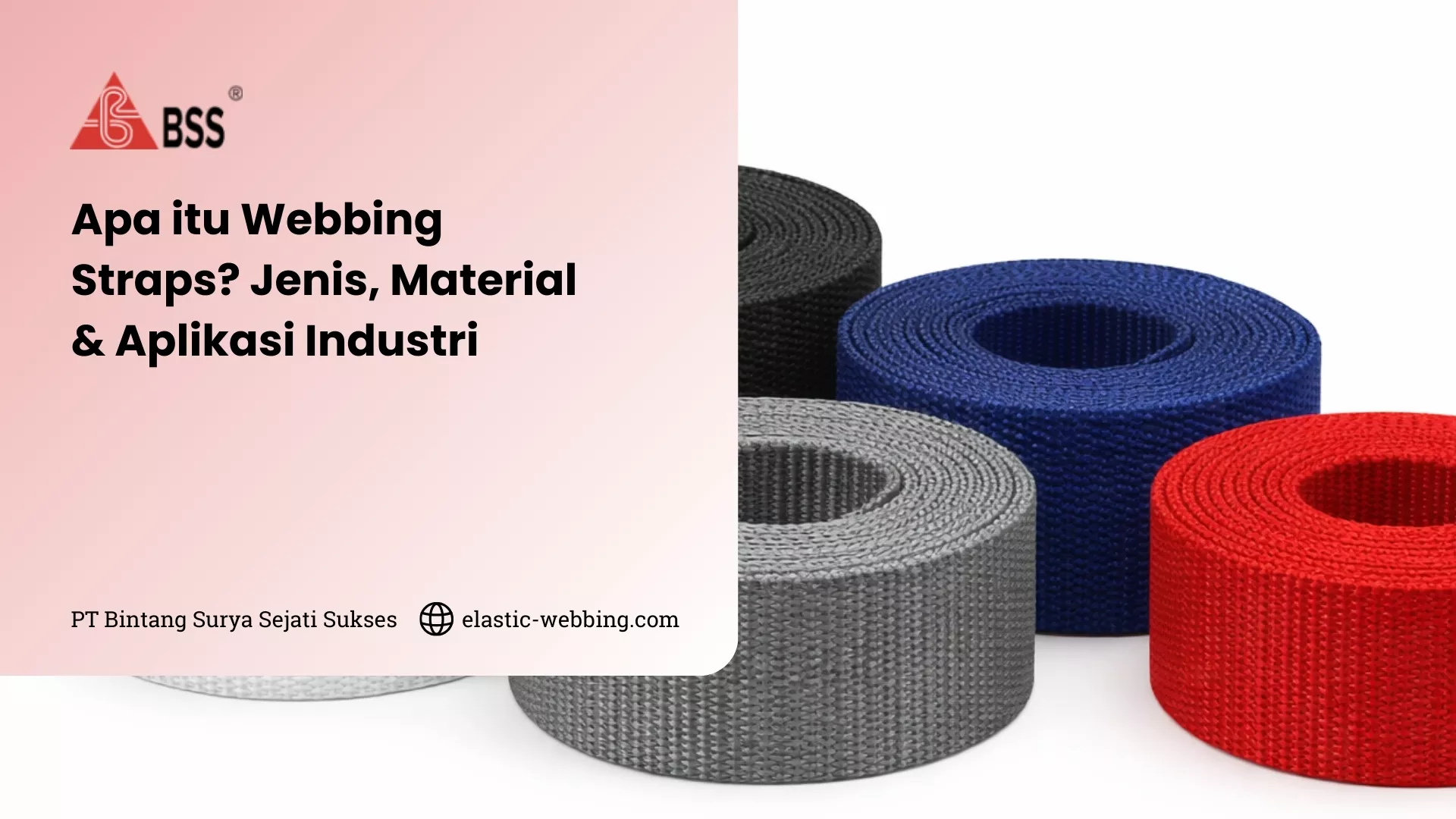


Across various industrial sectors, the need for strong, flexible, and safe fastening systems continues to grow. Whether in goods transportation, load securing, or integration into finished products, webbing straps have become a widely chosen solution due to their versatile characteristics.
Unlike conventional ropes or metal chains, webbing straps offer a combination of high tensile strength and flexible application. However, this performance is highly dependent on the correct selection of materials, structure, and manufacturing processes. Mistakes in choosing webbing straps can affect work efficiency and even compromise operational safety.
As a webbing manufacturer established since 1987, BSS understands that webbing straps are not merely auxiliary components, but essential parts of industrial systems. This article provides an in-depth discussion of what webbing straps are, their material types, structural composition, and applications across various industrial sectors.
What Are Webbing Straps?
Webbing straps are textile tapes produced through weaving or knitting processes, primarily designed for securing, restraining, or supporting loads. These webbings are engineered to withstand specific tensile forces according to defined technical specifications.
In industrial contexts, webbing straps serve as a lighter and more flexible alternative to metal materials. Their relatively soft surface also makes them safe for securing or supporting loads with sensitive surfaces without causing damage.
Webbing straps are widely applied in transportation systems, cargo securing, safety equipment, and consumer products. Therefore, a thorough understanding of webbing characteristics is essential for industry professionals.
Components & Structure of Webbing Straps
The structure of webbing straps consists of yarns woven or knitted in specific patterns. Weave density, yarn direction, and fiber type significantly influence the strength and flexibility of the webbing.
Generally, webbing straps are available in flat or tubular forms. Flat structures provide stability and even load distribution, while tubular structures offer additional protection against abrasion and pressure.
Beyond the basic structure, webbing straps may also undergo finishing processes such as UV-resistant coating, anti-abrasion treatment, or special treatments to enhance resistance to specific working environments. At BSS, every webbing structure is engineered based on the client’s industrial application requirements.
Types of Webbing Strap Materials
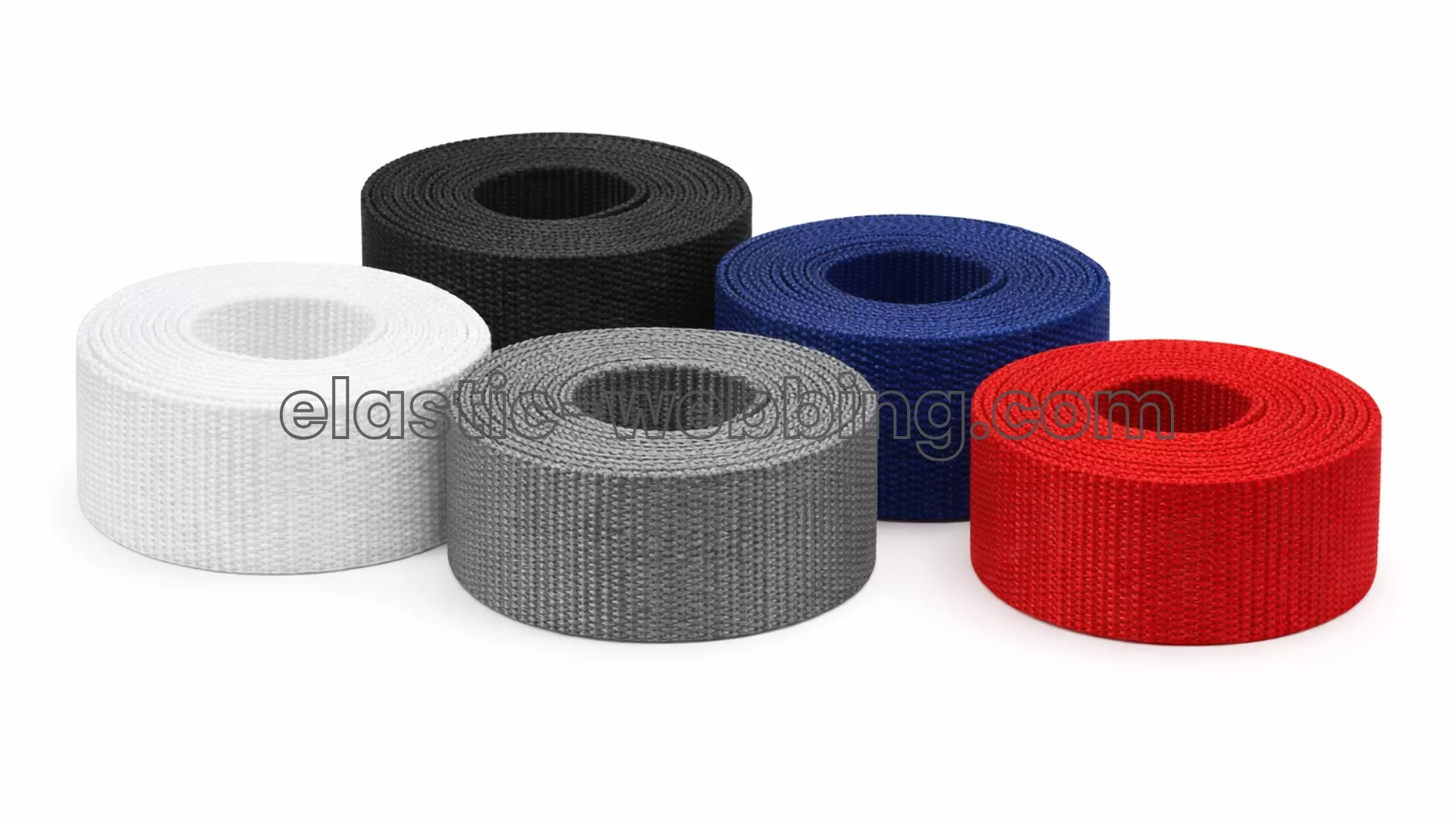
Material selection is the primary factor determining webbing strap performance. Below are commonly used materials and their characteristics.
1. Polyester
Polyester is the most commonly used material for webbing straps due to its high tensile strength and excellent dimensional stability. It does not stretch easily and maintains its shape even after long-term use.
Polyester is also resistant to UV exposure and moisture, making it suitable for outdoor use and general industrial environments. This is why polyester is widely used for cargo securing and safety systems.
BSS produces a wide range of polyester webbing for industrial applications due to its balanced performance, durability, and cost efficiency.
2. Nylon
Nylon is known for its higher elasticity compared to polyester. This elasticity allows webbing to absorb shock and vibration more effectively.
However, nylon tends to absorb water and may lose part of its strength when wet. Therefore, its application must be adjusted to the working environment.
In industrial practice, nylon is often used in applications requiring additional flexibility, such as safety equipment and outdoor gear.
3. Polypropylene (PP)
Polypropylene is a lightweight material with good chemical resistance. PP webbing does not absorb water and can float, making it suitable for certain applications in wet environments.
The main limitation of PP is its lower tensile strength compared to polyester and nylon. As a result, it is more appropriate for light to medium load applications.
BSS recommends polypropylene for specific applications that require chemical resistance or lightweight characteristics.
4. Aramid / High-Performance Fibers
Aramid and other high-performance fibers are designed for extreme applications. These materials offer very high tensile strength and excellent heat resistance.
Aramid webbing is used in high-risk industries such as energy, aerospace, and specialized safety applications. The higher material cost is proportional to its performance and reliability.
BSS provides high-performance fiber-based solutions for clients with specialized technical requirements and high safety standards.
5. Hybrid / Composite Materials
Hybrid materials combine two or more fiber types to achieve specific characteristics, such as high strength combined with good flexibility.
This approach allows webbing straps to be tailored precisely to the needs of specific industrial applications. However, hybrid designs require strict production control.
As an experienced manufacturer, BSS utilizes this approach for industrial projects requiring customized solutions.
Classification of Webbing Straps Based on Structure
In addition to material-based classification, webbing straps are also categorized by their structural construction. This structure affects how the webbing behaves under load.
Flat webbing is widely used for securing applications due to its even load distribution and good stability. Meanwhile, tubular webbing provides additional protection against internal abrasion.
Structural selection must be aligned with load type, usage method, and working environment. BSS assists clients in determining the most appropriate structure based on operational needs.
Advantages & Limitations of Webbing Straps
The main advantages of webbing straps are their lightweight nature, flexibility, and ease of use. Additionally, webbing does not damage load surfaces and is relatively safe for operators.
However, webbing straps have limitations when exposed to extreme heat and sharp objects. Without additional protection, webbing may experience abrasion or material degradation.
Therefore, selecting webbing straps must consider working conditions and operational risks to ensure optimal utilization of their advantages.
Industrial Applications of Webbing Straps
Webbing straps are widely used across multiple industries due to their ability to combine high tensile strength, flexibility, and surface safety. Compared to conventional fastening materials such as chains or steel wire ropes, webbing straps provide a lighter, easier-to-handle solution that adapts to various load shapes and working conditions. Each industry has specific requirements that influence the selection of material, structure, and webbing specifications.
1. Manufacturing & Logistics Industry
In manufacturing and logistics, webbing straps play a crucial role in securing, handling, and stabilizing goods during production and distribution. Webbing is used to secure machine components, raw materials, and finished products during transport by forklifts, cranes, or conveyor systems.
The main advantage of webbing straps in this industry is their ability to distribute pressure evenly without damaging product surfaces. This is particularly important for items with sensitive finishes such as automotive components, electronics, or coated materials.
Additionally, webbing straps improve operational efficiency as they can be installed and removed more quickly than metal fastening systems. With the right specifications, webbing helps reduce product damage risks and operational downtime.
2. Safety & Lifting Gear
In workplace safety systems and lifting gear, webbing straps are used as core components in webbing slings, lanyards, safety harnesses, and fall protection systems. In these applications, webbing functions not only as a connector but also as a critical element that directly supports human or working loads.
Webbing materials and structures used for safety applications must meet specific strength and durability standards. The webbing must withstand both static and dynamic loads while maintaining stability during repeated use.
Incorrect webbing selection in safety applications can have serious consequences. Therefore, the safety industry relies heavily on webbing straps with consistent quality, verified testing, and clearly defined technical specifications.
3. Outdoor & Sports Industry
In outdoor and sports industries, webbing straps are used in equipment such as carriers, climbing harnesses, tents, safety belts, and gear fastening systems. The primary requirements in this sector are lightweight webbing with reliable strength and environmental resistance.
Outdoor webbing must withstand UV exposure, high humidity, abrasion, and temperature variations. Polyester and nylon are commonly selected due to their resistance to these environmental factors.
Beyond technical performance, comfort and ergonomics are also important considerations. Webbing flexibility allows users to move freely without compromising safety or product durability.
4. Automotive & Transportation
The automotive and transportation industries are among the largest users of webbing straps, particularly in seat belt systems, cargo tie-downs, and vehicle load restraints. In these applications, webbing must meet strict safety standards as it directly relates to user protection.
Automotive webbing straps are engineered for high tensile strength, controlled elongation, and resistance to abrasion and material aging. Quality consistency is critical, as these products are used over long service lifespans.
In addition to passenger vehicles, webbing is also used in cargo securing systems for trucks, ships, and other transportation platforms. Proper webbing selection helps prevent load shifting during transit and reduces accident risks.
5. Apparel & Consumer Products
In the apparel and consumer goods industry, webbing straps are used in bags, backpacks, belts, fashion accessories, and work equipment. In this sector, webbing serves both as a structural element and a visual component.
Manufacturers often select webbing that combines strength, flexibility, and aesthetic appeal. Jacquard webbing or webbing with customized colors and patterns is widely used to support brand identity and product design.
Although lighter compared to heavy industrial applications, webbing quality remains critical. Webbing that wears quickly or loses shape will reduce product value and service life.
Quality Standards & Strength Testing for Webbing Straps
Industrial webbing straps must undergo tensile strength testing, abrasion testing, and dimensional stability evaluation. These tests ensure the webbing performs according to specifications.
Quality standards serve as essential references to ensure safety and consistent product quality. Technical labels indicating capacity and material specifications help users select the appropriate product.
At BSS, quality standards and quality control are integral parts of the webbing production process.
How to Choose the Right Webbing Straps
Selecting webbing straps requires consideration of load capacity, working environment, frequency of use, and applicable safety standards.
A common mistake is choosing webbing solely based on price without considering service life and operational risks. This approach often increases long-term costs.
BSS acts as a technical partner, helping industrial clients select webbing straps that best match their application requirements.
Get the Best Webbing Straps from BSS
As a webbing and webbing strap manufacturer established since 1987, PT Bintang Surya Sejati Sukses (BSS) is committed to delivering high-quality webbing solutions for both national and international industrial needs.
BSS not only manufactures webbing but also supports clients through technical consultation, material selection, and application-specific solutions.
If you are looking for a trusted webbing strap supplier and manufacturer in Indonesia, BSS is ready to become your long-term partner in supporting your industrial operations.