


In the modern industrial world, small details often determine the quality and reliability of a product. One component that is frequently considered simple yet plays a significant role is woven tape. This component is widely used as reinforcement, fastening, and functional elements across various industrial sectors.
Unlike ordinary ribbons or non-woven tapes, woven tape is produced through a controlled weaving process. This process results in a structure that is more stable, stronger, and more consistent – characteristics that are essential in industrial applications, whether as a structural element or a safety-supporting component.
As a company that has manufactured various types of webbing and narrow fabrics since 1987, BSS understands that woven tape is not merely an accessory. This article discusses in depth what woven tape is, the materials used, its construction, and how woven tape is applied across different industrial sectors.
What Is Woven Tape?
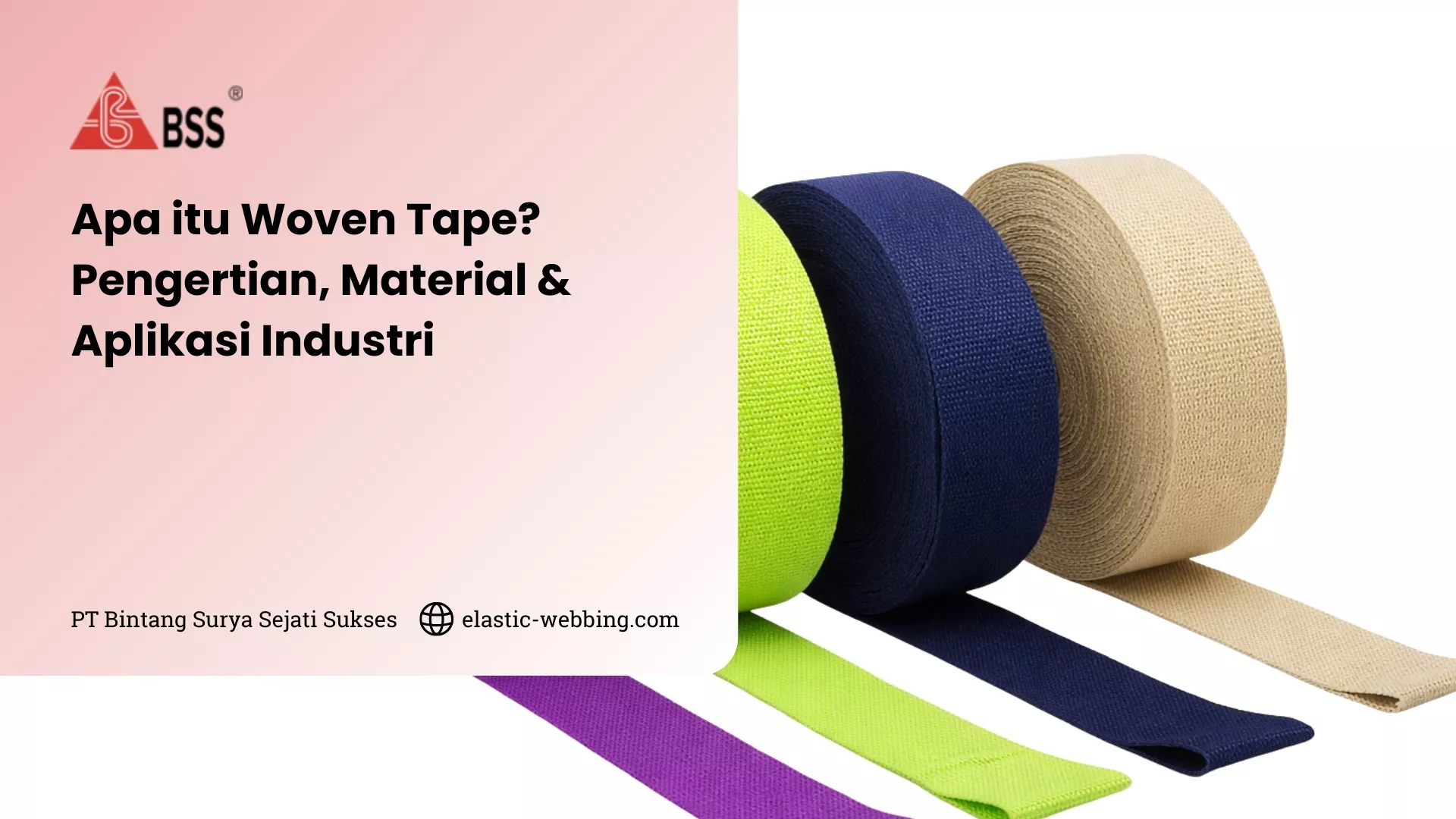
Woven tape is a textile tape made through a weaving process, in which warp and weft yarns are interlaced in a regular pattern to form a strong and stable structure. This process differentiates woven tape from knitted tape or elastic tape.
Because it is woven, woven tape has excellent dimensional stability. This means the tape does not easily stretch or deform during use, making it suitable for applications that require precision and consistency.
In industrial contexts, woven tape is commonly used as structural reinforcement, non-elastic straps, binding, or other functional components that require tensile strength and long-term durability.
Key Characteristics of Woven Tape
One of the primary characteristics of woven tape is its high dimensional stability. The tape maintains its shape and width even after repeated use or long-term application.
In addition, woven tape offers good tensile strength compared to non-woven tapes. The woven structure helps distribute loads evenly along the length of the tape.
Another important characteristic is its neat and consistent surface, allowing woven tape to function not only technically but also aesthetically—especially in apparel and consumer product applications.
Baca Juga : 5 Differences Between Nylon and Polyester for Industrial Applications
Materials Used in Woven Tape
Material selection greatly influences woven tape performance. Each material provides different characteristics depending on application requirements.
1. Polyester Woven Tape
Polyester is the most commonly used material for industrial woven tape. It is known for its stability, low water absorption, and resistance to UV exposure.
Polyester woven tape is suitable for both indoor and outdoor use and can maintain its strength over long periods. As a result, polyester is widely used in logistics, automotive, and outdoor product industries.
BSS uses polyester as the primary material for industrial woven tape that requires reliability and consistent production quality.
2. Nylon Woven Tape
Nylon offers greater flexibility and abrasion resistance compared to polyester. Nylon woven tape is suitable for applications involving high friction or dynamic use.
However, nylon tends to absorb moisture and is less UV-resistant than polyester. Therefore, its application must be adjusted according to the working environment.
In production practice, BSS recommends nylon woven tape for specific applications that require flexibility and high abrasion resistance.
3. Polypropylene (PP) Woven Tape
Polypropylene is known for being lightweight and having good chemical resistance. PP woven tape does not absorb water and can be used in humid environments.
Its tensile strength is relatively lower compared to polyester and nylon, making it more suitable for light to medium-duty applications.
BSS produces PP woven tape for specific needs that prioritize lightweight properties and cost efficiency.
4. Cotton / Natural Fiber
Woven tape made from cotton or natural fibers offers a more natural appearance and a soft hand feel. This material is widely used in fashion, interior, and decorative product applications.
However, cotton has limitations in strength and environmental resistance, making it less suitable for heavy industrial applications.
The use of cotton woven tape is more focused on aesthetics and comfort rather than structural performance.
5. High-Performance / Technical Fibers
For specialized requirements, woven tape can be produced using technical fibers such as aramid or high-tenacity fibers. These materials provide exceptional strength and durability.
Woven tape made from technical fibers is typically used in heavy industry, safety equipment, or high-risk working environments.
BSS provides technical fiber–based woven tape solutions for clients with stringent industrial specifications.
Structure & Construction of Woven Tape
In addition to material selection, weaving construction significantly affects woven tape performance. Weave patterns, yarn density, and edge finishing determine the tape’s strength and durability.
Woven tape can be produced with plain weave, rib weave, or other variations depending on application needs. The denser the weave structure, the higher the strength and stability of the tape.
BSS designs woven tape structures based on the product’s end-use, ensuring a balance between strength, flexibility, and production efficiency.
Differences Between Woven Tape, Webbing & Other Tapes
Woven tape is often equated with webbing, although they serve different functions. Webbing is generally designed for heavier loads, while woven tape is more commonly used as reinforcement or light structural components.
Compared to knitted tape, woven tape is more stable and less prone to stretching. Meanwhile, elastic tape is designed for flexibility rather than stability.
Selecting the appropriate type of tape helps industries achieve optimal performance without over-specifying or under-specifying materials.
Applications of Woven Tape Across Industries
Woven tape is used across various industries due to its ability to combine structural stability, strength, and design flexibility. Each industry utilizes woven tape with different specifications based on technical functions and environmental demands.
1. Apparel & Fashion Industry
In the apparel industry, woven tape is used as binding, straps, and seam reinforcement. Its stability helps maintain product shape and a neat appearance.
Beyond technical functions, woven tape also supports product aesthetics through consistent color and texture.
2. Bags, Footwear & Accessories
Woven tape is widely used as straps and structural reinforcement in bags and footwear. The tape supports loads without adding excessive weight.
Its abrasion resistance makes woven tape ideal for products used on a daily basis.
3. Safety & Industrial Equipment
In industrial equipment, woven tape serves as a supporting component that enhances product safety and durability.
Although it may not always bear the primary load, the quality of woven tape remains critical as it affects overall system performance.
4. Automotive & Transportation
The automotive industry uses woven tape in interiors, light fastening systems, and other functional components. Consistent quality is a key requirement.
Woven tape helps ensure long-term reliability in automotive applications.
5. Outdoor & Lifestyle Products
Outdoor products require materials that can withstand weather exposure and abrasion. Woven tape meets these needs while remaining relatively lightweight.
Applications include outdoor equipment, bags, and lifestyle products.
Quality Standards & Quality Control for Woven Tape
Industrial woven tape must meet specific quality standards, including width consistency, tensile strength, and abrasion resistance.
Strict quality control ensures that each production batch delivers consistent performance—an essential factor in B2B mass production.
BSS implements internal quality control processes to maintain consistency and reliability in woven tape products.
Baca Juga : What Is Military Webbing? Functions, Materials & Industry Standards