
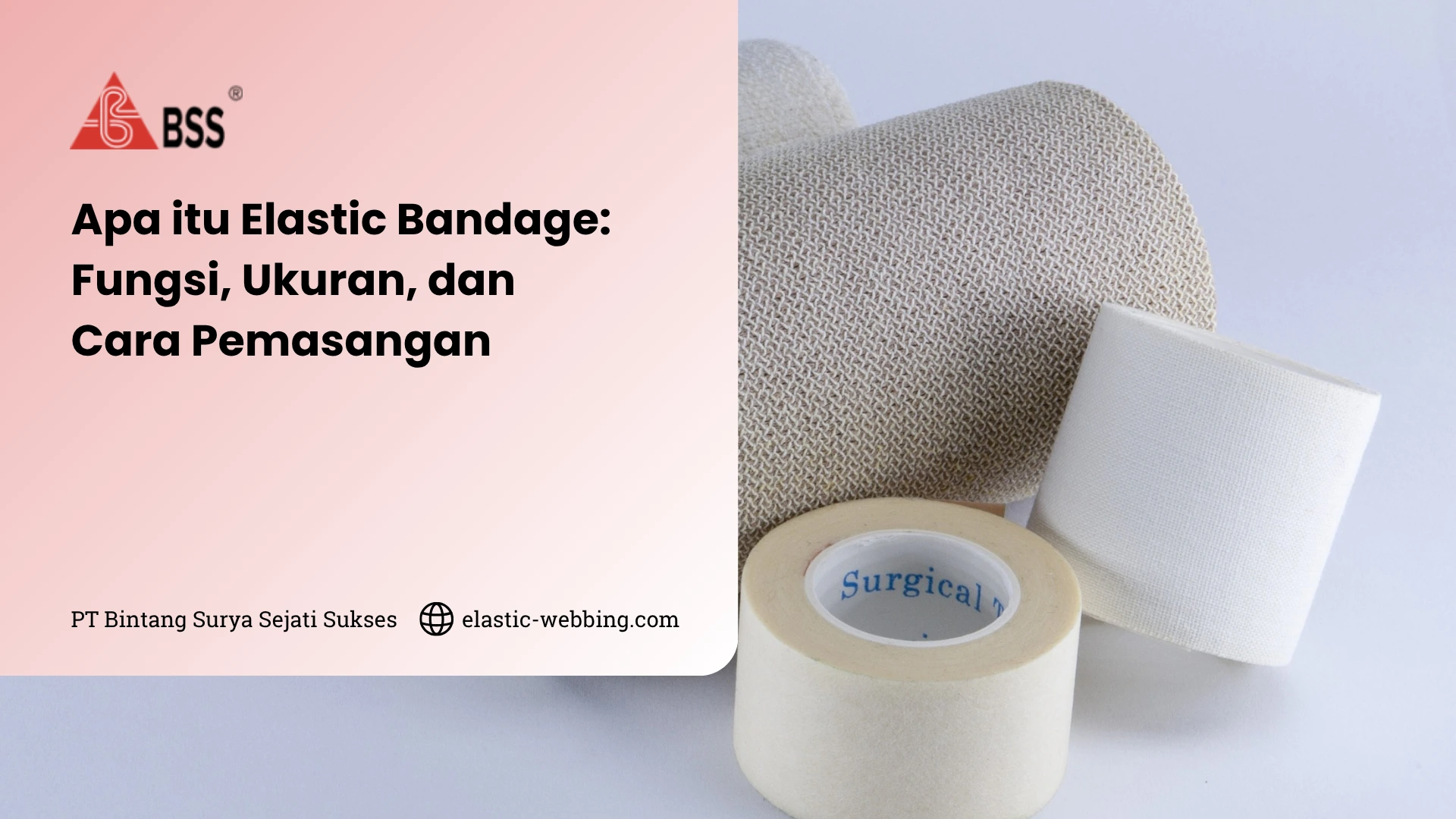


Elastic bandage is a practical solution often used when dealing with minor injuries, but not everyone fully understands how to use it properly. In emergency situations, an elastic bandage can provide optimal support without restricting body movement.
You need to know that its function is not just to wrap a wound, but also to help control swelling, reduce pain, and maintain joint stability. In this article, you will learn the definition, size variations, and proper application techniques.
In addition, you will also understand the important role of industries such as BSS in providing high-quality elastic products for medical needs. By understanding the basics, you can use this bandage effectively and safely.
Definition of Elastic Bandage
An elastic bandage (also known as an ACE bandage) is a roll-type bandage designed to wrap body parts such as the legs or arms.
This bandage is made from elastic material that can stretch, allowing it to provide controlled compression on specific areas without completely restricting movement.
To better understand its advantages, elastic bandages have several key characteristics that distinguish them from regular bandages:
- Flexible and able to follow body movement without significantly interfering with joint function
- Made from materials such as rubber, sweat-absorbing cotton, or crepe for comfortable use
- Equipped with clips or self-adhesive features to keep the bandage securely in place
The main difference between elastic and regular bandages is flexibility. Regular bandages tend to be rigid, while elastic bandages adapt to body shape and can support injured joints or tissues.
Functions of Elastic Bandage in Medical Use
In injury treatment, elastic bandages do more than just wrap the affected area—they provide controlled pressure and proper support.
Here are the key functions:
- Help manage muscle and joint injuries in a practical and flexible way
- Control swelling by preventing fluid buildup around the injured area
- Play an important role in the RICE method (Rest, Ice, Compression, Elevation), especially in the compression stage
- Support overall recovery by reducing swelling and stabilizing the injured area
However, elastic bandages should only be used as a temporary aid, typically for no more than 24–48 hours to maintain proper blood circulation.
Read Too: What Is Elastic Rubber Cord? Functions, Types, and Applications
Common Elastic Bandage Sizes
Each size is designed to provide optimal compression without disrupting blood flow. Choosing the right size improves effectiveness and comfort.
Standard Sizes (Width & Length):
Elastic bandages are generally about 4.5 meters long when stretched, allowing layered wrapping for even pressure. Common widths include:
- 7.5 cm x 4.5 m
- 10 cm x 4.5 m
- 15 cm x 4.5 m
Size Based on Body Area:
- Knee: 5–10 cm width for support without limiting movement
- Ankle, thigh, shoulder: around 7.5 cm for stability and pain relief
- Large areas or bigger injuries: 15 cm for broader coverage and even pressure
High-quality products usually have official certifications such as KEMKES RI AKL, indicating they are safe for medical use.
How to Apply an Elastic Bandage Correctly
Proper technique ensures optimal performance without affecting circulation.
1. Preparation Before Application
- Clean and dry the injured area
- Cover open wounds with sterile gauze
- Wash hands before handling the bandage
- Position the body comfortably and keep the injured limb straight
2. Wrapping Technique
- Start wrapping from below the injured area and move upward
- Use overlapping layers (each layer covering half of the previous one)
- Apply firm but not excessive pressure
- Ensure proper circulation by allowing one finger to fit under the bandage
- Secure with clips or adhesive
3. Important Considerations
- Loosen the bandage if numbness, tingling, or discoloration occurs
- Use for 24–48 hours only
- Remove during sleep
- Replace if dirty or damp
Elastic Bandage Price Range
In Indonesia (2026), elastic bandages are typically priced between Rp7,500 to Rp25,000 per roll, depending on several factors:
- Size (wider bandages cost more)
- Material quality (cotton is more comfortable and breathable)
- Features (self-adhesive, crepe, jacquard elastics)
- Safety standards (certified medical products are usually more expensive)
Tips for Choosing a Quality Elastic Bandage
- Choose comfortable and breathable materials
- Check adhesive strength and durability
- Match the bandage to your medical needs
- Buy from trusted brands to ensure safety and reliability
Common Mistakes When Using Elastic Bandage
- Wrapping too tightly, which can restrict blood flow
- Using it for too long, slowing down recovery
- Not replacing or cleaning it properly, increasing infection risk
Need High-Quality Elastic Bandage for Medical or Industrial Use?
As an essential medical tool, elastic bandages play a key role in injury recovery by providing proper compression, reducing swelling, and supporting joint stability.
However, material quality is the main factor that determines effectiveness and safety. For medical and industrial-scale needs, PT Bintang Surya Sejati Sukses (BSS) offers high-quality elastic materials with precision technology and international standards, including flexible custom production services.
If you need reliable elastic products tailored to your business or medical applications, consider consulting directly with BSS as a trusted manufacturing partner.
Read Too: What Is Stretch Fabric: Definition, Functions, and Benefits