


The function of braided elastic plays an important role in maintaining shape, flexibility, and stability in various types of garments and accessories. Before discussing further, you may not yet understand what braided material is and why it is widely used in textile production.
Another common question is what braided elastic is used for in industrial practice. From everyday clothing to healthcare products and sportswear, this material offers a combination of durability, efficiency, and comfort.
Textile companies like BSS also play a role in providing high-quality elastic products that support modern industry standards. This article will discuss its definition, benefits, and advantages in detail.
What Is Braided Material?
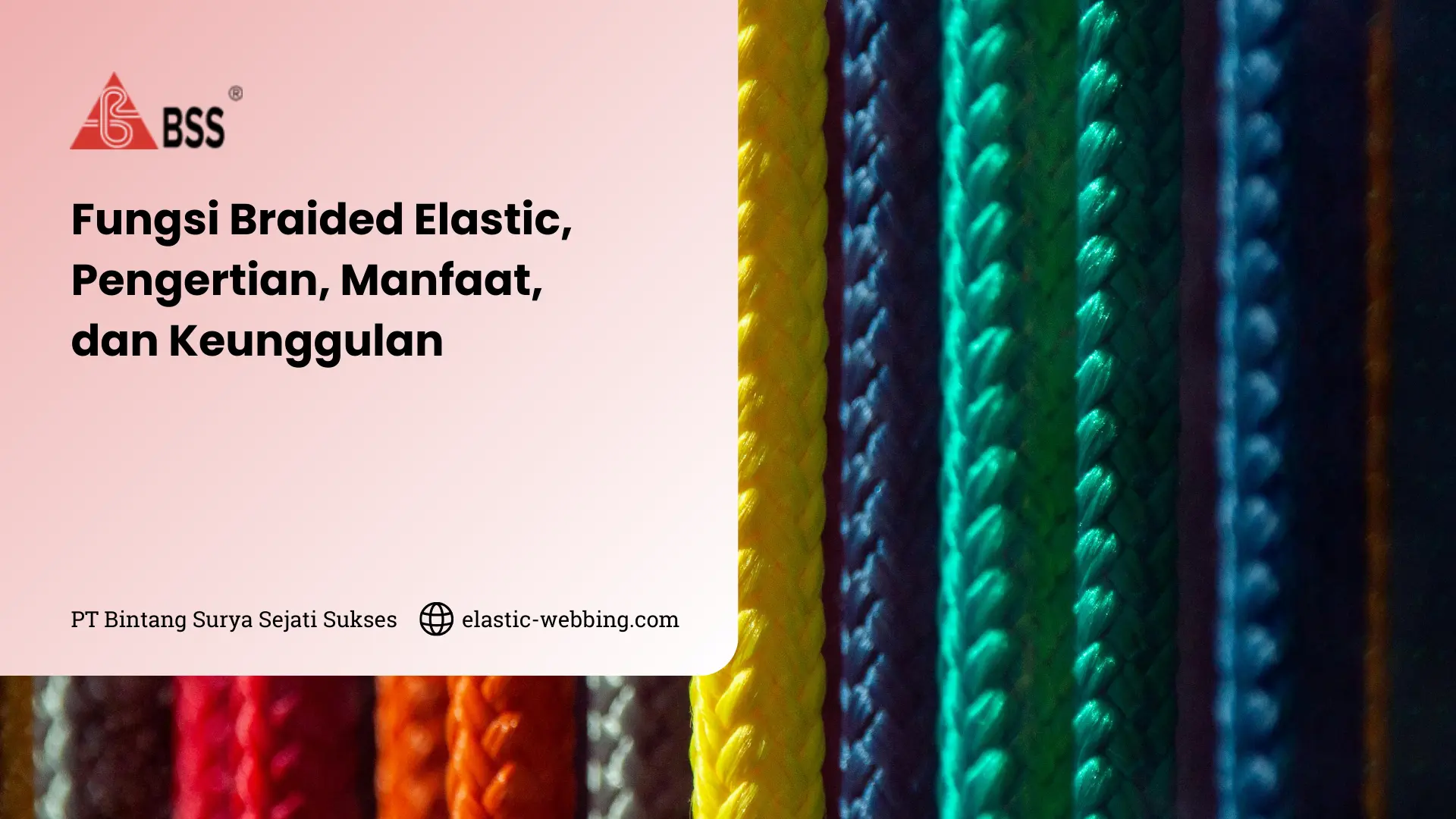
Braided elastic is a type of elastic tape that combines the strength of textile fibers with the flexibility of a rubber core inside.
This component is often referred to as a hidden element because it helps maintain the functionality of various textile products without being directly visible.
The production process of braided elastic involves several technical stages designed to produce stable elasticity and high durability, including:
-
Material Combination
-
Braiding Process
-
Machine Technology
-
Finishing Process
Braided elastic has a longitudinal ribbed surface and tends to be denser compared to other types.
Meanwhile, knitted elastic has a softer texture and usually contains small pores that make it more breathable. In contrast, woven elastic has a thicker and stronger structure due to its tight weaving technique.
What Is Braided Elastic Used For?
Braided elastic is widely used across various sectors because it combines strength, flexibility, and durability.
Its applications include:
Garment Industry:
It is mainly used in applications that involve casing or fabric channels. Its elastic structure helps maintain the shape of clothing while providing comfort.
Medical Field:
One of the most common uses is for mask ear loops. This elastic is typically available in small sizes ranging from 3 mm to 5 mm and can withstand repeated washing processes.
Fashion Accessories:
In the hair accessory industry, this material is often used as the base for hair ties, headbands, and supports for wigs or hairpieces.
Household and Industrial Products:
For household needs, this elastic is commonly used in bed sheets, mattress covers, furniture protectors, and storage covers.
Functions of Braided Elastic in Various Products
Many manufacturers use this elastic in clothing, healthcare products, and sports equipment because of its strong yet flexible characteristics.
The functions of braided elastic include:
1. Maintaining Elasticity in Textile Products
Manufacturers produce braided elastic using diagonal braiding or interlacing techniques. This process wraps a rubber core, made from natural rubber or spandex, with fibers such as polyester, nylon, or cotton.
This structure results in stable elasticity and the ability to return to its original shape after stretching.
Modern technologies such as high-tension braiding also help manufacturers control thread tension more precisely.
2. Providing Flexibility and Comfort
In addition to strength, this material is designed to improve user comfort. Its fiber structure allows good air circulation, making products breathable and comfortable during various activities.
Additional innovations such as microfiber and nano-fiber enhance surface softness and sweat absorption, making it ideal for sportswear or yoga clothing.
3. Helping Maintain Product Shape
The braided structure of braided elastic provides high structural stability. The material can maintain its shape even after repeated stretching during use.
As long as it is not stitched permanently through the center, this elastic tends to resist deformation.
In addition, its ribbed surface texture provides extra grip on fabric, helping it stay in place without shifting or rolling.
4. Supporting Product Durability
Durability is one of the main reasons many manufacturers choose this material. Braided elastic has good resistance to friction, making it suitable for use inside fabric casings where it can move freely.
This material can also withstand repeated washing without significant loss of elasticity.
Therefore, products such as cloth masks, homewear, and sportswear often use this type of elastic.
Some variants are even equipped with additional technologies such as heat resistance, UV protection, and resistance to chlorine and saltwater, making them suitable for outdoor or water-based use.
Read Too: What Are Webbing Straps? Types, Materials & Industrial Applications
Benefits of Braided Elastic for Industry
Although often hidden within clothing or textile structures, this material provides many industrial benefits, such as:
Strong and Durable Elastic Material:
Braided elastic is known for its high tensile strength and strong braided structure.
Easy Application Across Various Products:
Its ribbed surface provides better grip on fabric, helping it stay in position during use.
Improved User Comfort:
The breathable nature of the material ensures proper air circulation.
Suitable for Various Textile Industry Needs:
Its flexibility allows it to be used in a wide range of textile product categories.
Advantages of Braided Elastic Compared to Other Elastic Types
Many textile manufacturers choose this type of elastic because it provides a balance between tensile strength, consistent elasticity, and production efficiency.
1. Stable Elasticity
One of the main advantages of braided elastic is its stable elasticity. It has a high recoil ability, allowing it to return to its original shape after stretching.
This characteristic makes it comfortable for use in products that require both flexibility and stability.
Modern production technologies such as high-tension braiding enable precise control of thread tension, resulting in consistent elasticity across production batches.
2. Strong Braided Structure
Another advantage lies in its strong braided structure. Manufacturers create this elastic using diagonal braiding or interlacing techniques, where multiple yarn strands are woven around the rubber core.
This structure provides several key benefits:
-
High tensile strength to withstand pulling forces
-
Better resistance to friction, especially in fabric casings
-
Shape stability even after repeated stretching
As long as it is not stitched permanently in the center, it maintains its original form effectively.
3. Flexible for Various Applications
Another advantage is its flexibility in use. This material exhibits a phenomenon called necking, where its width narrows when stretched.
This property makes it easier to insert into narrow fabric casings.
Because of this, many industries use it for various applications, such as:
-
Waistbands in pajamas, casual pants, and jacket cuffs
-
Mask ear loops in the healthcare sector
-
Outdoor products such as bungee cords, storage covers, and notebook straps
4. Easy to Produce in Various Sizes
Manufacturers can produce braided elastic in a wide range of sizes, from small sizes like 1/8 inch (around 3 mm) for masks and hair ties, to wider sizes like 1/2 inch (around 12 mm) for waistbands.
This flexibility makes it suitable for various industrial needs.
In addition, manufacturers can customize colors, elasticity levels, and designs based on product requirements.
The production process is also relatively efficient, making it ideal for large-scale manufacturing while maintaining quality.
Differences Between Braided, Knitted, and Woven Elastic
In general, these three types of elastic serve the same purpose—providing flexibility in garments or fabric products. However, their manufacturing processes, tensile strength, and applications differ significantly.
Below is a simplified comparison:
| Feature | Braided Elastic | Knitted Elastic | Woven Elastic |
|---|---|---|---|
| Main Application | Ideal for fabric casings due to necking properties | Suitable for products in direct contact with skin | Used for heavy-duty applications requiring high strength |
| Product Examples | Pajama waistbands, skirts, jacket cuffs, mask ear loops, hair ties | Underwear, light sportswear, bed sheets | Heavy outerwear, bags, military equipment |
| Sewing Compatibility | Not suitable for stitching through the center as it may damage the rubber core | Very suitable because needles can pass between knit loops | Very suitable due to strong woven structure |
Economically, braided elastic generally has lower production costs compared to knitted and woven types.
Therefore, textile manufacturers often choose this material for mass production that requires cost efficiency without sacrificing basic elasticity performance.
Tips for Choosing High-Quality Braided Elastic
Choosing the right braided elastic affects the durability and performance of products in the long term.
If the wrong type is selected, garments or accessories may stretch out quickly, lose shape, or fail to hold fabric properly.
Here are some tips:
Pay Attention to Material Composition:
The material is a key factor that determines quality. Manufacturers usually select fiber combinations that provide both strength and stable flexibility.
Check Elasticity and Durability:
High-quality elastic should stretch and return to its original shape consistently.
Choose the Right Size for the Product:
Elastic size must match the product’s function for optimal performance.
Need High-Quality Braided Elastic for Your Production?
Choosing high-quality braided elastic ensures textile products have optimal performance, comfort, and durability.
With more than three decades of experience, BSS is a narrow fabrics manufacturer capable of providing elastic components that meet international standards.
With European-standard precision machinery and an integrated in-house production system, BSS maintains consistent quality from development to finishing.
If you need the best elastic materials, BSS is an efficient and high-quality manufacturing solution.
Read Too: How to Tie a Webbing Sling Safely and Extend Its Lifespan