
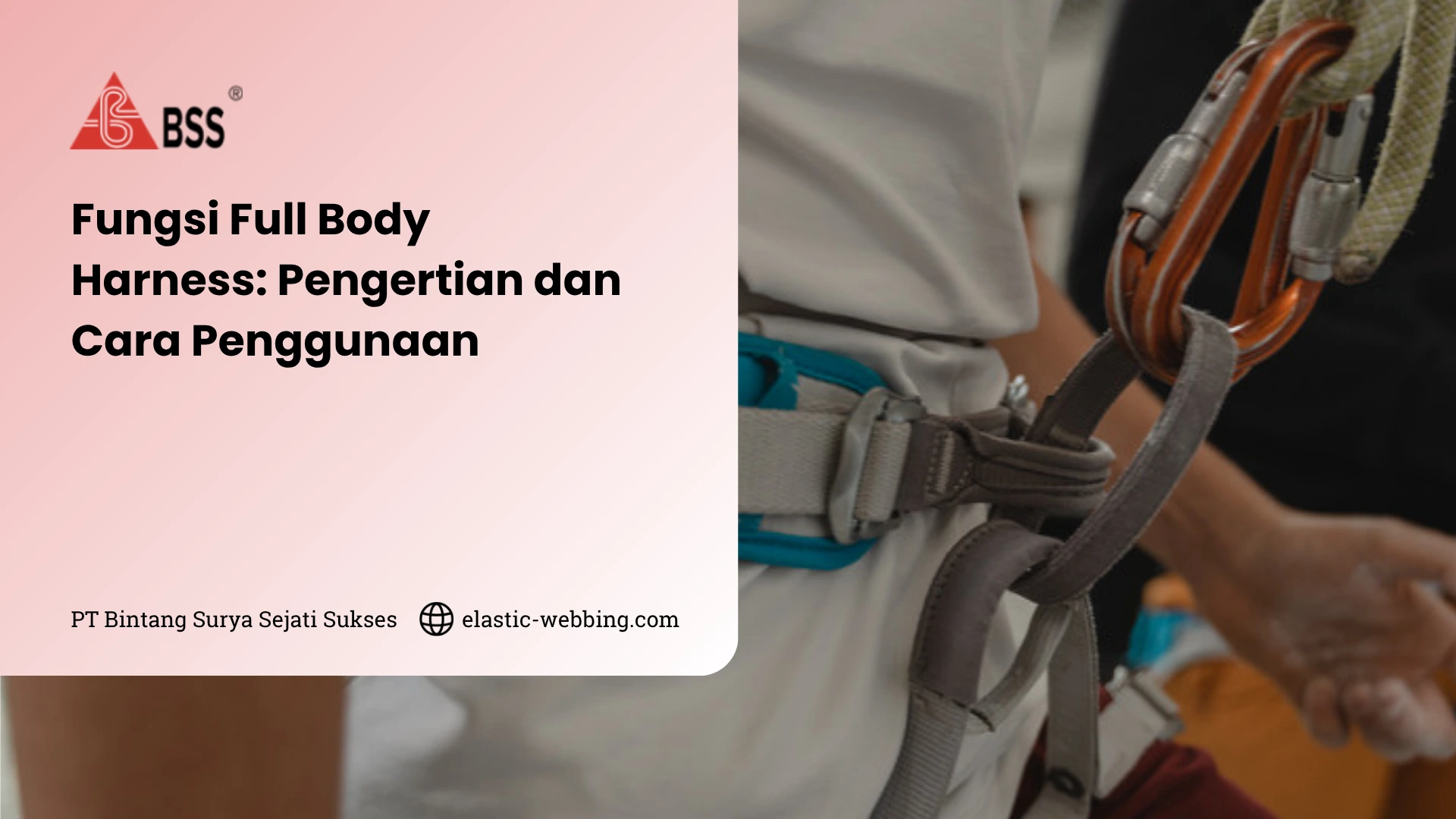


Working at heights always involves risks that should never be underestimated. Therefore, understanding the function of a full body harness is essential before starting any work in areas where fall hazards may occur.
This personal protective equipment (PPE) serves as a safety system designed to protect workers in emergency situations. However, the level of protection provided depends not only on the quality of the equipment but also on the user’s understanding of its components and proper use.
In this article, you will learn what a full body harness is, explore its key components, and understand how to use it correctly to maximize workplace safety.
What Is a Full Body Harness?
A Full Body Harness (FBH) is personal protective equipment (PPE) designed to protect workers performing tasks at height.
This equipment helps reduce the risk of serious injury during a fall by arresting the fall and distributing impact forces evenly across multiple parts of the body.
In Indonesia, the use of PPE for working at heights is regulated under the Minister of Manpower Regulation (Permenaker) No. 9 of 2016. This regulation aims to improve workplace safety, reduce accident risks, and prevent losses for both workers and companies.
Components of a Full Body Harness
A full body harness consists of several components that work together to ensure user safety. Each component serves a specific purpose.
1. D-Rings and Their Functions
D-rings are the primary attachment points on a full body harness. Each D-ring position serves a different purpose depending on the type of work being performed.
Generally, a standards-compliant full body harness includes five D-ring attachment points:
- Dorsal (Back): The primary attachment point for fall arrest systems during horizontal movement.
- Sternal (Chest): Used during vertical movement such as climbing ladders. This position helps keep the body upright in the event of a fall.
- Lateral (Waist): Located on both sides of the waist for work positioning applications, allowing workers to use both hands freely.
- Ventral (Abdomen): Serves as the connection point for ascending and descending devices.
- Shoulder: Typically found on Class E harnesses and used for rescue operations or confined-space work.
Each D-ring should have a minimum strength rating of 15 kN to meet safety standards.
2. Shoulder Straps
Shoulder straps support the harness and keep it properly positioned on the user’s body.
They prevent the harness from slipping off the shoulders and help distribute impact forces across the upper body in the event of a fall.
3. Chest Strap
The chest strap connects the shoulder straps and keeps them stable during use.
Besides maintaining proper fit, it helps distribute impact forces across the chest and shoulders rather than concentrating pressure on a single point.
4. Leg Straps
Leg straps keep the harness securely positioned and prevent shifting during use.
They also support body weight when a worker is suspended after a fall, helping maintain a stable and comfortable position during rescue operations.
5. Buckles and Adjustment Straps
These components ensure the harness fits securely on the user.
- Buckles act as locking mechanisms that make putting on and removing the harness safe and convenient.
- Adjustment straps allow users to customize the fit according to body shape, ensuring the harness is snug, secure, and comfortable.
6. Lanyards and Supporting Connectors
A lanyard is the connecting line that links the full body harness to an anchor point as part of a fall protection system.
Key functions and requirements include:
- Serving as the primary connection between the worker and the safety system.
- Supporting body weight during a fall event.
- Shock-absorbing lanyards should only be attached to the sternal or dorsal D-ring positions to ensure optimal fall arrest performance.
The system also uses connectors such as carabiners and hooks, which securely connect all components within the fall protection system.
How to Wear a Full Body Harness Correctly
Proper use of a full body harness is critical for ensuring safety while working at heights.
Follow these steps carefully to ensure maximum protection.
1. Inspect the Harness Before Use
Always perform a visual inspection before wearing the harness.
Check all webbing, stitching, buckles, and D-rings for signs of tears, wear, corrosion, or damage that could compromise the equipment’s strength.
In addition, review the harness usage history. If the harness has already arrested a fall and is designed as a single-use fall arrest harness, it should be removed from service immediately.
Replacing compromised equipment is far safer than risking failure during work.
2. Put the Harness on Correctly
Hold the dorsal D-ring located on the back and lift the harness to identify the front, back, and leg straps.
Next, loosen all straps to make the fitting process easier.
Insert your arms through the shoulder straps and ensure all straps are positioned correctly around the shoulders, chest, waist, and thighs without twists.
3. Adjust the Shoulder, Chest, and Leg Straps
Once the harness is on, adjust each strap to fit your body properly.
A correct fit ensures both comfort and maximum protection.
Shoulder Straps
Tighten the shoulder straps so they fit securely without slipping or sagging.
Chest Strap
Fasten and tighten the chest strap across the center of the chest to keep the shoulder straps stable.
Leg Straps
Adjust the leg straps so they fit comfortably around the thighs while providing sufficient support if suspension occurs.
Buckles
Verify that all buckles are properly locked and adjusted. They should be snug but not excessively tight.
4. Connect the D-Ring to the Lanyard
After adjusting all straps, connect the lanyard to the appropriate D-ring based on the task being performed.
- Dorsal D-Ring (Back): Used for horizontal movement and general fall arrest applications.
- Sternal D-Ring (Chest): Used for climbing ladders and other vertical access activities.
If using a shock-absorbing lanyard, attach it only to the dorsal or sternal D-ring.
Also, ensure all D-rings have a minimum load capacity of 15 kN to meet safety requirements.
5. Perform a Final Safety Check
Before starting work at height, conduct a buddy check with a coworker.
Ask them to inspect all straps, buckles, and D-ring positions, especially areas that are difficult to see, such as the back.
Finally, verify that the entire fall arrest system—including the lanyard and anchor point—is properly connected and securely locked.
This final inspection helps reduce installation errors and enhances workplace safety.
Differences Between Seat Harness and Full Body Harness
Although both are forms of personal protective equipment for working at heights, seat harnesses and full body harnesses serve different purposes.
Understanding these differences will help you choose the right equipment for specific tasks.
1. What Is a Seat Harness?
A seat harness supports the body primarily through the waist and thighs.
Compared to a full body harness, it has a lighter design that allows greater freedom of movement.
Because it supports only part of the body, it is generally used in tasks where fall risks are lower or mobility is prioritized over comprehensive protection.
2. Primary Functions of a Seat Harness
A seat harness is designed to provide comfort while maintaining a secure working position.
Its key functions include:
- Providing greater mobility and freedom of movement.
- Restricting movement into hazardous areas through work restraint systems.
- Supporting work positioning so workers can use both hands freely.
3. Primary Functions of a Full Body Harness
Unlike a seat harness, a full body harness provides complete fall protection.
It is the preferred choice for high-risk work at heights because it supports the entire body safely.
Its primary functions include:
- Arresting falls and reducing the risk of injury.
- Keeping the body upright after a fall to facilitate rescue operations.
- Supporting emergency evacuation through multiple attachment points.
4. Differences in Weight Distribution
The two harness types also differ in how they distribute loads.
Seat Harness
- Load is concentrated on the waist and thighs.
- During a free fall, impact forces are focused on these areas, increasing injury risk if not paired with an appropriate safety system.
Full Body Harness
- Load is distributed across the shoulders, chest, waist, and thighs.
- Balanced weight distribution reduces spinal stress and protects vital organs from sudden impact forces.
5. When to Use a Seat Harness vs. a Full Body Harness
Use a Full Body Harness When:
- Working at heights above 1.8 meters (6 feet).
- Working in environments with significant free-fall risks, such as construction sites, towers, and industrial structures.
- Using a fall arrest system with a lanyard and energy absorber.
Use a Seat Harness When:
- Mobility is the primary requirement and fall risks are controlled.
- Performing work positioning tasks that require stability and unrestricted hand use.
Also Read: What Is a Harness? Definition, Functions, and Parts of a Body Harness
Full Body Harness Applications Across Industries
Different industries have unique requirements for harness usage, attachment points, and safety systems.
1. Construction and High-Rise Buildings
The construction industry is one of the largest users of full body harnesses.
Workers building high-rise structures, bridges, and steel frameworks face significant fall hazards.
In the event of a fall, the harness distributes impact forces across the shoulders, chest, hips, and thighs, reducing the risk of severe injury.
For construction work, the dorsal attachment point is commonly used to support horizontal movement and fall arrest systems.
2. Oil, Gas, and Energy Industries
Workers in oil and gas facilities, petrochemical plants, and power generation sites face numerous hazards beyond working at height, including heavy machinery, complex structures, and chemical exposure.
Full body harnesses are an essential part of safety procedures in these environments.
Some harnesses are manufactured with specialized materials that offer enhanced resistance to chemicals and extreme working conditions.
3. Telecommunications and Cell Towers
Telecommunications technicians climb cell towers and communication structures to install, inspect, and maintain equipment.
These tasks require fall protection systems that provide stability and security during climbing.
The sternal attachment point helps maintain an upright posture while climbing, while lateral D-rings support work positioning, allowing technicians to work hands-free without losing balance.
4. Rope Access and Rescue Operations
Rope access and rescue work require specialized harness systems.
Rope Access
Rope access technicians often remain suspended for extended periods while working.
The ventral attachment point is typically used for ascenders and descenders.
Rescue Operations
Rescue teams use specialized harnesses equipped with additional attachment points to facilitate victim evacuation from difficult-to-access locations.
5. Outdoor Activities and Professional Climbing
Beyond industrial applications, full body harnesses are also used in professional climbing and outdoor activities that require enhanced fall protection.
These harnesses often include padded waist and thigh sections for improved comfort during prolonged suspension.
In certain situations, such as confined-space work, Class E harnesses are commonly used to improve mobility and support emergency rescue procedures.
Tips for Choosing a High-Quality Full Body Harness
When selecting a full body harness, consider more than just price or brand. Material quality, safety certifications, and job suitability are equally important.
1. Ensure Durable and High-Strength Webbing
Material quality is one of the most important factors in determining a harness’s ability to withstand fall forces.
Consider the following:
- Choose a harness designed for your specific application, whether fall prevention or fall arrest.
- Verify that metal components, especially D-rings, have a minimum strength rating of 15 kN.
- For high-temperature or chemically exposed environments, select webbing with suitable resistance properties.
2. Choose a Harness with Safety Certifications
Certification confirms that a harness has been tested according to recognized safety standards.
When evaluating products, ensure that:
- The harness complies with applicable workplace safety regulations.
- The product includes a user manual covering operation, inspection, maintenance, and service life limitations.
- Classification labels such as Class A, D, E, L, or P are clearly indicated.
3. Match the Harness to the Job Requirements
Different jobs involve different risks and movement patterns.
Recommended options include:
- Horizontal movement: Minimum Class A harness with a dorsal D-ring.
- Vertical climbing: Class L harness or a model with a sternal D-ring.
- Confined space work: Class E harness with shoulder D-rings.
- Work positioning: Class P harness or a model equipped with lateral D-rings.
4. Select a Trusted Harness Manufacturer
In addition to product specifications, choose a manufacturer with a proven reputation.
Reliable manufacturers often provide:
- High-quality products
- After-sales support
- Technical consultation
- User training
- Periodic inspection services
These services help ensure that workers use and maintain their equipment correctly and safely.
Looking for High-Quality Full Body Harness Materials and Components?
A full body harness plays a crucial role in protecting workers who perform tasks at height. However, maximum protection can only be achieved when high-quality equipment is selected and used according to proper procedures.
If you are looking for premium webbing materials and narrow fabrics for personal protective equipment manufacturing or industrial applications, PT Bintang Surya Sejati Sukses (BSS) is ready to be your trusted partner.
With experience dating back to 1987, European-standard technology, strict quality control processes, and custom production services, BSS delivers reliable material solutions that help improve safety standards across a wide range of industries. Contact us today for a consultation!
Also Read: Mattress Tape Supplier Indonesia: A Guide to Choosing a Reliable Manufacturer