


Understanding the differences between woven, knitted, and braided elastic can help you make the right choice for your application. Selecting the wrong type may affect user comfort, increase production costs, and reduce product performance in actual use.
As industrial requirements continue to evolve, the demand for materials that are strong, comfortable, and adaptable to specific technical requirements continues to grow. For this reason, understanding the strengths of each elastic construction is essential.
In this article, you’ll learn about the characteristics, functions, and applications of woven, knitted, and braided elastic. You’ll also discover BSS, a trusted narrow fabrics manufacturer that provides high-quality elastic solutions for a wide range of industries.
What Is Elastic?
In general, elastic is made from a combination of textile fibers such as polyester, nylon, or cotton, along with elastomeric materials like rubber or spandex. This combination creates a material that can stretch and return to its original shape after use.
However, the performance of elastic is not determined solely by its raw materials. The construction method used during manufacturing also plays a major role in its strength, comfort, durability, and flexibility.
Understanding the Three Main Types of Elastic
The manufacturing industry generally categorizes elastic into three main types based on their construction method: woven, knitted, and braided. Each type offers unique advantages depending on the intended application.
1. What Is Woven Elastic?
Woven elastic is widely recognized as the strongest and most stable type of elastic.
Manufacturers produce woven elastic by interlacing warp and weft yarns together with elastomeric fibers, creating a dense and durable structure.
This construction enables woven elastic to maintain its shape even when subjected to significant tension or pressure. As a result, many industries prefer woven elastic for applications requiring superior strength and long-term durability.
2. What Is Knitted Elastic?
Knitted elastic is made using an interlocking loop structure created through a knitting process.
This technique produces a material that is softer, lighter, and more flexible than woven elastic.
Many manufacturers choose knitted elastic for products that prioritize comfort because it feels smoother against the skin. Additionally, its knitted structure allows better airflow, making it more breathable.
Due to its comfort and softness, knitted elastic is commonly used in underwear, sleepwear, loungewear, and waistbands that require greater flexibility.
3. What Is Braided Elastic?
Braided elastic is produced by weaving yarns diagonally around a rubber core.
This construction creates the distinctive horizontal ribbed pattern that characterizes braided elastic.
Braided elastic offers excellent flexibility but behaves differently from woven and knitted elastic. When stretched, it tends to become narrower, making it important to use it in suitable applications.
Manufacturers typically insert braided elastic into fabric casings rather than sewing it directly onto products. It is commonly found in face masks, hair ties, sleeve cuffs, baby products, and other lightweight textile applications.
Also Read: What Is Elastic Tape? Definition, Types, Functions & Examples
Differences Between Woven, Knitted, and Braided Elastic
Each type of elastic has distinct characteristics. Understanding their strengths and limitations allows manufacturers to create products that are more durable, comfortable, and fit for purpose.
1. Differences in Construction
The way yarns and elastomeric fibers are arranged determines the fundamental characteristics of elastic. Construction directly affects strength, flexibility, and durability.
a. Woven Elastic Structure
Manufacturers create woven elastic by interlacing warp and weft yarns around elastomeric fibers.
This cross-weave pattern produces a dense, compact, and highly durable structure.
Because of its strong construction, woven elastic is generally thicker than other types. Its stability enables it to maintain its shape even under heavy stress and repeated stretching.
b. Knitted Elastic Structure
Knitted elastic is created by forming interconnected loops of yarn.
This construction results in a softer, lighter, and more flexible material.
The small gaps between loops also improve airflow, making knitted elastic more breathable and comfortable against the skin.
c. Braided Elastic Structure
Braided elastic is formed by braiding yarns diagonally around a rubber core.
This manufacturing method creates the recognizable horizontal ridges visible on its surface.
While braided elastic offers good flexibility, it is not as strong as woven elastic and is generally better suited for lightweight applications.
2. Differences in Strength and Durability
Each elastic type provides a different level of strength and longevity based on its construction density and manufacturing method.
a. Woven Elastic for Maximum Strength
Woven elastic delivers the highest level of strength and durability among all elastic types.
Its tightly woven structure allows it to withstand strong tension without significant deformation.
In addition, woven elastic maintains its performance even after repeated washing, stretching, and heavy use. These characteristics make it the preferred choice for demanding industrial applications.
b. Knitted Elastic for Balanced Flexibility
Knitted elastic offers a balance between durability and comfort.
Its flexibility allows it to move naturally with the fabric while providing sufficient support.
Although reasonably durable, knitted elastic may lose elasticity faster than woven elastic when subjected to intensive long-term use.
c. Braided Elastic for Cost-Effective Applications
Many manufacturers choose braided elastic because it is generally more economical.
It provides adequate stretch performance for lightweight applications and everyday products.
However, its durability is lower than both woven and knitted elastic, making it less suitable for heavy-duty applications.
3. Differences in Behavior When Stretched
The construction method also influences how each elastic type reacts to stretching and sewing.
a. Woven Elastic Resists Rolling
Its dense structure keeps woven elastic stable when stretched.
Many manufacturers refer to it as a “no-roll elastic” because it does not easily curl or roll during use.
Additionally, its width remains consistent even under maximum tension, helping maintain both comfort and product appearance.
b. Knitted Elastic Remains Stable When Sewn
One of the key advantages of knitted elastic is its ability to retain elasticity after sewing.
The knitting structure is less likely to be damaged by sewing needles, helping preserve stretch performance.
When stretched, knitted elastic also experiences minimal narrowing, making it easier to use in garments.
c. Braided Elastic Narrows When Stretched
Unlike woven and knitted elastic, braided elastic tends to narrow in width when stretched, a phenomenon known as necking.
Its diagonal structure is also more sensitive to needle penetration. If sewing damages the braid pattern, the elastic may lose part of its recovery performance.
4. Differences in User Comfort
Besides strength, manufacturers must consider comfort requirements when selecting elastic.
a. Woven Elastic for Heavy-Duty Products
Its firm and stable structure makes woven elastic ideal for products that require maximum support.
Common applications include workwear, military gear, orthopedic products, and automotive components.
Its ability to maintain shape helps ensure reliable performance in demanding conditions.
b. Knitted Elastic for Direct Skin Contact
The soft and lightweight texture of knitted elastic makes it ideal for products that come into direct contact with the skin.
Manufacturers frequently use it in underwear, sleepwear, baby clothing, and fashion products that prioritize all-day comfort.
c. Braided Elastic for Fabric Casings
Because braided elastic narrows when stretched, it performs best when enclosed within fabric casings.
This method helps preserve its shape and reduces the risk of damage from direct stitching.
As a result, braided elastic is commonly found in face masks, sleeve cuffs, concealed waistbands, and hair accessories.
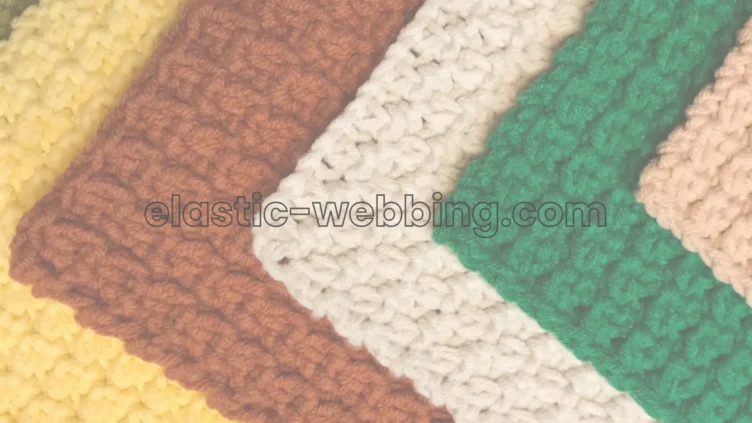
Advantages and Disadvantages of Each Elastic Type
Each elastic type has unique characteristics due to its manufacturing process. Understanding these advantages and limitations helps businesses choose the most suitable option.
1. Woven Elastic
Advantages
- Highest durability among all elastic types
- Resistant to rolling and twisting
- Maintains width during stretching and sewing
- Performs well after repeated washing
- Suitable for heavy-duty applications
Disadvantages
- Higher production cost
- Lower stretch capacity than knitted and braided elastic
- Firmer texture may reduce comfort in certain applications
2. Knitted Elastic
Advantages
- Soft and comfortable against the skin
- Lightweight construction
- Excellent breathability
- Maintains elasticity after sewing
- More affordable than woven elastic
Disadvantages
- Less durable than woven elastic under heavy use
- May lose elasticity more quickly over time
- Less suitable for products requiring strong support
3. Braided Elastic
Advantages
- Highly flexible
- Cost-effective
- Suitable for lightweight products and accessories
Disadvantages
- Narrows when stretched
- May lose elasticity if sewn directly onto fabric
- Lowest durability among the three types
- Not ideal for applications requiring high stability