
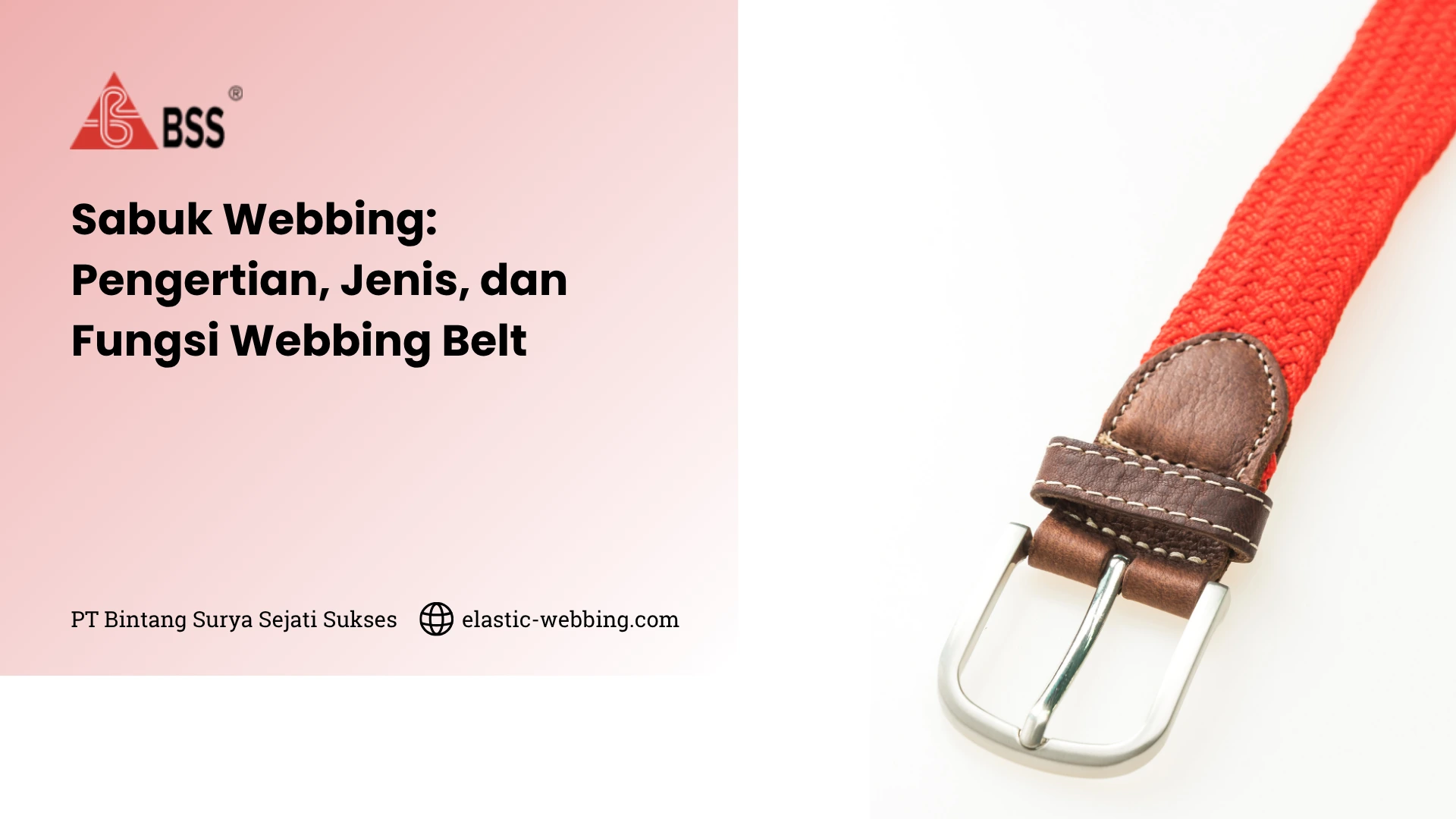


A webbing belt is a reliable solution for fastening needs that require high strength. This material is made from woven tape designed to withstand heavy loads and extreme pressure, making it suitable for situations that demand high safety standards.
As technology advances, webbing belt materials have become more diverse, ranging from nylon and polyester to polypropylene—each offering its own advantages. In addition, webbing belts are also developed in various types based on size and construction.
Through this article, you will gain a deeper understanding of how webbing belts work, their main functions, and the role of BSS as one of Indonesia’s trusted manufacturers in delivering high-quality products.
What Is a Webbing Belt?
A webbing belt is an essential component designed to provide both strength and flexibility in a single structure.
A webbing belt (or webbing strap) is a woven tape material made from strong synthetic fibers such as nylon, polypropylene, and polyester. Its tightly woven structure produces a flat, dense texture that does not easily deform.
This material can withstand pulling forces and physical pressure effectively, which is why it is widely used in various applications. The combination of flexibility and durability makes webbing a preferred choice across many industries.
Difference Between Webbing Belts and Regular Belts
To better understand its advantages, it is important to compare webbing belts with regular fabric belts. The differences are not only visible in appearance but also in function and technical quality.
- Webbing belts are designed to handle heavy loads without easily breaking. In industrial applications, materials such as webbing slings can lift loads from one ton to dozens of tons—something regular belts cannot achieve.
- Materials like polyester (resistant to chemicals and UV rays) and nylon (flexible and abrasion-resistant) make webbing belts far more durable than conventional fabric belts.
- Webbing belts are produced using modern weaving technology with high precision. Manufacturers use advanced machinery to ensure consistent fiber density and product quality.
Webbing Belt Materials
Material selection determines the strength and function of a webbing belt. Each material has unique characteristics suited for specific uses.
Polyester as the Main Material
Polyester is widely used for technical applications due to its excellent performance in extreme conditions.
- High strength: Capable of lifting loads from 1 ton to tens of tons
- Chemical & UV resistance: Remains stable under harsh exposure
- Optimal grip: Distributes pressure evenly to reduce load damage
Polypropylene (PP)
Polypropylene offers a balance between flexibility and strength, making it suitable for lighter applications.
- Strong, flexible, and resistant to daily wear
- Commonly used for outdoor gear like backpacks and tents
- Ideal for smaller sizes such as 15 mm straps
Nylon
Nylon is known for its toughness and elasticity.
- High abrasion resistance
- Used in safety belts, climbing gear, and rescue equipment
- Tubular nylon is often used for emergency harness systems like the Swiss Seat
Characteristics of Webbing Materials
Manufacturers ensure that webbing materials meet high-quality standards:
- High durability for heavy loads
- Dense and flat texture produced by advanced weaving machines
- Technical identification such as color codes and Safe Working Load (SWL) labels
- Customization options, including protective coatings for increased durability
Read Too: Differences Between Round Sling and Webbing Sling: Functions and Types
Types of Webbing Belts
Different applications require different specifications, leading to various types of webbing belts.
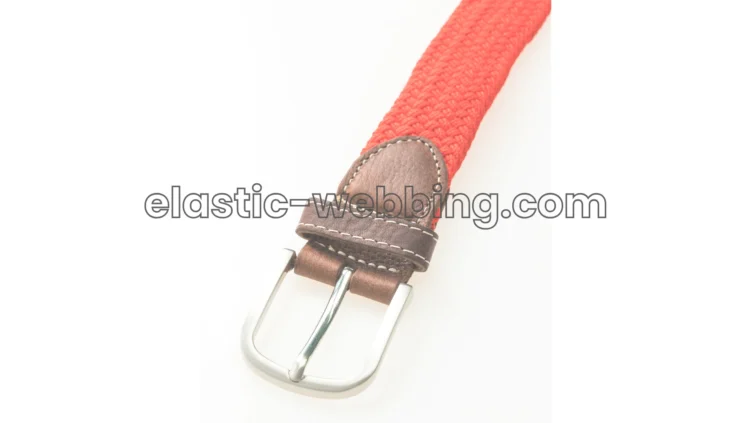
1. Fashion Webbing Belts
Used for both functionality and aesthetics.
- 25–32 mm: Ideal for school belts and casual wear
- ~3.8 cm: Suitable for formal or professional use
- 15 mm: Used for bag straps and DIY products
2. Outdoor and Tactical Webbing Belts
Designed for extreme conditions.
- Used in harnesses, tents, and backpacks
- 40–55 mm: Common for security forces and military use
- Tubular nylon for emergency harness systems
3. Industrial Webbing Belts
Used for lifting and securing heavy loads.
- Load capacity: 1 ton to 100 tons
- Types: Flat Web Slings, Round Slings, Endless Slings
- Safety features: Color codes and load labels
4. Custom Webbing Belts
Custom solutions for specific needs.
- Adjustable design, width, and material
- Anti-abrasion coatings like PU
- Jacquard technology for branding
Functions of Webbing Belts
Webbing belts are used across various sectors, from daily use to technical applications.
1. Fashion Accessories
- Used by students and professionals
- Provides both style and functionality
- Used in belts, bags, and DIY products
2. Load Securing and Lifting
- Used as cargo straps
- Industrial lifting equipment (webbing slings)
- Even pressure distribution for stability
3. Safety and Outdoor Use
- Used in harnesses, climbing gear, and backpacks
- Emergency harness systems (Swiss Seat)
- Safety belts and rescue equipment
4. Industrial and Military Applications
- Used by security forces and military personnel
- Applied in construction, logistics, and automotive industries
- Modern webbing may include RFID technology for tracking and inspection
Advantages of Webbing Belts Over Regular Belts
1. Stronger and More Durable
- Withstands extreme tension
- Reinforced edges reduce wear
- Protective coatings extend lifespan
- Meets international standards such as ISO and EN
2. Flexible and Comfortable
- Adapts to body shape or load form
- Even pressure distribution
- Suitable for various applications, including emergency harnesses
3. Weather and Water Resistant
- Resistant to UV exposure
- Does not easily absorb water
- Suitable for harsh environments and industrial use
Tips for Choosing the Right Webbing Belt
1. Match the Usage
- Use webbing slings with clear SWL ratings for heavy loads
- Choose flexible and abrasion-resistant materials for outdoor use
- Select professional designs for formal or institutional needs
2. Consider the Material
- Polyester: Best for heavy-duty industrial use
- Nylon: Ideal for safety and outdoor gear
- Polypropylene: Suitable for light applications
3. Check Stitching and Buckles
- Ensure strong stitching (Double Ply or 4 Ply for heavy use)
- Reinforced loops for durability
- Use appropriate buckles or locking carabiners
4. Choose the Right Size and Design
- 15 mm: Small accessories
- 25–32 mm: Casual and school use
- 40–55 mm: Heavy-duty and professional applications
Get High-Quality Webbing Belts from a Trusted Manufacturer
As a woven tape material, webbing belts offer a powerful combination of strength, flexibility, and durability, making them essential across many industries. However, quality remains the most critical factor as it directly impacts safety and performance.
Therefore, choosing an experienced manufacturer such as PT Bintang Surya Sejati Sukses (BSS) is a smart decision. If you are looking for precise, durable, and internationally standardized products, consulting with a trusted provider can help you find the best webbing solution for your needs.
Read Too: Trusted Webbing Tape Manufacturer: Types, Prices, and Functions